




The Essence of Vishu
Vishu, a cherished festival celebrated on April 15, 2026, marks the joyous Malayalam New Year and heralds the commencement of the Medam month, a period
synonymous with abundant harvests. This significant occasion brings families together, fostering a spirit of renewal, collective happiness, and the anticipation of good fortune. At the heart of Vishu's observances lies the profoundly meaningful ritual of Vishukkani, an experience that shapes the initial moments of the New Year and is thought to influence the trajectory of one's fortunes for the entirety of the coming twelve months. It is a time steeped in tradition, where the focus is on positivity and the welcoming of blessings.
Understanding Vishukkani
Vishukkani, translating to "the first sight," is a deeply revered practice observed in the predawn hours of Vishu day. The core belief underpinning this ritual is that the very first visuals one encounters upon waking on Vishu will profoundly impact their luck and well-being throughout the year. This tradition is deeply rooted in the philosophy of commencing the New Year with optimistic thoughts and auspicious signs, thus rendering Vishukkani a sacred and potent ritual. It's more than just a collection of items; it's a carefully curated experience designed to invoke positive energy and ward off any ill omens.
Components of Vishukkani
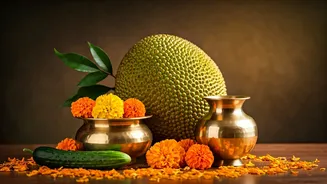
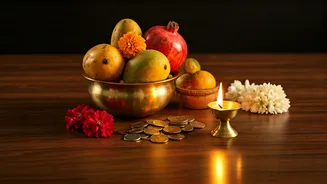
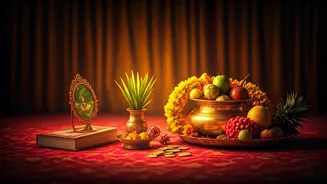
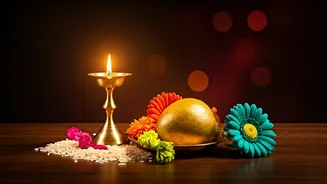
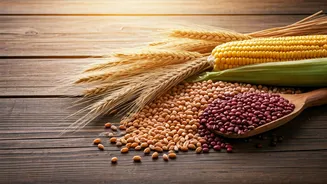
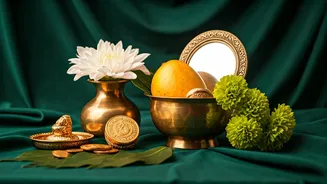
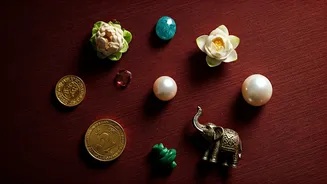
The Vishukkani arrangement is a visually stunning and symbolically rich tableau, meticulously assembled to represent good fortune, abundance, and divine favour. At its core, the display typically includes raw rice, signifying ample prosperity. Gleaming gold or coins are essential to invite wealth and good luck. Seasonal fruits and vegetables, such as ripe mangoes, jackfruit, and drumsticks, stand as powerful symbols of a plentiful harvest and robust health. The vibrant yellow blossoms of the Kanikonna tree (Cassia fistula) are an iconic and indispensable element, embodying happiness and prosperity. A mirror is often incorporated, allowing the viewer to see their own reflection, a metaphor for a clear and bright future. Betel leaves and nuts are included to symbolise good luck and blessings. Jewellery or ornaments made of gold are also featured to invoke blessings of affluence. A coconut and more betel nuts represent purity and divine blessings. Finally, a traditional brass lamp, the Nilavilakku, is lit alongside the arrangement, signifying the commencement of the auspicious day and inviting light into one's life. These items are thoughtfully placed in a vessel or tray, usually positioned before a family deity or an idol of Lord Vishnu or Lord Krishna, who are venerated during Vishu for their association with prosperity.
Observing the Ritual
The Vishukkani ritual is scheduled for April 15, 2026, falling on a Wednesday. The most auspicious time for viewing, known as Kani Time, is during the early morning Brahma Muhurtham, generally beginning around 4:00 AM. This specific timing is critical as it precedes sunrise, allowing for the first, pure sights of the day to be blessed. The transition into the Medam month, which signifies the commencement of the Malayalam New Year and the harvest season, occurs at the Sankranti Moment on April 14, 2026, at precisely 09:40 AM. This precise timing reinforces the significance of the dawn viewing, as the Vishukkani is observed on the day following this auspicious astrological shift, ensuring a spiritually charged beginning to the New Year.