







Strategic Himalayan Placement
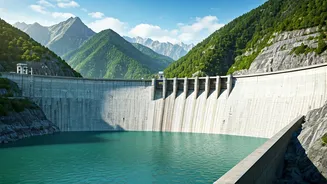
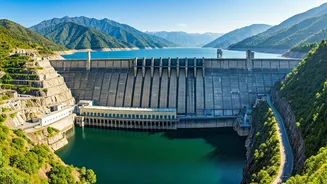
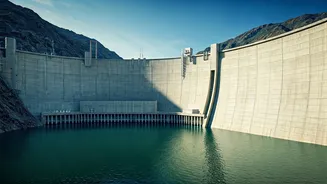
Nestled within the captivating Tehri Garhwal district of Uttarakhand, the Tehri Dam commands a spectacular position amidst the rugged Himalayan foothills.
Situated approximately 70 kilometers from Dehradun, its placement at the confluence of swift-flowing rivers and challenging mountainous terrain was a strategic, albeit demanding, choice for this colossal infrastructure project. This area, known for its steep valleys and susceptibility to seismic activity, presented unique engineering hurdles that were overcome to harness the power of the Bhagirathi River.
A Towering Achievement
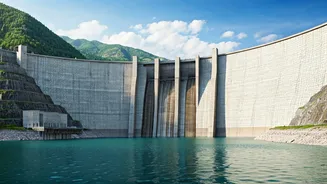
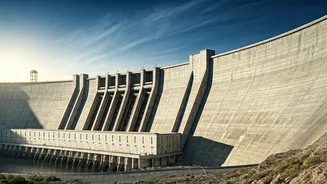
The sheer scale of the Tehri Dam is breathtaking, reaching an incredible height of 260.5 meters (855 feet). This monumental stature solidifies its position as the tallest dam in Asia and one of the world's highest. This impressive height is not merely for show; it enables the dam to impound an immense volume of water, creating the vast Tehri Lake. This expansive reservoir, a prominent feature of the landscape, stretches far into the surrounding hills, showcasing the dam's capacity to control and store significant water resources.
More Than Just Power
The Tehri Dam functions as a multi-purpose powerhouse, extending its benefits far beyond hydroelectric generation. It is a critical component of northern India's energy security, producing over 1,000 MW of electricity, with plans to further augment this capacity through pumped storage. Beyond power, the dam plays an indispensable role in water management, supplying essential drinking water to major metropolitan areas such as Delhi and Uttar Pradesh. Furthermore, its waters are vital for supporting agricultural activities, enabling irrigation across thousands of hectares of farmland and contributing significantly to regional food security.
Engineering Against Extremes
The construction of the Tehri Dam in a seismically active zone represents a triumph of modern engineering resilience. Designed to withstand significant seismic events, the dam incorporates advanced safety protocols and features to ensure its stability and longevity. Its innovative rock and earth-fill construction method provides crucial flexibility, a vital characteristic for structures built in geologically sensitive areas like the Himalayan fault lines. This thoughtful design ensures the dam can endure the forces of nature while fulfilling its critical functions.
Complex Legacy of Development
The journey of the Tehri Dam is marked by significant challenges and controversies. The project necessitated the submersion of the historic old town of Tehri, leading to the displacement of thousands of its inhabitants. This aspect of its development sparked considerable debate among environmentalists and social activists, who voiced concerns regarding potential ecological impacts, heightened seismic risks in the region, and the substantial social cost associated with such large-scale projects. These debates underscore the complex interplay between infrastructure development and its broader societal and environmental consequences.
Fascinating Dam Insights
The Tehri Dam's realization was a protracted endeavor, spanning over three decades from initial planning to final completion, as part of the broader Tehri Hydro Development Corporation (THDC) initiative. The sheer immensity of its reservoir has transformed it into a popular destination for water sports and tourism, attracting visitors from afar. The dam's hydroelectric output is substantial, generating 2400 MW of power, a testament to its significant contribution to India's renewable energy goals and its role as a vital resource for the nation.