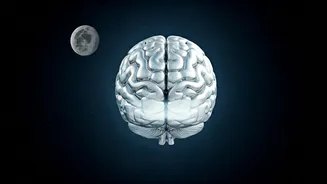

Mind's Lunar Genesis
The Veda's observation, "Chandrama Manaso Jatah" - "The Moon was born from the mind", presents a captivating cosmological narrative. This phrase, originating
from ancient Indian scriptures, isn't just a physical account of the moon's creation. Instead, it offers a symbolic portrayal of how the moon is intricately connected to the inner workings of the human mind. The mind, being the source of thought, emotion, and perception, is portrayed as the parent, from which the moon, a celestial body, emerges. This perspective proposes a deep connection between our mental states and the lunar cycles. This ancient philosophy suggests that observing the moon's phases is essentially observing the mind's behavior.
Ancient Wisdom Unveiled
This Vedic quote, extracted from the deeper philosophical undertones of the ancient Hindu scriptures, presents a way of viewing the cosmos and our interior worlds as deeply entwined. The choice of the word 'mind' as the moon's origin shows a deliberate effort to connect the moon's influence and the mind. This view indicates the understanding that emotions, thoughts, and cognitive functions are influenced by the celestial body. In contrast to modern science which studies the physical moon, this view focuses on the subtle interplay of forces that connect the mind and the celestial body. Furthermore, the selection of the moon as the focus is significant. The moon has long been connected with intuition, emotion, and the subconscious, making it an excellent symbol for the mind's mysterious nature.
Symbolism and Interpretation
The phrase "Chandrama Manaso Jatah" can be interpreted on multiple levels, extending beyond the literal. Symbolically, the moon's emergence from the mind suggests how the mind produces concepts. This indicates that thoughts and feelings emerge from the mental space, similar to how the moon emanates from the mind. The moon is a common symbol for the intuitive, the subconscious, and the emotional aspects of the self. By linking the moon to the mind, the Vedic quote hints at the inherent potential for transformation and growth within the individual. As the moon changes phases, the quote encourages us to understand the cycles of our own mental states. This perspective emphasizes introspection and the recognition of how the mental landscape is always developing.
Modern Relevance Explored
While rooted in ancient wisdom, the quote continues to inspire introspection and reflection in contemporary contexts. The connection between the moon and the mind resonates with modern psychological concepts. Ideas of the subconscious and the impact of the emotional on thought and behavior are considered. Furthermore, the lunar cycle is seen as a way of understanding the rhythmic nature of human life. The focus on the moon highlights our connection to natural cycles, encouraging a deeper consciousness. This perspective has relevance in practices of mindfulness and meditation. Through such practices, individuals can understand their mental patterns and find a deeper understanding of themselves.