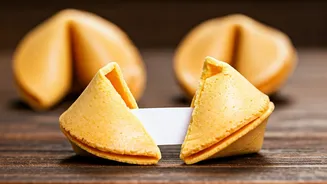

Origins of the Cookie
Contrary to popular belief, fortune cookies did not originate in China. While they are a staple in Chinese restaurants worldwide, their roots can be traced
to Japan. During the 19th and early 20th centuries, small bakeries in Kyoto crafted a similar cookie known as 'tsujiura senbei.' These cookies, baked using sesame oil and miso, contained fortunes and were a part of temple and shrine rituals. Japanese immigrants brought the recipe to the United States, particularly to California, where they adapted it and the fortune cookie, as we know it, was born, eventually gaining popularity in Chinese restaurants.
Evolution in America
In America, the fortune cookie underwent significant changes. The recipe was tweaked, with the introduction of ingredients like vanilla and butter, to cater to the American palate. The cookies became sweeter and lighter in texture compared to their Japanese counterparts. Simultaneously, the fortune messages inside evolved from simple fortunes to often generic statements or lucky numbers. The widespread presence of fortune cookies in Chinese restaurants contributed to their association with Chinese cuisine, creating a cultural bridge between two distant worlds. World War II played a role in popularizing fortune cookies. As Japanese Americans were interned, Chinese restaurants filled the void, further solidifying the cookie's link to Chinese food in the public's perception.
Cultural Impact Worldwide
The fortune cookie has become more than just a dessert; it's a cultural symbol. It has been integrated into movies, television shows, and literature. The cookies' fortunes often provide lighthearted entertainment, offering a moment of reflection, amusement, or a glimpse of hope. Their accessibility and cultural neutrality make them a universally loved item. While often associated with Chinese culture, they are enjoyed by people of all backgrounds. This widespread appeal has led to diverse interpretations and usages, and they have become iconic across the globe. They serve as a fun, shared experience for people during meals, a simple source of joy, and a way to spark conversation.