


Ideological Divide Unveiled
India's political stage in April is set for a fascinating electoral showdown, particularly in the assembly elections of Assam, Kerala, Puducherry, Tamil
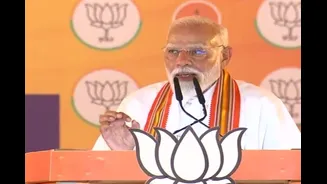
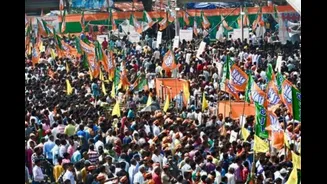
Nadu, and West Bengal. What makes these contests particularly noteworthy is the unprecedented challenge posed by the Bharatiya Janata Party (BJP) to established Left-of-centre political parties in Kerala, Tamil Nadu, and West Bengal. Historically, the UDF and LDF in Kerala, the DMK-led front in Tamil Nadu (including the Congress), and the All India Trinamool Congress (TMC) in West Bengal have all aligned themselves to the left of the ideological centre. These parties generally champion constitutionalism, federal principles, legislative supremacy, secularism, social justice, equitable development, welfare programs, media freedom, and a liberal economic approach. The BJP, conversely, occupies the right end of the spectrum, often associated with ideologies rooted in Hindu supremacy (Hindutva), Vedic traditions, Aryan culture, a strong central government, executive primacy, a unified national language (Hindi), vegetarianism, and a 'One Nation, One Government' philosophy, often fostering close ties with select business houses. This divergence sets the stage for a compelling clash between these two distinct political philosophies in the upcoming state elections.
Kerala's Shifting Sands
In Kerala, the political landscape has for decades been dominated by a steady alternation between the Congress-led United Democratic Front (UDF) and the CPI(M)-led Left Democratic Front (LDF). While smaller parties have typically aligned with one of these two blocs, voters have historically switched their allegiance. However, in 2021, this pattern was broken when the LDF, led by the now aging Pinarayi Vijayan, secured re-election after winning in 2016. Both major fronts have honed their electoral strategies for the upcoming contest. Public sentiment suggests a potential desire for change after two terms under the current LDF government, with criticism lingering over its handling of the devastating floods in 2018 and the Wayanad landslide in 2024. The Congress, bolstered by a cadre of capable and younger leaders, expresses confidence in the UDF securing a comfortable majority. The BJP's presence in Kerala, however, is seen as struggling to connect with the state's unique social and cultural fabric, with predictions for their seat tally generally falling within the single digits.
Tamil Nadu's Complex Matrix
Tamil Nadu's electoral dynamics are characterized by the enduring strength of the DMK-led front, which has maintained its unity from the 2021 assembly elections and the 2024 Lok Sabha polls. Under M.K. Stalin's leadership, smaller allied parties are contesting under the DMK's symbol, a strategic move designed to consolidate votes and prevent fragmentation. The opposing AIADMK-led front has experienced erosion in its vote share since the previous elections. Ironically, the AIADMK alliance has managed to secure the support of the AMMK, a faction that had previously vowed never to accept the AIADMK's current leadership. The BJP's contribution to the AIADMK's electoral prospects is viewed primarily through the lens of central government influence, potential resource allocation, perceived tacit support from election authorities, and the divisive rhetoric employed by its national leaders. However, these factors proved insufficient in past elections, and their efficacy in 2026 remains questionable. The BJP is contesting 27 out of 234 seats, with its projected win count ranging from low single digits to a maximum of 10. The presence of influential regional parties like the Tamilaga Vettri Kazhagam (TVK) and Naam Tamizhar Katchi (NTK), known for their ability to draw votes away from larger fronts, promises closely contested individual constituencies. Nevertheless, poll observers and seasoned journalists anticipate the DMK-led alliance will likely retain power.
West Bengal's Fierce Contest
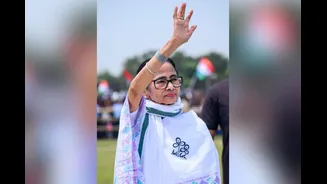
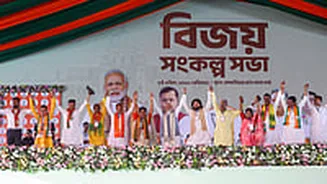
In West Bengal, the election is largely shaped into a direct confrontation between the incumbent Trinamool Congress (TMC) and the challenger BJP. While the historically significant Congress and CPI(M) parties are expected to direct their criticism towards the BJP, their impact on the ultimate outcome is projected to be minimal. The contest is a high-stakes battle between the formidable Mamata Banerjee and the persistent leadership of Prime Minister Modi and Home Minister Shah. This electoral fight transcends mere political maneuvering; it has evolved into a raw, visceral struggle that deeply engages the passions of West Bengal's populace. Citizens are motivated to defend their rich cultural heritage, literary traditions, linguistic identity, social harmony, patriotic spirit, and veneration for icons like Swami Vivekananda, Rabindranath Tagore, Bankim Chandra Chatterjee, and Amartya Sen. Should this sense of Bengali pride and self-respect prevail, Ms. Banerjee and the TMC are poised for a historic fourth consecutive victory. The performance of parties in these states, which lie outside the Hindi heartland, carries significant weight, potentially enhancing or diminishing their broader political fortunes. This is particularly true for the BJP, which is often perceived as being at odds with the distinct political and social ethos of these regions.