



Etna's Fiery Majesty
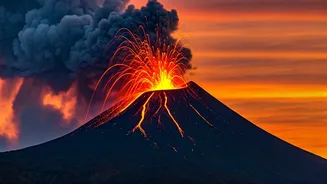
Mount Etna, located on the island of Sicily, Italy, is one of the world's most active volcanoes and has a well-documented history of eruptions that stretches
back millennia. Its frequent activity makes it a subject of constant monitoring by volcanologists. Etna's eruptions, often involving lava flows and explosive activity, have significantly shaped the surrounding landscape and pose a continuous challenge to nearby communities. The volcano's fertile volcanic soil has also made the area rich for agriculture, particularly viticulture. Etna’s iconic presence has made it a significant feature in Sicilian culture, attracting tourists and scientists alike to witness its raw power and beauty.
Mayon’s Perfect Cone
Mayon Volcano, situated in the Philippines, is celebrated for its perfectly symmetrical cone shape. It is one of the country's most active volcanoes, and the volcano has erupted numerous times, often with devastating consequences for nearby settlements. The volcano's eruptions are characterized by pyroclastic flows, ash plumes, and lahars (mudflows), which pose significant hazards to the surrounding areas. Despite the dangers, the area around Mayon is densely populated, and the volcano is a major tourist attraction. The local communities have adapted to living near the volcano and have developed strategies to cope with its eruptions.
Kilauea's Ongoing Activity
Kilauea, located in Hawaii, is renowned for its persistent, effusive eruptions, making it one of the world’s most active volcanoes. It’s been erupting nearly continuously for decades, providing scientists and visitors a front-row seat to the processes of volcanism. The volcano's eruptions often involve lava flows that reshape the landscape. Kilauea is part of the Hawaiian Volcanoes National Park, a popular destination for tourists eager to witness its volcanic activity up close. Continuous monitoring allows for real-time tracking of eruptions, enhancing safety for those who live nearby and visit the area.
Mount St. Helens' Resilience
Mount St. Helens in Washington State, USA, became infamous for its catastrophic eruption in 1980. This event dramatically reshaped the landscape, providing a landmark study for geological and ecological recovery. The eruption caused widespread destruction, including massive landslides, pyroclastic flows, and ashfall. Yet, since then, the area has shown remarkable resilience, with vegetation and wildlife gradually returning. Today, Mount St. Helens remains an active volcano. It provides invaluable insights into volcanic processes and ecological regeneration.
Mount Fuji's Beauty
Japan’s Mount Fuji, an iconic symbol of the country, is a potentially active stratovolcano. Although relatively dormant in recent centuries, it remains a source of concern. Geologists are monitoring it closely. Mount Fuji last erupted in the early 18th century, and the potential for future activity means it is continuously under surveillance. The volcano’s stunning beauty makes it a cultural and tourist attraction. It has inspired countless works of art and draws millions of visitors each year.
Popocatépetl's Fury
Popocatépetl, near Mexico City, is one of the most active volcanoes in North America. Its name translates to ‘Smoking Mountain’ in Nahuatl. The volcano frequently erupts, sending ash plumes into the air and affecting nearby populated areas. Constant monitoring and alerts are vital for the safety of the millions living in the surrounding region, including Mexico City. The proximity to a major urban area makes Popocatépetl’s activity a significant concern, with regular updates and emergency preparedness crucial for mitigating risks associated with eruptions.
Stromboli's Explosions
Stromboli, a small island in Italy, is famous for its almost constant explosive eruptions. This volcano is often referred to as the ‘Lighthouse of the Mediterranean’ because of its regular activity. Stromboli's frequent, small-scale eruptions, called Strombolian eruptions, provide a spectacular display. They involve bursts of glowing lava, ash, and volcanic bombs. The volcano’s continuous activity has made it a favorite spot for volcanologists and tourists alike, eager to witness the ongoing display of nature's power. Its accessibility allows for close-up observation.
Mount Merapi's Danger
Mount Merapi in Indonesia is one of the country’s most active and dangerous volcanoes. Its name, which means ‘Mountain of Fire’, reflects its frequent and often violent eruptions. Merapi's explosive eruptions pose a significant threat to the densely populated areas around it, including Yogyakarta. The volcano is closely monitored. The Indonesian government and local communities have developed sophisticated early warning systems and evacuation strategies to minimize the impact of eruptions. Merapi is a crucial example of the challenges and resilience of people living near active volcanoes.
Vesuvius' History
Vesuvius, located near Naples, Italy, is infamous for its eruption in 79 AD, which destroyed the Roman city of Pompeii. This event is one of the most well-known volcanic disasters in history. Vesuvius remains a potentially dangerous volcano with the potential for devastating eruptions. The area around Vesuvius is densely populated. Scientists continue to study the volcano and its history, providing insights into the effects of past eruptions and the potential for future ones. The risk assessment and preparedness measures are vital in mitigating the potential effects of future volcanic activity.
Galeras' Vigilance
Galeras, in Colombia, is known for its frequent eruptions and is another volcano that requires constant monitoring. The volcano is located near the city of Pasto, and its activity poses a threat to the local population. Galeras is a stratovolcano that has been active for a long time, with its eruptions characterized by explosive activity and ash emissions. The scientific community has been studying Galeras for decades, providing valuable data to mitigate risk. Understanding the volcano’s behavior is key to reducing the impact on nearby communities.