


Volcanic Fury & Glacial Might
Iceland's moniker, the 'Land of Fire and Ice,' isn't just a catchy phrase; it's a profound descriptor of its unique geological makeup. The country stands
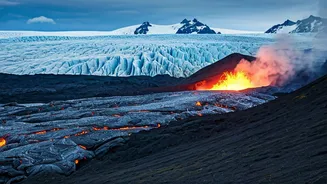
as a testament to Earth's powerful forces, showcasing a constant interplay between intense volcanic activity and vast, frozen landscapes. Imagine fiery magma spewing from beneath immense ice caps, a phenomenon that defines Iceland's dramatic scenery. This duality is not a mere coincidence but a fundamental aspect of its existence, creating a dynamic environment where these contrasting elements shape every vista. The very ground beneath your feet is a product of this ongoing, epic battle between heat and cold, a visual narrative of geological evolution that draws visitors from around the globe.
Fiery Eruptions Unveiled
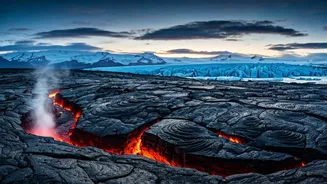
The 'fire' aspect of Iceland's nickname is vividly demonstrated by its numerous active volcanoes and geothermal phenomena. Regions like the Reykjanes Peninsula frequently experience volcanic eruptions, offering a spectacular display of molten rock flowing across the terrain, often starkly contrasting with snow-covered fields or barren volcanic rock. Historic eruptions, such as the one at Eyjafjallajökull, have not only shaped the land but have also captured the world's attention. These events are raw, powerful demonstrations of the Earth's internal energy, where incandescent lava cascades down slopes, creating a breathtaking and sometimes intimidating spectacle. It’s a constant reminder of the powerful geological forces at play just beneath the surface.
Glacial Giants & Icy Marvels
Complementing the fiery displays are Iceland's colossal glaciers, embodying the 'ice' in its famous title. Vatnajökull, the largest ice cap in Europe, sprawls across thousands of square kilometers, a majestic frozen expanse that profoundly influences the country's topography. These immense bodies of ice are not static; they are active sculptors of the land, their slow, relentless movement carving out valleys and fjords over millennia. As these glaciers melt, they contribute to the formation of stunning glacial lagoons, where icebergs calve and drift serenely. The sheer scale and beauty of these icy formations are a powerful counterpoint to the volcanic heat, showcasing nature's artistry in frozen form.
Duality in Scenery
Iceland’s geography presents a striking visual of its 'fire and ice' identity, particularly where these two elements converge. It's common to find active volcanoes nestled directly beneath expansive ice caps, a prime example of the nation's contrasting geological features. This proximity leads to dramatic interactions, where volcanic heat can melt glacial ice, creating unique landscapes and phenomena. Near the Vatnajökull glacier, the Jökulsárlón lagoon is a prime example, filled with icebergs that have broken off from the ice cap, eventually making their way to the sea. Adjacent to this is Diamond Beach, a unique shore composed of black volcanic sand adorned with glistening ice chunks, creating a surreal and highly photogenic environment that perfectly encapsulates Iceland's dual nature.
Ethereal Lights & Volcanic Shores
Adding another layer of enchantment to Iceland's dramatic landscapes are the celestial displays of the aurora borealis. During the darker months, these vibrant curtains of light frequently dance across the night sky, casting an ethereal glow over glaciers, volcanoes, and the striking black sand beaches. These beaches, characterized by their dark pebble surfaces and dramatic basalt columns, are a direct result of Iceland's volcanic past. The contrast between the dark sand, the crashing Atlantic waves, and the scattered remnants of ice from the nearby glaciers creates a scene of profound beauty. Especially at night, these shores transform into captivating spots for viewing the Northern Lights, merging the earthly wonders of fire and ice with the cosmic spectacle above, making Iceland an exceptionally photogenic and magical destination.