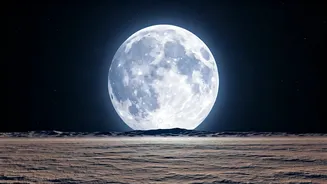

Supermoon Defined
A supermoon occurs when a full moon coincides with the moon's closest approach to Earth in its orbit, known as the perigee. This proximity causes the moon to appear
significantly larger and brighter than a typical full moon. The difference in size can be as much as 14%, and the brightness can increase by around 30%. This fascinating celestial alignment provides a captivating spectacle, offering an opportunity to observe the moon in all its enhanced glory. Supermoons are not rare occurrences but are a unique opportunity to witness the moon's beauty in a particularly striking form. Observing a supermoon is an accessible activity, accessible to anyone with a clear sky.
January 3, 2026
The first supermoon of 2026 is scheduled to rise on January 3. This event will provide a remarkable start to the year for stargazers across India. Specific timings will vary depending on your location within the country. Observing this astronomical event does not require any special equipment. The full moon will be easily visible to the naked eye, allowing people of all ages and backgrounds to participate in this cosmic observation. It is recommended to check local astronomical resources for precise viewing times applicable to your specific city or region to get the most out of your experience.
Optimal Viewing Tips
To maximize your supermoon viewing experience, choose a location with minimal light pollution and a clear view of the eastern horizon. Away from city lights is preferable, as the darkness allows for the moon's brilliance to fully shine. Allow your eyes time to adjust to the darkness for the best possible experience. Look for landmarks or interesting foreground elements to add depth to your view. The supermoon rises in the east, so selecting a location with an unobstructed view in that direction will be key. Consider using binoculars or a telescope to get a closer look at the lunar surface's details, adding another layer of wonder to the viewing experience.
Additional Viewing Advice
The best time to see the supermoon is typically shortly after moonrise or before moonset. During these times, the moon appears larger due to an optical illusion. The atmospheric effect can make the moon appear a little bigger near the horizon, adding to the spectacle. Weather conditions play a critical role; clear skies are essential for viewing the supermoon. Cloud cover will significantly diminish the view. Check the weather forecast for your area before making viewing plans. Sharing the experience with friends or family adds to the enjoyment. Take photos and videos of the event. It can be a memorable activity to cherish.
Why It Matters
Observing a supermoon offers a wonderful chance to connect with the universe and appreciate the beauty of the cosmos. Supermoons serve as a reminder of the celestial events that shape our lives and provide an opportunity for reflection and wonder. These events promote a sense of unity, as people worldwide share in the experience. Understanding astronomical events enriches our connection to the universe. Encouraging an interest in astronomy fosters a deeper appreciation for the natural world and prompts a sense of curiosity about the world around us. So, enjoy the spectacle!