







Dominance in Forest Area
Madhya Pradesh proudly stands as the leader in India's forest cover, an achievement solidified by the latest India State of Forest Report (ISFR) 2023.
The state commands an impressive 77,073 square kilometers of forest land, a figure that significantly surpasses other regions. This vast expanse represents approximately 25% of Madhya Pradesh's total geographical area, underscoring its profound ecological significance. While minor fluctuations may occur in reporting, the state consistently maintains its position as the nation's greenest heartland in terms of absolute forest area. This dominance not only enhances India's environmental profile but also plays a crucial role in the country's overall carbon sequestration capabilities and its pursuit of national climate targets.
Diverse Forest Ecosystems
The forests of Madhya Pradesh are characterized by a rich tapestry of tropical moist and dry deciduous types, creating varied habitats. These woodlands are a sanctuary for a remarkable array of flora and fauna. Botanically, the state's forests are home to over 5,000 distinct plant species, contributing to their ecological richness. This biodiversity extends to avian life, with more than 500 bird species inhabiting these areas. The state's commitment to preserving these natural treasures is evident in its establishment of renowned protected areas. Places like Kanha and Bandhavgarh National Parks are not only global tourist destinations, drawing visitors keen on wildlife and conservation, but also vital hubs for eco-tourism that supports local economies and fosters a deeper appreciation for nature.
Rich Biodiversity and Wildlife
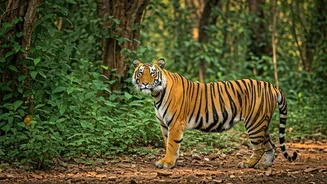
Madhya Pradesh is a stronghold for some of India's most iconic wildlife. Its expansive forests are crucial for the survival of species like the majestic tiger, elusive leopard, powerful gaur, and the critically important hard-ground barasingha, also known as the swamp deer. The state's dedication to safeguarding these creatures is reflected in its comprehensive network of protected areas. This includes 11 National Parks, such as the celebrated Kanha and Bandhavgarh, and numerous Tiger Reserves, solidifying its reputation as the 'Tiger State' of India. These reserves are not merely sanctuaries for wildlife but also active participants in national and international conservation efforts, contributing significantly to species protection and ecological balance.
Forest Density and Distribution
The forest cover in Madhya Pradesh is categorized by its density, with a significant portion falling under different classifications. According to recent assessments, the state has 7,021 sq km of Very Dense Forest, 33,509 sq km of Moderately Dense Forest, and a substantial 36,543 sq km of Open Forest. A considerable part of this forest area is located within officially recorded forest boundaries. Ongoing conservation initiatives are demonstrating positive impacts, with evidence of densification occurring in several protected zones. This nuanced understanding of forest density is crucial for effective management and strategic planning to ensure the long-term health and resilience of these vital ecosystems.
Protected Areas Network
Madhya Pradesh has established a robust and extensive network of protected areas, crucial for the preservation of its natural heritage. This network comprises 11 National Parks and 25 Wildlife Sanctuaries, collectively covering thousands of square kilometers. These designated zones are fundamental to the state's conservation strategy, particularly in its role as a leading tiger habitat. The state's designation as the 'Tiger State' highlights the success of these protected areas in supporting tiger populations. Beyond wildlife, these areas also serve as magnets for eco-tourism, generating economic benefits for local communities. However, this valuable natural resource faces ongoing pressures from development projects and human encroachment, necessitating continuous vigilance and adaptive management strategies.
National Contribution and Challenges
Madhya Pradesh's vast forest cover plays an indispensable role in India's national environmental goals. The state's 77,073 sq km of forests contribute significantly to India's total forest area of approximately 715,343 sq km, which constitutes 21.76% of the nation's geographical area. This substantial contribution bolsters India's commitments to climate change mitigation, enhances national carbon storage capacity, and supports the ambitious target of achieving 33% forest cover across the country. Despite these achievements, the state grapples with numerous challenges. Pressures from agricultural expansion, infrastructure development, and the overarching impact of climate change pose threats to forest integrity. Recent reports have indicated some localized declines, underscoring the urgent need for intensified protection measures, greater community involvement in conservation, and the implementation of sustainable land management practices.