
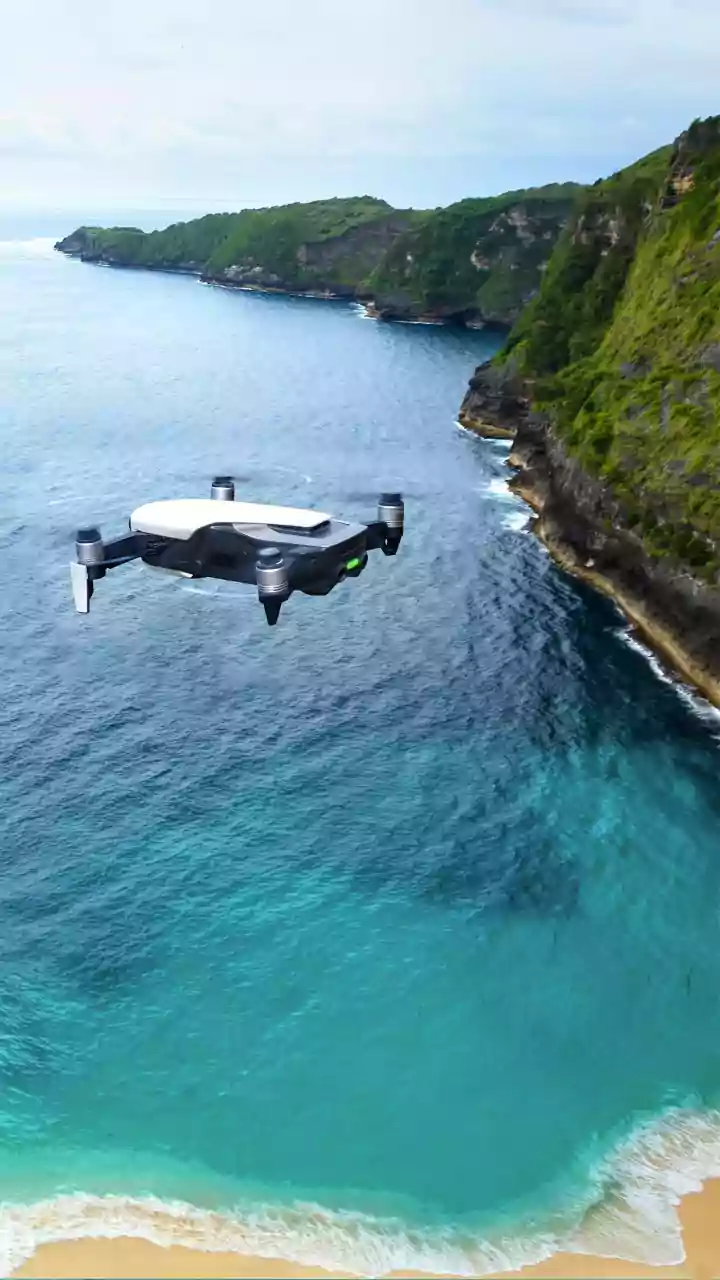




Introducing Avataar Drone
India has achieved a significant milestone in advanced robotics with the development of its first amphibious drone, named 'Avataar'. This groundbreaking
technology, conceptualized and built by the Bengaluru-based startup AquaAirX Autonomous Systems, redefines operational capabilities by allowing a single unmanned aerial vehicle (UAV) to perform tasks both in the air and beneath the water's surface. AquaAirX specializes in creating robust autonomous vehicles designed for challenging aquatic environments such as oceans, rivers, and coastal regions. The Avataar project received crucial early-stage funding from Rainmatter, an organization dedicated to fostering and supporting innovative technological advancements. This dual-domain operation capability sets Avataar apart from traditional drones, marking a substantial leap forward for India's defense and scientific research sectors.
Seamless Air-to-Water Transition
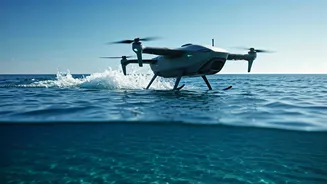
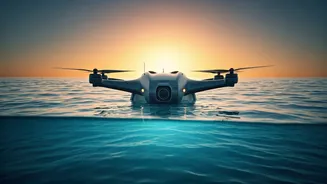
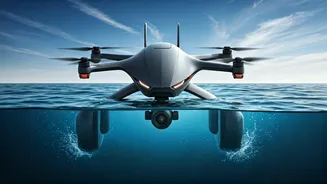
Avataar is engineered to execute a seamless transition from aerial flight to underwater operations, a capability previously unattainable for a single unmanned system. Unlike conventional drones confined to the skies, Avataar is a sophisticated surveillance platform that can effectively operate in both atmospheric and aquatic domains. This dual functionality drastically enhances its utility for a variety of critical applications. The drone's construction features a saltwater-resistant carbon fiber frame, specifically designed to withstand the corrosive effects of marine environments. Additionally, it is equipped with specialized coatings that actively repel salt deposits and prevent the accumulation of grime on its sensors, ensuring consistent performance even in harsh oceanic conditions. This resilience is a testament to the meticulous engineering behind Avataar, ensuring reliability and longevity in its challenging operational theaters.
Technological Readiness and Testing
The 'Avataar' drone has successfully achieved Technology Readiness Level 6 (TRL 6), a critical benchmark signifying that the technology has progressed well beyond theoretical concepts and laboratory prototypes. This achievement indicates that Avataar is a fully functional system that has undergone rigorous testing in realistic operational settings. The drone has proven its mettle in actual water bodies, navigating complex currents and enduring significant pressures, rather than being confined to controlled environments like test tanks. Successfully reaching TRL 6 represents a vital step, clearing the path for further advanced trials and ultimately paving the way for large-scale production. This level of development assures potential users of Avataar's robustness and readiness for deployment in demanding real-world scenarios.
Avataar's Operational Functions
Avataar functions as an autonomous amphibious drone, capable of independent flight through the air and propulsion through water. This unique combination allows it to perform a wide array of tasks that were previously beyond the scope of a single machine. It merges the agility of a quadcopter for aerial reconnaissance with the robust design of a submersible for underwater monitoring, providing real-time surveillance both above and below the water's surface. For naval and coast guard operations, this means a single Avataar unit can spot a vessel from the sky and then dive to inspect its hull or identify submerged threats. To maintain precise positioning and avoid drift in ocean currents, the drone utilizes an intelligent speed monitoring system that tracks its movement relative to the seabed, ensuring accurate location awareness. Communication with the surface is facilitated through underwater sound waves, effectively acting as a wireless data link. For navigation back to its base, a sophisticated timing mechanism calculates the distance and direction required, enabling autonomous return journeys.
Future of Surveillance
The Avataar drone is poised to become an indispensable tool for future monitoring and exploration missions, bridging the gap between aerial and underwater capabilities. Its ability to autonomously transition between these two distinct environments offers unprecedented versatility for a wide range of applications. Whether employed for maritime surveillance, environmental monitoring, search and rescue operations, or scientific research, Avataar provides a comprehensive solution. Its combined flight and diving functionalities allow for extensive coverage of both surface and sub-surface areas, making it ideal for tasks such as inspecting underwater infrastructure, mapping marine ecosystems, or tracking illegal activities in coastal waters. This integrated approach significantly reduces the complexity and cost associated with deploying separate aerial and underwater systems, heralding a new era in unmanned operational effectiveness.