









A Triumph of Grit
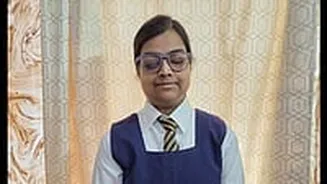
Sarah Moin, a 19-year-old student from Lucknow, has achieved an outstanding 98 per cent in her school-leaving examinations, a feat made even more extraordinary
by her personal journey. Diagnosed at a young age with a progressive vision impairment, Sarah later faced the loss of her hearing and developed speech difficulties. Her remarkable success is not just a personal victory but a shining example of how a supportive and imaginative educational setting can empower students to overcome immense challenges. This achievement underscores the critical role of an inclusive ecosystem in fostering academic excellence and personal growth, prompting a wider conversation about the readiness of India's educational landscape to support all learners.
An Inclusive Learning Model
Christ Church College in Lucknow provided Sarah Moin with the specialized support that enabled her remarkable achievement. Recognizing her unique needs, the institution implemented personalized classes and converted textbooks into accessible digital formats. Sarah utilized a Braille-based device to engage with her studies, and her exam papers were adapted for tactile reading, with her responses later transcribed. This bespoke approach, meticulously crafted by educators and her supportive parents, showcases the profound impact of adapting educational methodologies to suit individual learning styles and abilities. It demonstrates that true inclusion goes beyond mere physical presence in a classroom, requiring a fundamental transformation of institutional culture to actively dismantle barriers.
The Inclusion Gap
While India has seen an increase in student enrollment across the country, official reports like the Annual Status of Education Report consistently reveal that this growth hasn't been matched by a corresponding shift towards inclusive pedagogies. Sarah's experience at Christ Church College highlights an irony: her success is noteworthy precisely because it represents an ideal that remains largely out of reach for many. The gap between policy intent, such as that articulated in the National Education Policy 2020, and on-ground implementation is significant. The policy emphasizes inclusion, flexibility, and multidisciplinary learning, yet educators like Salman Ali Qazi, who are adept at bridging curriculum and cognition for students with special needs, are a rarity. This disparity leaves countless students struggling within rigid systems that fail to acknowledge their diverse learning experiences.
Systemic Barriers to Inclusion
Despite legislative efforts like the Sarva Shiksha Abhiyan and the Right to Education Act, and policy pronouncements favoring diversity, the practical reality for many students in India remains challenging. The nation's educational framework, while acknowledging the need to cater to varied abilities, genders, castes, languages, and socio-economic backgrounds, often falters in execution. Overworked, disempowered, and undertrained teachers, coupled with curricula that prioritize rote memorization over deep understanding, create significant hurdles. For students from marginalized communities, including those with disabilities, the promise of inclusive education often remains unfulfilled due to a severe lack of trained special educators, inadequate infrastructure, and limited access to essential assistive technologies. Caste-based discrimination further exacerbates these issues, subtly or overtly impacting classroom interactions and learning outcomes.
Scaling Sensitivity and Creativity
India is positioned at a pivotal demographic moment, possessing one of the world's youngest populations, a potential demographic dividend that can only be realized if the education system truly equips all young people for meaningful economic participation. While a universal template for addressing diversity and inequality is elusive, and replicating specific programs like those at Christ Church College might not be feasible everywhere, Sarah's story offers a powerful blueprint for what inclusive education can achieve. The crucial question is whether the empathy and innovative spirit demonstrated by the Lucknow school can be scaled to become the norm across the country. This necessitates a fundamental reorientation of classrooms to accommodate a wide spectrum of learning needs and a transformation of teacher training programs to empower educators to view difference not as an obstacle, but as an opportunity to enrich the learning environment for everyone.