





Spring's Arrival Celebration
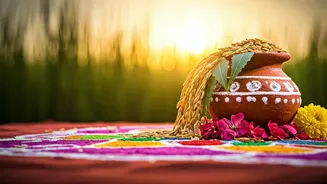
Bohag Bihu, also recognized as Rongali Bihu, signifies Assam's New Year and heralds the arrival of spring along with the agricultural season's peak. This
festival is a profound cultural expression, deeply rooted in the state's agrarian lifestyle, bringing communities together to celebrate the earth's bounty and the renewal of life. It’s a period that transcends simple festivity, embodying a deep connection between the land and its people, fostering a sense of unity and shared cultural pride. In 2026, the festival will commence on April 14th, spanning seven days of immersive cultural activities and communal gatherings that reflect Assam's rich heritage.
Ancient Roots of Bihu
The origins of Bohag Bihu trace back millennia, intertwining with the very beginnings of agriculture in the Brahmaputra Valley. Initially, it served as a ceremonial observance to honor the earth and invoke blessings for prosperous harvests, acknowledging the vital role of nature's forces. The term 'Bihu' itself originates from the Sanskrit word 'Bishu,' signifying the seeking of divine favor for prosperity and abundance. Over centuries, this agrarian ritual evolved, accumulating layers of social and spiritual significance, transforming into the multifaceted festival celebrated today. Its enduring legacy highlights a continuous thread of cultural practice from ancient times to the present day.
Spirit of Renewal
The essence of Bohag Bihu lies in its profound connection to the cycles of nature and the human spirit. As spring emerges, the festival embodies a spirit of renewal, mirroring the transition from winter's dormancy to spring's vibrant awakening. This is not only a celebration of the changing seasons and the regeneration of crops but also a period of personal and communal rejuvenation. The festival encourages individuals to embrace change, foster new beginnings, and strengthen interpersonal bonds. The widespread participation in traditional attire, communal feasts, and age-old music and dance forms underscores the festival's role in preserving and promoting Assamese culture across generations.
Seven-Day Rituals Unveiled
Bohag Bihu unfolds over a significant seven-day period, each day dedicated to specific customs and rituals that collectively enrich the festival's tapestry. The first day, 'Goru Bihu,' is a heartfelt tribute to cattle, acknowledging their indispensable contribution to farming through prayers and appreciation. 'Manuh Bihu' follows, focusing on people and the exchange of good wishes and blessings within the community. 'Gohain Bihu' is reserved for honoring elders and seeking their wisdom and blessings for the year ahead. 'Kutum Bihu' provides an occasion for families to unite, visiting relatives and reinforcing familial ties. 'Tator Bihu' and 'Nangolor Bihu' are preparatory days, setting the stage for the grander festivities. 'Jiyori Bihu,' also known as 'Senehi Bihu,' celebrates youth, love, and relationships. The culmination arrives with 'Mela Bihu,' a day of exuberant dancing, singing, communal feasts, and celebratory bonfires.
Cultural Extravaganza Awaits
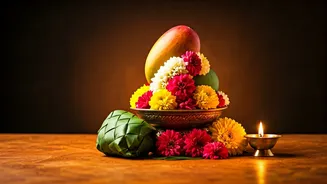
The celebration of Bohag Bihu in 2026 promises a dazzling spectacle of Assamese culture, with vibrant displays of tradition and community spirit. Streets and villages will come alive with people adorned in their finest traditional attire, including men in dhotis and gamosas, and women in elegant mekhela sadors. The air will resonate with the distinctive rhythms of the Bihu dance, a lively and energetic folk dance form. Traditional folk songs, known as 'Bihu Geets,' will narrate the stories and lives of the Assamese people, adding a rich narrative layer to the festivities. The symbolic act of lighting bonfires ('Meji') will bid farewell to the lingering chill of winter, while an abundance of traditional Assamese delicacies, such as 'Larus' (sweet rice balls), 'Pithas' (rice cakes), and various 'Xaak' (vegetable dishes), will be shared, fostering a spirit of communal joy and culinary celebration.
Unity and Gratitude
More than just a series of rituals and celebrations, Bohag Bihu embodies a profound expression of gratitude towards the earth, nature's generosity, and the strength of community bonds. It serves as a powerful reminder of Assam's enduring cultural identity, where ancient traditions seamlessly blend with contemporary life. The festival acts as a unifying force, bringing together individuals of all ages to collectively appreciate the gift of life and the unparalleled beauty of Assam's diverse landscape. As Bohag Bihu approaches in 2026, the palpable excitement across Assam, from its bustling urban centers like Guwahati to its serene rural villages, underscores the festival's significance as a vibrant testament to the resilience of Assamese culture and its rich heritage.