


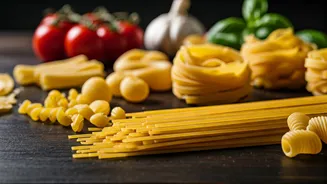

The Macaroni Magic
Macaroni, with its characteristic short, curved tube form, is a cornerstone of comfort food, particularly in baked dishes. Its hollow interior acts as
a miniature vessel, perfectly designed to capture and hold rich, creamy cheese sauces. This design ensures that with every bite, you experience an even distribution of luscious flavor and a satisfyingly gooey texture, making it ideal for classics like macaroni and cheese. While its absorbent nature is a boon for cheesy preparations, its tendency to become quite soft means it might not be the best choice for recipes where a firmer pasta bite is desired or in dishes featuring extremely rich, heavy sauces where it could feel overwhelming.
Penne's Purposeful Design
Penne pasta, recognizable by its diagonal-cut ends and often ridged exterior, is a frequent star in dishes featuring robust, creamy sauces. Its tubular shape, combined with its capacity to hold sauce both inside and on its surface (especially when ridged), makes it an excellent partner for dishes like Alfredo. This structure allows the pasta to effectively carry thick sauces, ensuring that each piece is well-coated with flavor, and that ingredients like vegetables or chicken are evenly distributed throughout the dish. The substantial bite of penne holds up admirably against rich sauces, providing a filling and satisfying meal experience, though its heartiness might be more than some are looking for in a lighter meal.
Spaghetti's Smooth Glide
The iconic long, thin strands of spaghetti are uniquely suited to lighter, more delicate sauces, such as those based on oil, garlic, or simple tomato preparations. Think of classic dishes like Aglio e Olio or a fresh Marinara. The slender shape allows these lighter sauces to coat the pasta evenly without becoming heavy or clumpy, contributing to a balanced and refined eating experience. While spaghetti excels at delivering subtle flavors, its structure isn't ideal for thick, chunky, or overly creamy sauces, which require a more robust pasta shape to carry their weight and texture effectively.
Fusilli's Flavorful Embrace
The delightful spiral twists of fusilli pasta are a culinary playground for sauces and small ingredients. This distinctive shape acts as a natural trap, capturing everything from vibrant pesto to small pieces of herbs, vegetables, and grated cheese within its nooks and crannies. The result is an explosion of flavor in every mouthful, with a satisfying texture that’s consistent throughout. Fusilli shines in both hot pasta dishes and cold pasta salads, where its ability to hold onto dressing and finely chopped additions is a significant advantage. However, with exceptionally thick or heavy sauces, the pasta can sometimes feel a bit dense.
Farfalle's Charming Texture
Farfalle, commonly known as bow-tie pasta, offers a delightful interplay of textures, making it a versatile choice for various pasta preparations. The central, thicker part of the pasta maintains a pleasant firmness, while the 'wings' or edges become softer and absorb sauce more readily. This contrast creates an engaging eating experience, and it pairs beautifully with creamy sauces or more innovative, fusion-style dishes. Its visually appealing shape also adds an aesthetic charm to the plate. However, careful cooking is essential, as uneven water absorption can lead to some parts being perfectly cooked while others are underdone.
Fettuccine's Rich Embrace
Fettuccine's broad, flat ribbons are perfectly engineered to cradle and showcase rich, indulgent sauces. This shape is traditionally paired with opulent, cream-based sauces, such as a classic Alfredo or a hearty mushroom cream sauce. The substantial surface area of fettuccine allows these luxurious sauces to adhere beautifully, creating a decadent and deeply satisfying dish. The result is typically a robust and filling meal, emphasizing bold flavors and a luxurious mouthfeel, making it an excellent choice for those who enjoy a more substantial and indulgent pasta experience.