






Northern River Hub
India's geography is intricately woven with its numerous rivers, serving as fundamental arteries for its economy, culture, and daily life. These vital
water systems, meandering through diverse terrains from plains to plateaus, are indispensable for agricultural irrigation, supporting countless livelihoods, and ensuring access to potable water for millions. Beyond their practical importance, these rivers are imbued with profound spiritual and historical significance, often forming the bedrock of ancient civilizations and continuing to be central to religious observances. When considering which Indian state possesses the most extensive river network, the answer might surprise many. While states renowned for their mountainous terrains might come to mind, it is actually Uttar Pradesh that holds this distinction, featuring a remarkable abundance of waterways.
UP's Waterways Abound
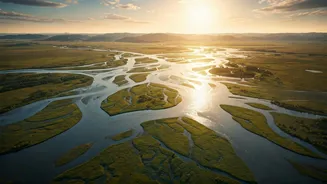
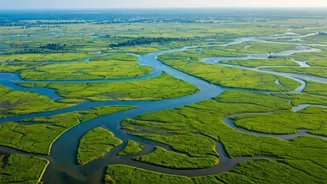
Uttar Pradesh stands out as the Indian state characterized by the highest concentration of rivers. Its strategic location in northern India, coupled with its expansive plains, makes it a natural nexus for a multitude of river systems. Some of the most significant and recognizable rivers gracing this state include the mighty Ganga and Yamuna, alongside the substantial Ghaghara river, and many others. These rivers are far more than just sources of water; they are deeply intertwined with the state's agricultural productivity, providing essential irrigation for its vast farmlands, and play a crucial role in its rich tapestry of religious customs and practices. Media reports suggest that the total count of rivers flowing through Uttar Pradesh surpasses the mark of 30, encompassing both major arteries and their numerous contributing tributaries.
Rivers and Landmarks
The presence of these numerous rivers has profoundly shaped the landscape and cultural identity of Uttar Pradesh, particularly evident in its iconic cities and their riverside features. Many cities within Uttar Pradesh are celebrated for their magnificent ghats, the steps leading down to the riverbanks, which serve as centers for spiritual activities and daily life. Varanasi, in particular, is globally renowned for its spiritual ghats along the sacred Ganga River, attracting pilgrims and visitors from around the world. Similarly, Prayagraj is famous for its Triveni Sangam, the sacred confluence where the Ganga, Yamuna, and the mythical Saraswati rivers are believed to meet, a site of immense religious importance. Adding to this allure, the world-famous Taj Mahal, an architectural marvel, is majestically situated on the banks of the Yamuna River in Agra, its beauty significantly enhanced by the river's presence.
Lifelines of the State
Ultimately, the rivers flowing through Uttar Pradesh are far more than geographical features; they are indispensable lifelines supporting millions of inhabitants. These waterways are fundamental to the state's economy, providing crucial resources for agriculture, ensuring a steady supply of drinking water to its dense population, and sustaining numerous livelihoods that depend directly or indirectly on riverine resources. Beyond their economic contributions, these rivers are deeply embedded in the cultural and religious fabric of Uttar Pradesh, holding sacred significance and inspiring traditions that have endured for centuries. Their continued presence and vitality are essential for the state's prosperity and the well-being of its people.