






Tulsi's Displeasure
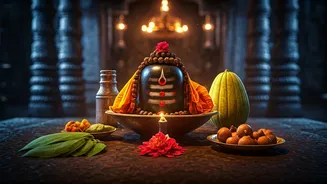
During your worship of Lord Shiva, particularly on significant occasions like Maha Shivratri, it’s essential to be mindful of the offerings. While many
items are considered auspicious, some are traditionally excluded to show reverence and adhere to ancient beliefs. For instance, Tulsi leaves, highly revered in Hinduism and strongly associated with Lord Vishnu, are generally not presented to Lord Shiva. A prominent legend suggests that offering Tulsi to Shiva may displease the deity. This is why devotees often opt for bel leaves, which are widely recognized as a favorite of Lord Shiva, making them a more suitable and pleasing choice for his worship. Understanding these nuances ensures your devotional practices are in harmony with established spiritual traditions and mythological narratives, honoring Shiva's unique divine persona and preferences.
Ketaki Flower's Ban
The Ketaki flower, also known as the screw pine blossom, is another item that is traditionally omitted from offerings to Lord Shiva due to a significant mythological account. The story goes that Lord Brahma and Lord Vishnu once engaged in a heated debate to determine their supremacy. During this dispute, the Ketaki flower is said to have falsely testified in Brahma's favor, leading Lord Shiva to curse it. As a consequence of this deception, the flower was declared unfit for his worship. Therefore, in any Shiva puja, you will find that Ketaki flowers are consistently avoided, maintaining the sanctity of the ritual and honoring Shiva's decree.
Coconut Water's Exclusion
While coconuts themselves are a common and auspicious item used in numerous Hindu rituals, the water from within is typically not offered to Lord Shiva. There are various interpretations for this practice, with some suggesting that coconut water is considered impure for his specific form of worship, possibly due to its association with fertility rites, which contrasts with Shiva's ascetic nature. Instead of coconut water, devotees commonly present pure water, cooling milk, or sweet honey. These alternatives are believed to be more in line with Shiva's divine essence, representing purity, nourishment, and the sweetness of devotion without the specific connotations sometimes attached to coconut water.
Kumkum and Turmeric
Two common items used in Hindu worship that are not offered to Lord Shiva are kumkum and turmeric. Kumkum, a vibrant vermilion powder, is deeply linked with Goddess Parvati and is a symbol of marital bliss and prosperity for married women. Lord Shiva, however, embodies detachment and asceticism, making kumkum inappropriate for his worship. Instead, devotees use vibhuti, or sacred ash, which signifies renunciation and spiritual purity, aligning better with Shiva's persona. Similarly, turmeric, while auspicious for many deities and associated with fertility and well-being, is not offered to Shiva. For him, sandalwood paste is preferred; its cooling properties are considered pleasing to the deity, representing calmness and spiritual solace.
Champa and Jaggery
Further expanding on the tradition of what not to offer Lord Shiva, Champa flowers are also avoided. Sacred texts indicate that these blossoms are not considered pleasing to him, and offering them might result in negative outcomes according to traditional beliefs. Devotees instead choose items like dhatura or white flowers, which are universally accepted as sacred to Lord Shiva. Additionally, when it comes to sweets, those made from jaggery are generally excluded from Shiva's offerings, even though milk, honey, and fruits are welcomed. The reasoning behind avoiding jaggery is rooted in the belief that it generates internal heat, which is considered unsuitable for Lord Shiva, who is revered for his cool, calm demeanor and association with the moon.