






Electromagnetic Magic Explained
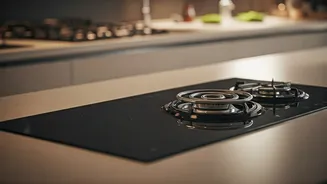
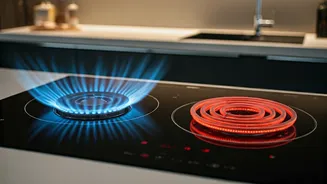
Unlike conventional gas stoves that rely on open flames, induction cooktops operate on a principle of electromagnetism, leaving their surface notably cooler.
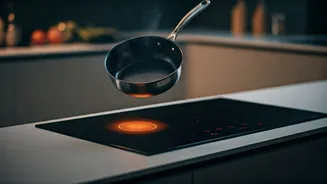
The magic happens beneath the smooth glass or ceramic top. A meticulously wound copper coil lies underneath, and when activated, it allows an alternating current to flow. This generates a rapidly oscillating magnetic field that passes through the glass without heating it. The cooktop's surface only warms up incidentally from contact with the hot pan itself. This method bypasses combustion entirely, offering a distinct cooking experience. The core of its functionality stems from Faraday's Law of Induction, a fundamental scientific principle that explains how changing magnetic fields can create electrical currents.
Cookware Compatibility Secrets
The unique nature of induction cooking means that not all pots and pans are suitable. The key lies in ferromagnetic materials, such as cast iron or certain types of steel, which respond effectively to magnetic fields. Induction works by creating eddy currents within the base of the cookware. These currents are induced when the pan, acting as an electrical conductor, is placed within the fluctuating magnetic field generated by the cooktop. For this to happen efficiently, the pan's base must possess magnetic properties. This is why many cookware items marketed for induction cooktops explicitly mention an 'induction base,' ensuring optimal performance and heat transfer.
Heating Through Resistance
Once eddy currents are generated within the ferromagnetic base of the pan, the heating process truly begins. Metals, particularly those used in cookware for induction, have inherent electrical resistance. As these swirling eddy currents move through the atomic structure of the pan's base, they encounter this resistance. This interaction converts the kinetic energy of the electrons into thermal energy, effectively heating the pan from within. This phenomenon is governed by Joule's Law of Heating. Interestingly, the law highlights that the heat generated increases with the square of the electrical current. This means a small increase in current can lead to a significantly larger increase in heat output, contributing to the speed and efficiency of induction cooking.
Unmatched Energy Efficiency
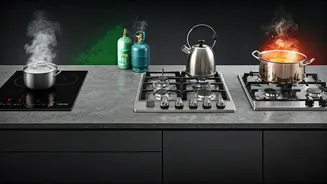
The direct heating of the pan itself makes induction cooktops remarkably energy efficient. Approximately 85% to 90% of the electrical energy consumed is converted directly into cooking heat. In stark contrast, traditional LPG stoves typically achieve only 40% to 50% efficiency. A significant amount of heat from a gas flame escapes into the surrounding air, which is wasted. Induction, however, precisely targets the heat at the base of the cookware, where it is needed most. This localized heating not only cooks food faster but also makes induction a safer and more sustainable alternative, especially when considering the volatility of fossil fuel supplies.