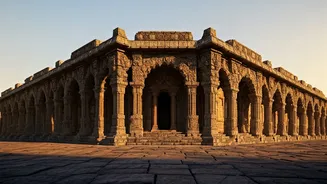







Temples: Cultural Significance
India's ancient temples stand as magnificent testaments to the country's rich cultural heritage. These structures are not merely places of worship; they
are also vibrant hubs that have, for centuries, shaped artistic expression, philosophical thought, and community life. The architecture, which varies considerably across regions, reflects distinct artistic styles, regional resources, and the beliefs of the people. Each temple often embodies specific religious narratives, with intricately carved sculptures, elaborate murals, and detailed iconography that portray stories from Hindu epics, Buddhist teachings, and other spiritual traditions. The very act of visiting a temple is often considered a pilgrimage, providing an opportunity for spiritual reflection, communal harmony, and a deep connection to history. These temples preserve ancient traditions, passing them down through generations and demonstrating the enduring power of faith and artistic innovation.
Architectural Marvels
The architectural diversity of Indian temples is breathtaking, representing centuries of development. Many temples feature elaborate structures with intricate carvings, showcasing the remarkable skill of ancient artisans. The styles vary significantly, from the Nagara style in North India, known for its curved towers, to the Dravida style prevalent in South India, recognized by its towering gopurams (gateway towers). The design of a temple often symbolizes the cosmos, with the central sanctum sanctorum (garbhagriha) representing the heart of the universe. The construction incorporates complex mathematical principles and astronomical alignments, highlighting the advanced knowledge of the builders. Materials used in the construction range from sandstone and granite to marble, creating structures that have endured for centuries. The use of pillars, domes, and ornate decorations further enhances the grandeur, making each temple a unique work of art and a marvel of engineering.
Spiritual Practices within
Temples in India serve as focal points for a multitude of spiritual practices, providing a space for devotees to connect with the divine. Rituals and ceremonies, often dating back centuries, are performed daily, shaping the spiritual lives of those who participate. The daily routine typically includes prayers (pujas), offerings of food and flowers, chanting of mantras, and the lighting of lamps. Many temples have specific festivals that celebrate deities and important events. Pilgrims often circumambulate the inner sanctum (pradakshina), a symbolic act of reverence, and seek blessings from the temple's deities. These practices not only provide personal spiritual fulfillment but also strengthen the bond between individuals and the community. The overall atmosphere within a temple instills a sense of peace, creating an environment that encourages introspection, worship, and the sharing of collective faith.
Key Temple Locations
India is home to numerous temples that are renowned for their historical and religious significance. The Meenakshi Amman Temple in Madurai, Tamil Nadu, showcases the Dravidian architectural style, boasting towering gopurams that are a spectacle of vibrant colours and intricate carvings. The Khajuraho temples in Madhya Pradesh are famous for their exquisite sculptures, which depict a blend of spirituality and artistry. The Jagannath Temple in Puri, Odisha, is another important pilgrimage site, drawing devotees from across the globe, especially during the annual Rath Yatra (chariot festival). The Golden Temple (Harmandir Sahib) in Amritsar, though a Sikh shrine, symbolizes the spirit of inclusivity. These temples, along with numerous others scattered across India, provide a fascinating insight into the country’s diverse spiritual and artistic traditions.
Protecting Heritage
The preservation of India's ancient temples is essential to safeguard the nation's cultural inheritance for future generations. Protecting these architectural and spiritual treasures involves a multi-faceted approach. Efforts involve restoration projects to repair damages, conserve historic materials, and stabilize the structures against environmental threats. The implementation of sustainable tourism practices helps control the impact of visitors on the temple sites. Awareness campaigns inform the public about the importance of preserving these historical landmarks. Collaboration between government agencies, religious organizations, and local communities ensures that preservation efforts are carried out effectively. The continued upkeep of these temples guarantees that future generations can experience their beauty, history, and spiritual depth, thus ensuring a lasting legacy of India's cultural heritage.