



Nostalgic Flavour Pairings
Actress Rashmika Mandanna has shared a charming glimpse into her childhood culinary preferences, revealing a fondness for what many would consider unusual
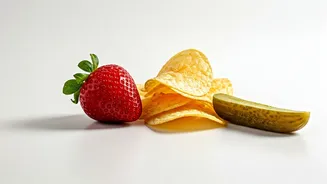
food combinations. Growing up, she was known for her adventurous palate, often pairing items like potato chips with curd rice or even instant noodles. These playful experiments with flavours and textures were a source of amusement for her father, who humorously acknowledged her unique talent for 'food mixing'. While Mandanna now adheres to a strict diet to maintain her physique amidst a busy filming schedule, these nostalgic pairings highlight an early inclination towards exploring diverse tastes and the comforting memories associated with them. Her openness about these unconventional tastes suggests a personality receptive to novel sensory experiences, a trait that often influences our willingness to try new things.
The Science of Taste
Our perception of taste is a sophisticated interplay between the taste buds on our tongue and the olfactory receptors in our nose, working together to create a complete flavour profile. This intricate process allows for unexpected sensory experiences when certain foods are combined. For instance, the contrasting elements of salty and sweet, like those found in a fast-food order of fries dipped in a creamy milkshake, can produce a surprisingly harmonious and complex taste sensation. This phenomenon underscores how the unique chemistry of different foods can interact to generate novel flavour synergies that might not be immediately apparent. Expert insights suggest that these flavour discoveries are not merely random but often tap into a deeper understanding of how our senses process and interpret culinary inputs, leading to enjoyable and memorable eating experiences.
Psychology and Familiarity
Beyond the purely sensory, our affinity for certain food combinations, even unconventional ones, is often deeply rooted in psychological factors and past experiences. When we encounter a flavour pairing that echoes a pleasant memory from our past, such as a childhood favourite like peanut butter and pickle sandwiches, it can evoke feelings of comfort and nostalgia. This emotional connection can drive a craving for these particular tastes, making them more appealing despite their unusual nature. For Mandanna, her childhood predilection for items like chips with spicy noodles or curd rice likely taps into these associations, linking the unique tastes to positive early memories. This highlights how our personal histories and the emotional resonance of food play a significant role in shaping our culinary preferences and our openness to exploring diverse flavour profiles.
Personality and Culture
Individual personality traits and cultural backgrounds significantly influence our acceptance of novel food pairings. Those who are naturally more adventurous and open to new experiences tend to embrace unusual food combinations with enthusiasm, finding the novelty itself exciting. Conversely, individuals who prefer routine and familiarity might find the idea of strange food pairings less appealing, sticking to more conventional tastes. Furthermore, what is considered 'weird' or 'off-putting' is highly subjective and culturally determined. For example, a fruit like Durian, known for its strong aroma, is a celebrated delicacy in Southeast Asia, demonstrating how exposure to different culinary traditions can broaden our palates and encourage us to be more receptive to a wider array of tastes and textures.