
Infrastructure Boost
The Union Budget 2026 emphasized the need for infrastructure development, allocating a substantial increase in public capital expenditure, estimated to
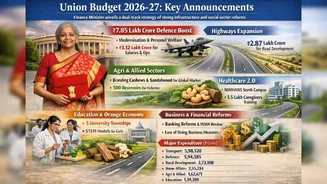
reach Rs 12.2 lakh crore. The government proposed several measures to improve connectivity and transport networks. Seven high-speed rail corridors were planned to be established, aiming to enhance the efficiency of passenger travel. Additionally, new dedicated freight corridors were proposed to optimize the movement of goods and boost logistics capabilities across the country. These infrastructure projects highlight the government's commitment to improving transportation networks and fostering economic growth.
Taxation and Incentives
Several tax-related measures were announced in the Union Budget 2026. The government reduced the Tax Collected at Source (TCS) rate for those pursuing education abroad and for medical purposes, aiming to facilitate smoother financial transactions. The budget also extended the deadline for filing revised Income Tax Returns (ITR) up to March 31, providing more time for taxpayers to comply with regulations. Furthermore, the Finance Minister proposed a scheme aimed at supporting small taxpayers. The aim was to ensure compliance and support the financial requirements of this significant segment of the population. The government also reduced the tariff rate on all dutiable goods imported for personal use.
MSME and Economic Zones
The budget included a three-pronged strategy aimed at supporting Micro, Small, and Medium Enterprises (MSMEs), focusing on providing economic stability and growth. A special one-time measure was proposed for Special Economic Zones (SEZs), allowing for specific financial benefits to boost their operations. The budget included the launch of the India Semiconductor Mission 2.0. This reflected a commitment to technological advancements and industry growth. Additional schemes for the enhancement of construction and infrastructure equipment were proposed. These initiatives are important for the overall economic growth of India.
Social Sector Initiatives
The Union Budget 2026 introduced several initiatives in the social sector. The budget proposed setting up 3 new All India Institutes of Ayurveda to improve healthcare infrastructure. A significant allocation was made for the Bio Pharma Shakti initiative with an outlay of Rs 10,000 crore. This initiative highlighted the government's support for the pharmaceutical industry and research and development. In the education sector, the budget proposed the establishment of AVGC (Animation, Visual Effects, Gaming, and Comics) Content Creator Labs in 15,000 secondary schools. The government also proposed a new scheme for the promotion of the coconut sector. Furthermore, a new scheme was announced to support states in setting up 5 regional hubs. These measures highlighted the government's focus on social welfare, skill development, and regional growth.
Other Key Highlights
The Union Budget 2026 included various other important announcements. The Finance Minister proposed interventions in six key areas, underlining a holistic approach to address various challenges. The government planned to increase investment for PROI from 5% to 10%. The budget also focused on environmental sustainability, with a proposed outlay of Rs 20,000 crore in Carbon Capture Utilization and Storage technology. Furthermore, measures were proposed for motor accident claims. The budget included the launch of Bharat Vistar - Virtually Integrated System and the Khelo India Mission. These various initiatives showcase a commitment to balanced and inclusive growth, covering a broad spectrum of sectors and addressing various needs of the population.