


Seal in the Heat
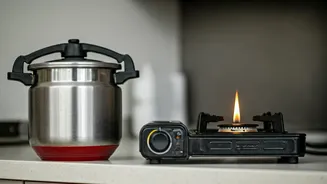
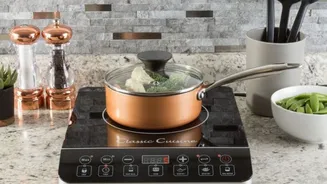
A fundamental yet often overlooked practice for saving cooking gas is to consistently use a lid on your cookware. By trapping heat and steam within the
pot, food cooks more rapidly and uniformly. When heat escapes, your stove is compelled to remain on for extended periods, leading to increased gas consumption. Employing lids on your pans and pots is a straightforward method to substantially shorten cooking durations and conserve your LPG supply, making your cylinder stretch further.
Burner and Pot Harmony
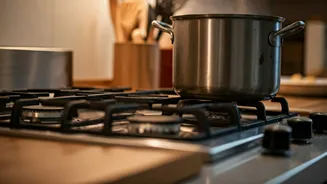
Many gas stoves feature burners of varying sizes, yet a common habit is to default to the largest burner for most cooking tasks, which is inefficient. When a small vessel is placed on a large burner, the flame extends beyond the pot's base, wasting considerable energy. The key is to match the burner size to your cookware: utilize smaller burners for smaller pots and reserve the larger ones for bigger vessels or more substantial cooking projects, thereby optimizing gas usage.
Soaking for Speed
Significantly reduce your reliance on the gas stove by soaking staples like rice, lentils, and pulses before cooking. Pre-soaking allows these ingredients to absorb water and soften, dramatically cutting down the time they need to cook on the burner. Even a preliminary soak of 30 minutes to an hour can lead to considerable savings in both cooking time and LPG consumption, a simple preparation step with a big impact.
Chop for Efficiency
The size at which you prepare your vegetables plays a crucial role in cooking efficiency and gas consumption. Larger vegetable pieces require more time and energy to soften and cook through. By cutting vegetables into smaller, uniform pieces, you facilitate faster and more even cooking, which in turn minimizes the amount of time your stove needs to be on, thus saving gas.
Batch Cooking Brilliance
Consider the cumulative effect of multiple cooking sessions throughout the day. Turning on your stove repeatedly for individual dishes can consume more gas than necessary. A more efficient approach is to plan your meals and cook multiple dishes simultaneously. For instance, prepare your rice, vegetables, and dal in a single cooking session rather than spreading them out, thereby consolidating your gas usage.
Gentle Heat Post-Boil
A common error in cooking is maintaining a high flame even after food has reached a boiling point. Once your dish is boiling, reducing the heat to a gentle simmer is sufficient to continue the cooking process. Keeping the flame on high at this stage is purely wasteful, consuming extra gas without accelerating the cooking, leading to unnecessary depletion of your cylinder.
Sparkling Burner Care
The cleanliness of your gas burner directly impacts its efficiency. Food debris and grease can obstruct the burner holes, leading to uneven flames and less effective gas combustion. Regular cleaning of your burners ensures a consistent, clean blue flame, promoting better gas utilization and optimizing your stove's performance, which translates to gas savings.
Flame Meets Vessel
A frequent oversight involves using cookware that is too small for the burner's flame. When the flame flares out beyond the base of the pot, a substantial amount of heat is lost to the surrounding air. To maximize heat transfer and cooking efficiency, it's vital to select utensils whose base dimensions are appropriate for the burner size, ensuring most of the heat is directed into the cooking process.
Flat Bottom Advantage
Opt for flat-bottomed cookware as it offers superior heat absorption from the burner compared to rounded-bottom alternatives. These vessels sit evenly on the stove, allowing heat to distribute more consistently across the entire base. This improved heat transfer cooks food more quickly and efficiently, requiring less gas to achieve the desired results.
Residual Heat Mastery
Leverage the power of residual heat to your advantage. Many dishes continue to cook for a short period even after the gas is turned off, due to the heat retained within the cookware and food. By switching off the burner a minute or two before your dish is completely done, you can utilize this stored heat to finish the cooking process, thus saving a small but significant amount of gas.