




The Luminous Pink Moon
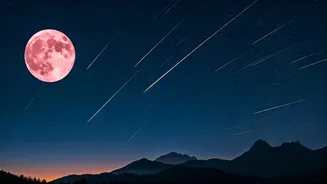
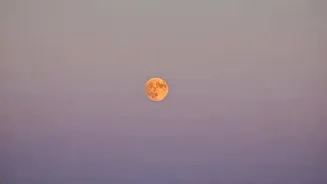
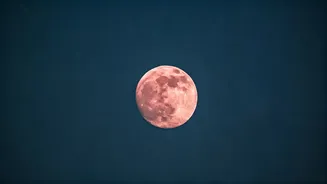
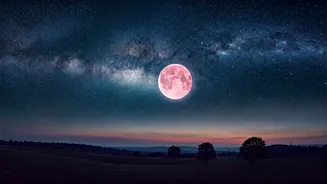
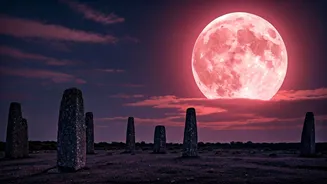
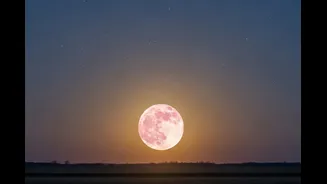
As spring's first full moon graces the sky at 10:12 PM ET, it will be affectionately known as the "Pink Moon." This celestial event derives its name not
from its colour, but from the vibrant moss pink flowers that typically bloom in North America around this time. Adding to its allure, the moon will be positioned at its closest orbital point to Earth, bestowing upon it a "supermoon" appearance. This proximity will render it approximately 15% brighter and visibly larger than a standard full moon, creating a truly magnificent spectacle for all to behold. Stargazers can anticipate an exceptionally brilliant and grander lunar display, making it a prime opportunity to appreciate the moon's majestic presence in the night sky.
Mercury's Morning Zenith
Experience Mercury at its most accessible in the pre-dawn sky. This elusive planet will achieve its farthest point from the Sun, appearing higher and clearer in the eastern horizon just before sunrise. Typically, Mercury's proximity to the Sun makes it challenging to observe, often lost in the Sun's glare. However, this particular alignment offers astronomers an excellent window to study its surface features and tenuous atmosphere. This phenomenon provides a unique chance to catch a glimpse of the solar system's innermost planet, offering valuable insights for those interested in planetary science and observation.
A Brilliant Sun-Grazer Comet
Anticipate the appearance of a remarkable "sun-grazing" comet, predicted to sweep incredibly close to our Sun, within a mere 850,000 miles. As this celestial visitor encounters the Sun's intense heat, its icy composition will vaporize, generating a brilliant, luminous coma and an expansive tail. Should the comet maintain its structural integrity during this close approach, it has the potential to evolve into a truly spectacular "Great Comet." Such an event could render it a breathtaking sight visible to the naked eye in the morning sky, offering an unparalleled opportunity to witness the dynamic beauty of cometary activity.
Planetary Confluence
A rare and captivating planetary alignment will unfold as Mercury, Mars, Saturn, and Neptune congregate in close proximity within the celestial sphere. While their visual closeness in the sky is striking, it's important to remember they remain separated by vast cosmic distances. These infrequent planetary gatherings are highly valued by astronomers, as they provide crucial opportunities for studying the solar system's dynamics and for precisely calibrating sensitive astronomical instruments. Observing such an event offers a unique perspective on the orderly, yet often surprising, ballet of our planetary neighbours.
Moon, Venus, Pleiades
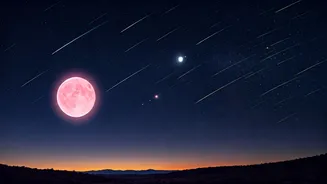
Prepare for a visually stunning celestial tableau as the Moon, Venus, and the enchanting Pleiades star cluster converge into a remarkably close grouping. This beautiful conjunction offers a captivating sight for both casual observers who simply appreciate the night sky's beauty and seasoned astronomers engaged in the meticulous study of planetary movements and celestial configurations. Such alignments highlight the intricate dance of celestial bodies and provide memorable moments for anyone looking upwards. The apparent nearness of these distinct celestial objects creates a breathtaking visual spectacle, underscoring the vastness and elegance of the cosmos.
Lyrid Meteor Shower
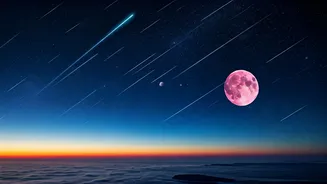
The Lyrid meteor shower is set to illuminate the night sky, originating from the cosmic dust trail left behind by Comet Thatcher. As Earth traverses this debris field, minute particles encounter our atmosphere at astonishing speeds of 110,000 mph, disintegrating in brilliant streaks of light. This meteor shower boasts an ancient legacy, having been observed for over 2,700 years, making it one of the most historically documented celestial phenomena. Witnessing the Lyrids is an opportunity to connect with a tradition of stargazing that spans millennia, offering a glimpse of the universe's continuous cosmic events.
Whirlpool Galaxy's Peak
April presents the optimal period for observing the majestic Whirlpool Galaxy, also catalogued as Messier 51. Located approximately 31 million light-years away, this grand spiral galaxy is currently engaged in a gravitational dance with a smaller companion galaxy, NGC 5195. This dynamic galactic pairing provides an exceptional chance for astronomers to delve into the intricate processes of star formation occurring within the spiral arms of galaxies. Viewing the Whirlpool Galaxy at its peak visibility allows for detailed study of galactic interactions and the birth of new stars.
Aurora Season Finale
As daylight hours lengthen with the onset of spring in the Northern Hemisphere, the increased ambient light will unfortunately diminish the visibility of the Northern Lights. Despite ongoing solar activity, the auroras will gradually fade from view. This marks the conclusion of the traditional aurora viewing season for regions within the Arctic Circle. While the stunning displays may become less apparent, the underlying solar processes continue, a reminder of the dynamic forces at play beyond our atmosphere.