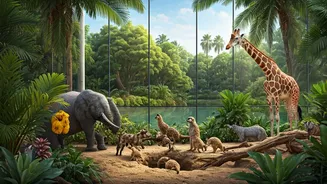








A Tale of Two Zoos
Berlin stands alone as the sole metropolis globally featuring two extensive, fully operational zoological parks. This distinctive situation traces its
origins back to the division of the city during the Cold War. The original Berlin Zoological Garden, established in West Berlin, spurred the East to inaugurate Tierpark Berlin in 1955. While Tierpark Berlin is recognized for its expansive grounds and picturesque park-like setting, the Zoologischer Garten—Zoo Berlin—remains the undisputed world leader in terms of the sheer variety of species housed within a single facility.
Aquarium's Aquatic Wonders
Opened in 1913, the Berlin Zoo's onsite Aquarium Berlin ranks among the planet's most biodiverse public aquariums. Spread across three levels, it is home to over 9,000 creatures, from formidable blacktip reef sharks swimming in a grand coral ecosystem to an impressive dedicated hall showcasing a variety of crocodilians. The uppermost floor is equally renowned for its 'insectarium', presenting one of Europe's most comprehensive collections of insects and reptiles, offering a fascinating glimpse into the smaller, often overlooked, world of invertebrates and cold-blooded species.
The Majestic Panda Garden
Currently, Berlin is the exclusive destination in Germany where visitors can behold Giant Pandas. Inaugurated in 2017 by then-Chancellor Angela Merkel and Chinese President Xi Jinping, the Panda Garden is a $5.4 million, vast habitat meticulously designed to replicate the misty mountainous forests of China. This sanctuary is the proud home of the celebrated panda pair, Meng Meng and Jiao Qing, and has achieved a significant conservation success with the birth of panda cubs, marking a pivotal moment in efforts to preserve this endangered species globally.
Pioneering Rhino Conservation
Beyond its role as a popular attraction, Berlin Zoo functions as a vital global research center. It plays a preeminent part in the BioRescue initiative, an international collaborative undertaking aimed at preventing the extinction of the Northern White Rhino. With only two female specimens of this species remaining on Earth, scientists stationed at the zoo are actively engaged in pioneering advanced reproductive technologies and stem cell research, striving to ensure the survival of this majestic mammal for future generations.
World's Species Champion
While numerous zoos exist worldwide, and many countries host multiple facilities, the title of the 'world's largest zoo by species' belongs to Berlin Zoological Garden, not North Carolina, despite the latter's vast size. Often, discussions about large zoos focus on land area, but Berlin Zoo holds a more distinguished record: the highest number of distinct species housed in a single location. This 180-year-old institution is a global nexus of biodiversity and conservation, proudly exhibiting approximately 1,200 species and over 20,000 individual animals.
Iconic Elephant Gate
The Elefantentor, or Elephant Gate, situated on Budapester Straße, is arguably the most photographed entrance at any zoo globally. Originally erected in 1899, this elaborate sandstone portal features two colossal, recumbent elephants and a characteristic pagoda-style roof. Although the initial structure was lost during World War II, it was meticulously restored in the 1980s and now stands as an enduring symbol of the zoo's resilience and historical continuity.
Aviary's Free-Flight
One of the zoo's most technologically advanced enclosures is the World of Birds. Departing from conventional cages, this innovative facility incorporates free-flight halls. These allow visitors to immerse themselves within habitats where a variety of tropical and European bird species can freely fly overhead. Integrated interactive learning stations provide insights into bird anatomy and migratory patterns, while specially designed dark sanctuaries offer a unique environment for nocturnal species, such as the rare Northern Brown Kiwi.
Optimal Visiting Times
To fully appreciate the tranquil ambiance of the zoo, selecting the right time to visit is crucial. The most favorable conditions are generally found during Spring, specifically April and May, or in Early Autumn, between September and October. During these periods, the weather is pleasantly mild, and the peak summer tourist crowds have dispersed. Furthermore, these cooler temperatures often encourage many of the animals to be more active and visible compared to the heat of midday in the summer months.