





A Celestial Calendar
April 2026 promises a breathtaking showcase in the night sky, offering a remarkable array of astronomical phenomena for enthusiasts and casual observers
alike. This month, the cosmos is set to deliver a series of captivating events, ranging from lunar delights to the distant glow of galaxies. Among the highlights is the occurrence of the Pink Moon, a widely anticipated event that draws attention not just for its beauty but also for its historical and cultural significance. Beyond the moon's enchantment, the sky will also present opportunities to witness distant celestial bodies, challenging us to look deeper into the universe. The month’s lineup is meticulously curated to provide a diverse viewing experience, ensuring that there is something to awe every stargazer. The sheer variety of events underscores the dynamic nature of our universe and the continuous opportunities it presents for exploration and wonder. From easily observable events to those requiring a bit more effort, April 2026 is poised to be a memorable month for anyone with an eye on the heavens.
The Enchanting Pink Moon
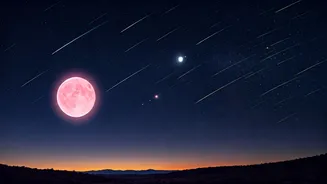
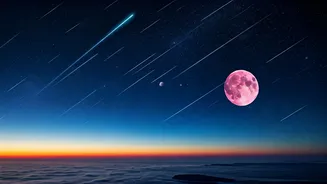
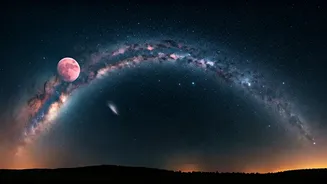
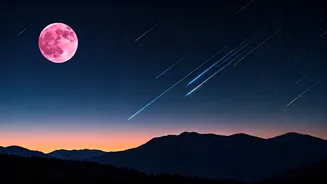
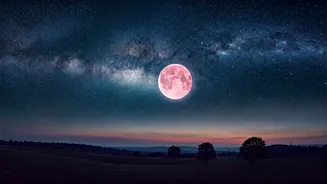
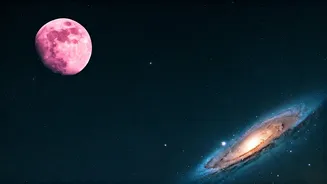
The April 2026 sky will be graced by the much-anticipated Pink Moon, a spectacle that captivates observers annually. Contrary to its name, the Pink Moon does not typically appear in a rosy hue; its name is derived from the wild ground phlox, a flower that blooms in abundance during springtime in North America, signaling the arrival of warmer seasons. This full moon, occurring in April, offers a magnificent display as it rises above the horizon, often appearing larger and more luminous than at its zenith. Its gentle glow illuminates the night, creating a serene atmosphere for those who venture out to witness it. The Pink Moon serves as a significant marker in many cultural calendars, often associated with renewal and growth, reflecting the season it appears in. Observing this lunar event provides a moment of connection with nature's cycles and a chance to appreciate the moon's ethereal beauty against the dark canvas of the night sky. It's an accessible event for most, requiring only a clear view of the moon as it reaches its fullest phase, inviting a sense of wonder and calm.
Journey to Whirlpool Galaxy
Beyond our solar system, April 2026 presents a phenomenal opportunity to cast our gaze towards the distant Whirlpool Galaxy, also known as M51. This spiral galaxy, located approximately 23 million light-years away in the constellation Canes Venatici, is a magnificent celestial object that has fascinated astronomers for centuries. Its distinct spiral arms, clearly visible due to its nearly face-on orientation, make it a prime target for telescopic observation. The Whirlpool Galaxy is actually a pair of interacting galaxies; the larger spiral is gravitationally bound to a smaller companion galaxy, which is visible as a fuzzy blob just off the tip of one of the Whirlpool's arms. This interaction creates dramatic tidal tails and enhances the visibility of its structural features. For amateur astronomers, observing the Whirlpool Galaxy requires a telescope with a decent aperture and dark skies free from light pollution. Its appearance through a telescope is often described as a faint, swirling misty patch, but with magnification and good conditions, the intricate details of its arms and core can be discerned, offering a profound glimpse into the vastness and complexity of the universe.
More April Sky Wonders
April 2026 unfurls a rich tapestry of celestial events beyond the celebrated Pink Moon and the distant Whirlpool Galaxy, offering multiple points of interest for skywatchers. The month’s astronomical calendar is dotted with phenomena that cater to a variety of interests, from subtle atmospheric optics to more pronounced deep-sky objects. While specific details of other events in April 2026 are not provided, a typical April sky can offer meteor showers, planetary conjunctions, or even the chance to observe nebulae and star clusters with the aid of optical equipment. These additional events, when they occur, contribute to the month's allure, providing continuous opportunities for discovery. Each event, whether it’s a fleeting meteor streak or the steady glow of a planet, adds another layer to our understanding and appreciation of the cosmos. The cumulative effect of these various sky happenings transforms April into a prime month for astronomical exploration, inviting individuals to connect with the universe in profound ways through observation and learning.