





A Father's Playful Gesture
Actor Shoaib Ibrahim recently shared an endearing moment from his family life on his vlog, featuring his wife Dipika Kakar and their young son, Ruhaan.
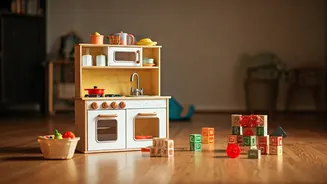
In a lighthearted exchange, Shoaib asked Ruhaan to assist him with washing grapes in the kitchen. During this interaction, Shoaib playfully remarked that he should have brought a toy kitchen set for his son and intended to buy one soon. Dipika, who is currently recovering, responded with a humorous doubt about Ruhaan's interest in miniature utensils, though Shoaib was later seen acquiring several toy kitchen sets for him. This seemingly casual exchange sparked broader discussions about parenting and the subtle ways children absorb societal norms regarding gender.
Expert Insights on Stereotypes
Psychotherapist and life coach Delnna Rrajesh highlighted the profound developmental implications of such everyday family scenarios. From a psychological viewpoint, these interactions can significantly shape a child's perception of gender roles, emotional maturity, and sense of responsibility. Children, even as young as two or three, are keen observers, internalizing patterns of behavior related to domestic tasks. They notice who engages in cooking, cleaning, nurturing, or fixing. When fathers actively participate in caregiving or household chores, it sends a powerful, subconscious message that these are human qualities, not limited by gender. This normalizes equality and provides children with a balanced model of family dynamics, challenging historical societal divisions where kitchens were seen as exclusively feminine domains and boys were steered toward different activities.
The Power of Play
Beyond the direct participation in chores, the role of play in a child's emotional development is paramount. Delnna Rrajesh emphasizes that activities like pretend cooking and engaging with toy kitchens are far more than simple entertainment; they are vital developmental tools. These forms of imaginative play significantly enhance a child's creativity, refine their fine motor skills, boost problem-solving abilities, and foster social awareness. When boys participate in nurturing play, such as cooking or caregiving, it cultivates empathy and emotional intelligence—qualities that are fundamental for forming healthy relationships later in life. Such engagement helps children understand and express emotions effectively, contributing to their overall well-being and social competence.
Practical Strategies for Parents
To actively dismantle gender stereotypes and raise emotionally intelligent children, parents can adopt several practical approaches. Involving children in everyday household chores, irrespective of their gender, is crucial. Simple tasks like washing produce, setting the table, tending to plants, or folding laundry help children develop a strong sense of responsibility and independence. It's also vital to avoid assigning gender labels to toys and activities; instead, encourage curiosity and exploration. Parents should consciously model shared responsibilities in their own relationship, demonstrating that partnership is built on cooperation. Furthermore, the language used around children matters immensely. Avoiding phrases like 'boys don't cook' or 'girls belong in the kitchen' and instead promoting messages of mutual support and the value of life skills for everyone can have a powerful, lasting psychological impact on a child's worldview.