

Always Cook With a Lid
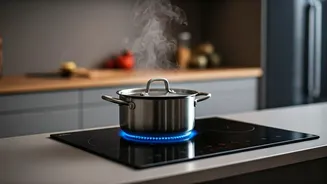
A fundamental yet often overlooked tip is to keep your cooking vessels covered. When you use a lid, it effectively traps the heat and steam generated within
the pot. This trapped energy accelerates the cooking process for your food, allowing it to cook faster and more uniformly. Without a lid, the heat dissipates into the surroundings, forcing your stove to remain on for a longer duration to achieve the desired cooking result, thereby consuming more LPG. By making a conscious effort to cover all your pots and pans during cooking, you can achieve substantial savings in both time and the amount of cooking gas used.
Match Burner To Pot Size
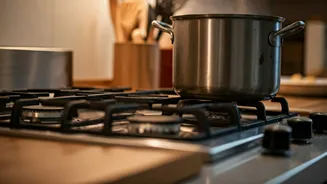
Gas stoves typically feature burners of varying sizes, yet many individuals habitually opt for the largest burner regardless of the utensil's dimensions. This practice leads to considerable wastage of cooking gas. When a small pot is placed on a large burner, the flame tends to spread outwards beyond the base of the vessel, heating the surrounding air rather than the food. The key to efficiency here is to judiciously select the appropriate burner. Utilize the smaller burners for smaller pots and pans, reserving the larger ones for bulkier vessels or when preparing substantial meals that require greater heat distribution.
Soak Grains Before Cooking
Implementing a simple pre-cooking step for your grains and pulses can yield significant gas savings. Items like rice, lentils, and beans, when soaked in water for a period before being placed on the stove, absorb moisture and soften considerably. This pre-softening dramatically reduces the time they need to spend on the burner to become fully cooked. Even a short soaking duration of 30 minutes to an hour can make a noticeable difference in reducing the overall cooking time. Consequently, you conserve both your valuable time and a substantial amount of LPG.
Smaller Vegetable Cuts
The size at which you prepare your vegetables has a direct impact on their cooking duration and, by extension, your gas consumption. Larger pieces of vegetables require more time to soften and cook through when exposed to heat. Conversely, by cutting your vegetables into smaller, uniformly sized pieces, you facilitate a faster and more even cooking process. This efficiency means the vegetables will be ready to eat in less time, thereby reducing the amount of LPG needed to prepare your meals.
Batch Cooking Strategy
Frequent ignition of the gas stove throughout the day for individual dishes can cumulatively consume more LPG than is strictly necessary. A more economical approach involves strategic meal planning to enable the preparation of multiple dishes in a single cooking session. For instance, you could simultaneously cook your rice, a vegetable dish, and a lentil preparation, rather than operating the stove multiple times for each item at different points in the day. This consolidated cooking approach significantly cuts down on overall gas usage.
Reduce Flame After Boiling
A common habit among cooks is to maintain a high flame even after the contents of the pot have reached a boiling point. However, this is an unnecessary waste of cooking gas. Once your food or water begins to boil, reducing the flame to a gentle simmer is sufficient to continue the cooking process effectively. Keeping the flame on high at this stage does not expedite the cooking further but solely leads to the depletion of LPG without any added benefit.
Maintain Clean Burners
The efficiency of your gas stove can be significantly compromised by dirty burners. Over time, accumulated food debris and grease can obstruct the small holes in the burner, leading to uneven flame distribution and inefficient combustion of gas. Regularly cleaning your burners is crucial. This ensures that the flame produced is consistently blue and steady, maximizing the heat transfer to your cookware and optimizing gas consumption.
Right Utensil-Flame Match
A prevalent kitchen error involves using cookware that is disproportionately small for the size of the burner flame. When the flame extends beyond the base of the pot or pan, a substantial amount of heat energy is lost into the open air, failing to contribute to the cooking process. To prevent this waste, it's essential to select utensils whose base size is commensurate with the burner's flame. This alignment ensures that the maximum heat generated by the burner is effectively utilized for cooking.
Prefer Flat-Bottom Cookware
For optimal heat absorption from your gas burner, opt for flat-bottomed cookware over those with rounded bases. Flat surfaces ensure even contact with the burner, allowing heat to distribute uniformly across the entire base of the vessel. This superior heat transfer property helps food cook more rapidly and efficiently. By choosing flat-bottomed pots and pans, you can reduce the amount of time the stove needs to be on, thereby conserving LPG.
Turn Off Early
Many dishes continue to cook even after the heat source is removed, thanks to the residual heat retained within the cookware and food itself. By intelligently switching off the gas flame a minute or two before your dish is completely finished, you can leverage this residual heat. This allows the final cooking to occur naturally, without consuming additional LPG. This simple adjustment can lead to noticeable savings over time.