





Water Restrictions Begin
The Brihanmumbai Municipal Corporation (BMC) has mandated a 10 percent reduction in water supply across Mumbai, commencing on May 15th. This decision stems
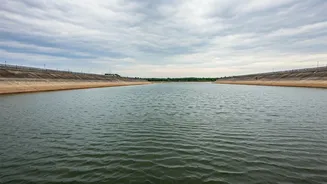
from concerns over diminishing water levels in the city's seven primary reservoirs, which are currently at 23.12% capacity. While this figure is higher than in the past two years (19.56% in 2025 and 14.38% in 2024), the civic body emphasizes the necessity of these precautionary measures to safeguard reserves ahead of the monsoon. Mumbai typically receives 3,850 million litres per day (MLD) against an estimated demand of 4,300 MLD, already necessitating reliance on private tankers for certain areas. The announced cut is expected to exacerbate existing shortfalls, prompting residential societies to devise and implement immediate conservation strategies to manage the reduced supply.
Societies Implement Conservation
In response to the impending water scarcity, residential societies are rolling out a series of water-saving initiatives. Jal Kiran Housing Society in Cuffe Parade has already halted pipeline water usage for car washing, instructing cleaners to use a single bottle of water and a wet cloth. Residents are also encouraged to switch from showers to buckets for bathing, and gardeners have been advised to water only plant roots, minimizing wastage. At Runwal Chestnut in Mulund, discussions are underway regarding the temporary closure of the swimming pool during the summer break. Evershine Towers in Malad is leveraging existing backup reserves of 5,000 litres, sufficient for about a week, but plans to suspend pool, gym, and banquet hall operations if the cut extends. These varied measures reflect a collective effort to adapt to the reduced water availability and ensure equitable distribution within communities.
Tanker Dependence Rises
Even before the official water cut, some Mumbai neighborhoods have increased their reliance on private water tankers due to inadequate supply. Residents in Chandivali’s Nahar Amrit Shakti have begun procuring tanker water after experiencing insufficient supply. Mandeep Singh Makkar, chairman of Synchronicity Housing Society, has alerted residents to conserve water and prepare for tanker dependence, also emphasizing the need to monitor tanker availability and prevent price inflation. In the Marine Drive area, residents have been facing shortages for months due to low water pressure, receiving 20-30% less supply. Vice-president Ashok Gupta anticipates the 10% cut will worsen this situation, with the non-potable tanker water being mixed into the main supply. The Mumbai Tanker Association anticipates a surge in demand, potentially by another 100 MLD, as the city's expanding high-rises continue to strain existing water infrastructure, which often supplies the same quantum of water as to older, lower-rise buildings.
Disproportionate Impact Expected
Activists are raising concerns that the brunt of the water cut will disproportionately affect the city's slum areas. Sitaram Shelar of Pani Haq Samiti highlights a significant disparity, stating that while affluent areas like Malabar Hill receive 400 litres per capita per day, slum pockets are allocated only 90 litres. He predicts that in upscale areas such as Malabar Hill and Bandra, the 10% cut will have minimal impact. Conversely, slum communities are expected to face substantial reductions, potentially up to 50%. Amita Bhide, dean of the School of Habitat Studies at TISS, points to Mumbai's historical water infrastructure, which has often excluded informal settlements. The system was designed for permanent structures, and large slum areas were never integrated into the main pipeline network due to their classification as temporary settlements, thus exacerbating their vulnerability during water shortages.