



Essence of Maha Shivaratri
Maha Shivaratri, celebrated on February 15, 2026, is a paramount Hindu festival dedicated to Lord Shiva, marked by a night of intense spiritual devotion,
fasting, and prayer. While regional customs may present variations, the fundamental practice revolves around spiritual discipline and heartfelt reverence for the deity. Devotees engage in a variety of practices, including meditation, chanting sacred mantras, visiting Shiva temples, and performing numerous rituals believed to please Lord Shiva. The core of the celebration lies in maintaining a state of spiritual alertness and devotion throughout the night, which can be punctuated by puja rituals performed either once or four times. This sacred occasion is a time for devotees to deepen their connection with the divine through acts of faith and austerity.
The Four Prahar Puja
The Maha Shivaratri festival is distinguished by its four-part night vigil, known as Prahar puja. These distinct periods offer specific opportunities for devotees to connect with Lord Shiva. The first Prahar is observed from 6:11 PM to 9:23 PM on February 15th. Following this, the second Prahar takes place from 9:23 PM until 12:35 AM on February 16th. The third Prahar is scheduled from 2:35 AM to 3:47 AM on February 16th, and the concluding fourth Prahar extends from 3:47 AM to 6:59 AM on the same morning. Each of these temporal divisions is considered sacred and is associated with unique devotional practices and rituals, allowing for continuous spiritual engagement throughout the night.
Sacred Abhishek Rituals
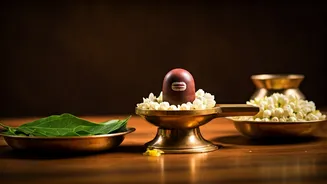
Central to the Maha Shivaratri four-Prahar puja is the 'Abhishek,' a ritualistic bathing of the Shiva Lingam with sacred substances. The specific ingredients used vary with each Prahar, adding a layer of symbolic depth to the observance. During the First Prahar, the Lingam is bathed with milk, symbolizing purity and nourishment. The Second Prahar involves an Abhishek with curd or yogurt, representing cleansing and fertility. The Third Prahar calls for an Abhishek with ghee (clarified butter), signifying prosperity and spiritual abundance. Finally, the Fourth Prahar concludes with an Abhishek using honey, symbolizing sweetness and divine grace. Following these sacred baths, the Shiva Lingam is adorned with Bilva leaves, believed to be highly pleasing to Lord Shiva, and then decorated with sandalwood paste, kumkum, and incense, accompanied by offerings of Vibhuti and Aak flowers.
Chanting and Breaking Fast
Throughout the entirety of the Prahar puja, a singular, powerful mantra resonates: 'Om Namah Shivaya.' This sacred chant is the bedrock of devotion during Maha Shivaratri, fostering a deep connection with Lord Shiva. Devotees are encouraged to chant this mantra with sincere devotion and focus, allowing its spiritual vibrations to permeate their being. The observance of the fast is crucial and should be broken on the following day. For maximum spiritual merit, it is advised to break the Shivratri fast after sunrise and before the conclusion of the Chaturdashi Tithi, ensuring the spiritual benefits of the night-long vigil are fully realized and integrated into daily life.