
Sensory Powerhouses: Elephant Feet
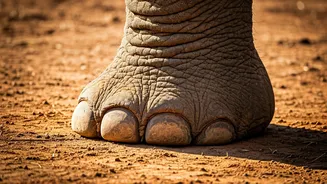
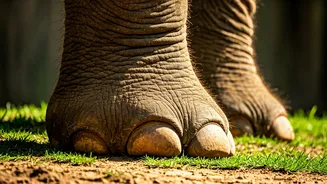
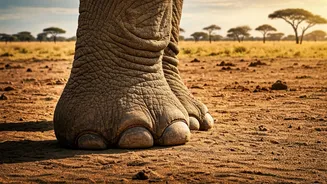
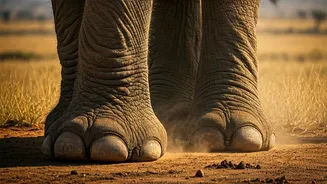
Elephants depend on their feet as sensory powerhouses. The elephant's feet are equipped with specialized receptors, which are extremely sensitive to vibrations.
This sensitivity enables the animal to perceive seismic signals, or ground vibrations. They can detect sounds through the ground before their ears ever pick them up, and can even feel the vibrations of distant herds of elephants, which assists them in communicating over long distances. Besides detecting potential danger, elephants also use their feet to find water sources. Due to their great sense of hearing, elephants can differentiate between the sounds of walking and the vibrations from seismic activity. These abilities are very useful for elephants as they navigate their surroundings and maintain their social networks.
Vibration Detection Abilities
The unique structure of an elephant's feet facilitates vibration detection. The feet act as a kind of amplifier, efficiently gathering vibrations from the ground. This mechanism allows elephants to perceive low-frequency sounds that would be inaudible to humans. The feet's structure also enables elephants to determine the direction and distance of the source of the vibrations. This helps elephants communicate with one another across long distances, and the information passed can be about anything from food sources to potential threats. Additionally, elephants can also detect other living creatures and the overall vibrations that come with their activities.
Feet vs. Ears: Sensory Roles
Comparing the roles of elephant feet and ears, it becomes clear that each organ plays a distinct part in how elephants perceive their environment. Ears are more effective for capturing airborne sounds, whereas feet excel in sensing ground vibrations. The feet support a complex social network, which provides opportunities for effective communication and survival. Ears and feet work together, allowing elephants to gather a complete understanding of their surroundings. This complete understanding helps elephants make better decisions, whether they are communicating with each other or navigating different surroundings, which in turn ensures survival. Without either sense, elephants may struggle to survive in their surroundings, as they are a team effort.
Elephant Social Network
The ability to detect vibrations through their feet supports the intricate social network of elephants. Elephants can use seismic communication to connect with other members of their herd and can even maintain contact with other groups over extensive distances. This capacity is critical in keeping the family together, especially over areas with sparse resources and potential dangers. The feet also play a role in identifying other elephants, which can foster social bonds and assist in protecting the vulnerable. Elephant calves, for example, can sense the vibrations caused by their mothers' footfalls, which can help strengthen the emotional attachment between them and the herd, fostering a sense of community.
Adaptations & Evolution
The evolution of the elephant's feet is a remarkable tale of adaptation. Over generations, the feet have evolved to maximize sensitivity and effectiveness in detecting vibrations. Specialized sensory cells in the feet gather information from the earth to send to the brain, which assists in effective communication and survival. The unique bone structure and cushioning pads have developed to absorb and transmit vibrations effectively. The overall design provides an amazing ability to sense things through the ground, demonstrating the power of the elephant's feet.
Protecting Their Feet
The feet are very important, so elephants have developed many ways to protect them. The thick pads protect against cuts, punctures, and the general wear and tear of travel. Also, elephants can use their toenails, which serve as protection from the ground. These adaptations are very important in protecting the feet from harm. Elephants also keep their feet clean by walking through water and mud. Elephants' feet also offer protection from both hot and cold ground temperatures. This careful care of the feet is vital to the elephant's well-being and overall survival. Understanding these aspects shows how important their feet are to their existence.