







A Taste of 'Shishir Ritu'
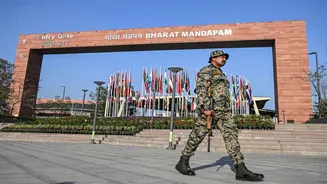
The recent India-AI Impact Summit 2026 culminated in a distinguished dinner hosted by Prime Minister Narendra Modi at the Bharat Mandapam, presenting a menu
meticulously crafted by ITC. This culinary experience was designed to harmonize India's deep-rooted agricultural traditions with its forward-thinking aspirations in artificial intelligence. The 'Shishir Ritu' theme, representing the transition from late winter to early spring, underscored the philosophy of 'Vikas bhi, Virasat bhi'—development intertwined with heritage. The menu prominently featured indigenous millets and produce with Geographical Indication (GI) tags, intended to provide both nourishment and a sense of restoration for the distinguished global attendees, including notable figures like French President Emmanuel Macron and Brazilian President Luiz Inácio Lula da Silva.
Vivid Beginnings: 'Varnila'
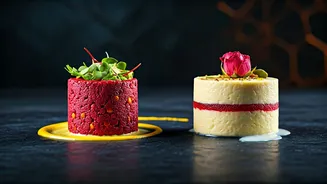
The gastronomic journey commenced with 'Varnila,' a vibrant appetizer designed to awaken the palate with a spectrum of colors and textures, echoing the lively essence of Indian street food. This dish featured delicate baby spinach crisps and spherical yogurt elements, offering a playful contrast. The flavor profile was a sophisticated interplay between the sweet and tangy notes of tamarind-date chutney and a refreshing cilantro relish, enhanced by a sprinkle of Old Delhi masala. Adding a unique crunch was a crisp made from multifloral Jowar, commonly known as Sorghum. This starter was calorifically balanced, with 213 kcal per 100 g, setting a sophisticated tone for the meal to follow.
Harvest Flavors: 'Sasya'
The main course, aptly named 'Sasya' or 'The Harvest,' transported diners to the Kumaon region of the Himalayas, celebrating its distinctive mountainous flavors. The centerpiece was 'Rajma Gilawat,' prepared using GI-tagged Munsyari Rajma, celebrated for its exceptionally creamy texture and subtly nutty undertones. Accompanying this were grains, presented as a fragrant pulao blending Pahadi rice with Jhangora, or Barnyard Millet. The dish was further enriched by 'Kumaoni Aloo Gutke,' tender potato pieces seasoned with the aromatic Himalayan spice Jakhya and served alongside a smooth tomato-anari (pomegranate) sauce. This main course contained 331 kcal per 100 g, offering a hearty and culturally rich experience.
Artisan Breads Showcase
Complementing the main course was an array of breads that paid homage to India's diverse baking traditions. Among these was 'Taftaan,' a leavened flatbread originating from Uttar Pradesh, infused with saffron for a delicate aroma and a light, flaky consistency. Also featured was 'Kashmiri Girda,' a traditional round bread characterized by its distinctive dimpled surface, baked fresh to embody the spirit of the Kashmir Valley. These breads provided a perfect vehicle for savoring the rich flavors of the main dishes.
Nature's Sweet Finale
The concluding course, 'Nisarga' (Nature’s Creation), artfully merged classic Indian sweet preparations with contemporary global pastry techniques. The highlight was the 'Rasmalai Tres Leches,' a delightful rendition featuring a creamy chena cake sponge, generously soaked in sweetened milk, offering a fusion of familiar textures with an exotic twist. Adding a textural contrast, this creation was served atop a Bajra (Pearl Millet) streusel, accompanied by a vibrant winter berry preserve. This dessert perfectly encapsulated the menu's theme of innovation rooted in tradition.
Beverages and Delights
To accompany the meal, guests had a choice of distinguished beverages reflecting India's rich cultural tapestry. Traditional Kashmiri Kahwa, a fragrant green tea infused with spices and nuts, was offered alongside the robust South Indian Filter Coffee and the delicate Darjeeling Tea. As a final sweet treat, the evening concluded with an Indian Rose and Mishri Gulkand Chocolate Leaf, a unique interpretation of the traditional paan, providing a final aromatic and subtly sweet note to the memorable dining experience.
Millet Mission Alignment
The strategic inclusion of various millets—Jowar, Jhangora, and Bajra—throughout the menu served a dual purpose, reinforcing India's commitment to its 'Millet Mission.' This conscious culinary choice was a subtle yet powerful demonstration to global leaders about the nation's dedication to sustainable and climate-resilient agricultural practices. By showcasing these nutritious and hardy grains, the summit's menu highlighted how traditional farming methods can be integral to building a robust, AI-driven food security plan for the future, aligning culinary excellence with national policy objectives.