





Cosmic Birth in Deccan
Approximately fifty millennia ago, the heavens delivered a dramatic gift to Earth. A colossal meteorite, estimated to weigh a staggering two million tons
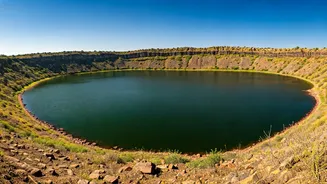
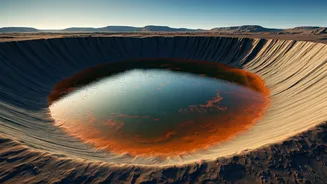
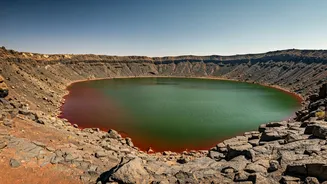
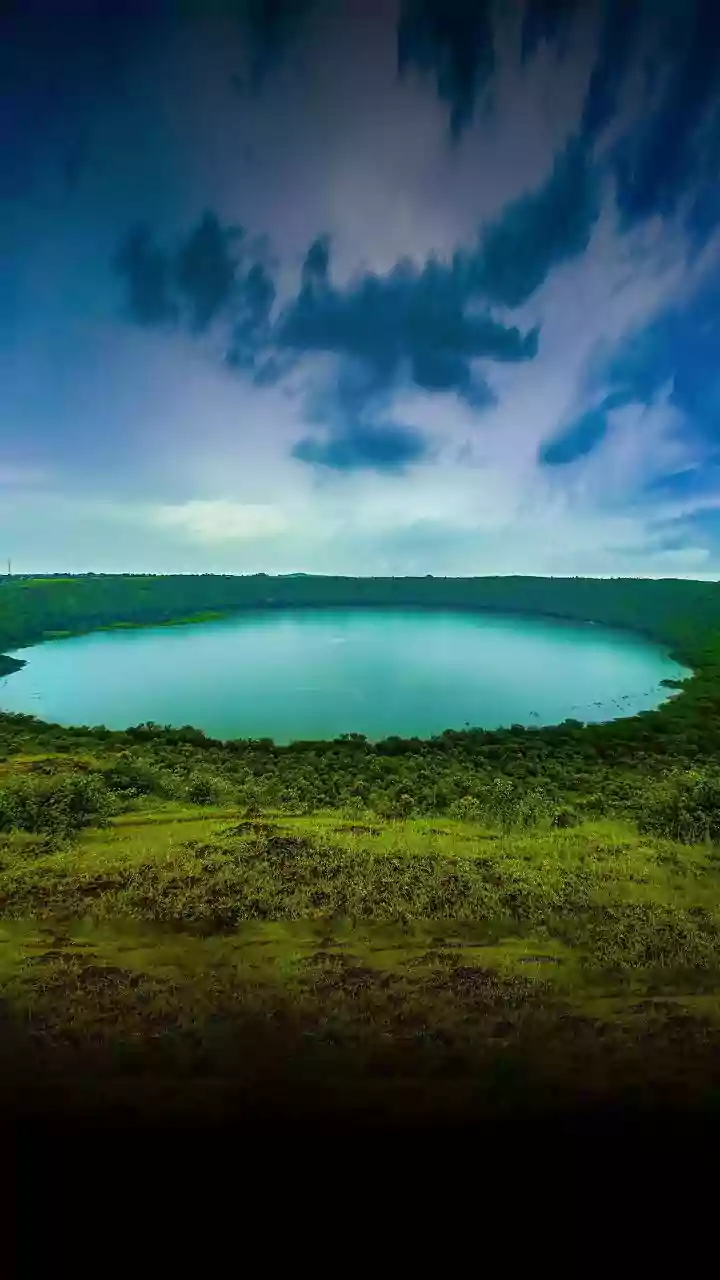
and hurtling at incredible speeds, impacted the ancient Deccan Plateau. This cataclysmic event carved a massive crater into the hard basaltic rock, an impact so significant it left an indelible mark on India's landscape. This geological wonder, Lonar Lake, is not merely a body of water; it's a vital scientific resource. Its formation in basalt, the very same geological material found extensively on Mars, has earned it the moniker 'earthly twin of Mars.' NASA scientists find Lonar invaluable for studying potential ancient Martian aquatic environments, effectively making it a terrestrial proxy for understanding the Red Planet's watery past. It's as if a piece of Mars has been preserved for us right here on Earth.
A World Apart
Descending into the Lonar crater feels like stepping into another dimension. The ambient air noticeably cools, and the clamor of the modern world above dissolves, replaced by an almost primal silence. Steep, verdant walls plunge downwards, swathed in vegetation so dense it evokes a sense of deep antiquity. Within this sheltered basin, the natural world operates under its own unique set of rules. Perhaps the most intriguing phenomenon is the lake's division into two distinct bodies of water, segregated into two concentric rings. One ring maintains a saline composition, while the other is distinctly alkaline. These two water types, despite their proximity, remarkably refuse to mix, presenting a captivating chemical enigma that has intrigued scientists for generations. This dual nature—both salty and fresh, simultaneously ancient and vibrantly alive—makes Lonar a truly extraordinary ecosystem.
The Pink Transformation
Lonar Lake is a master of spectacular, natural transformations, proving it's far from a static geological monument. In a widely observed event in 2020, the lake underwent a breathtaking metamorphosis, shifting from its usual emerald hue to a vivid, almost ethereal pink. This dramatic color change was not indicative of pollution or an environmental crisis, but rather a testament to the lake's vibrant biological activity. The phenomenon was attributed to an increase in salinity, which in turn stimulated the proliferation of rare microorganisms known as Haloarchaea. These extremophiles, thriving in such conditions, released pigments that bathed the entire lake in a stunning rosy glow. This event served as a powerful reminder that Lonar is a dynamic, living entity, capable of surprising us with its unique biological processes and its capacity for astonishing visual displays.
Echoes of History
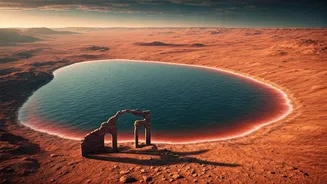
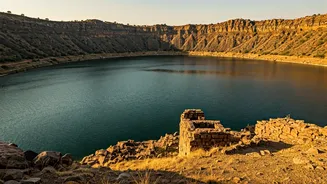
Adorning the lake's periphery are the 'Ghost Temples,' remnants of 12th-century Hemadpanti architecture. These ancient stone structures are slowly succumbing to the embrace of time, gradually being enveloped by the lake's sediment and the tenacious roots of surrounding vegetation. A profound sense of stillness pervades these ruins, where weathered stones have stood sentinel for close to a millennium. When viewed against the vast geological timescale of the crater's 50,000-year existence, these temples represent merely a fleeting moment, a recent echo in the crater's enduring narrative. They stand as a poignant reminder that while human civilizations and empires rise and inevitably fall, the ancient crater itself persists, an unwavering witness to the passage of ages.
Stardust Beneath Foot
Even the very ground beneath your feet at Lonar tells a compelling story of cosmic violence transformed into terrestrial beauty. A close examination of the soil may reveal 'maskelynite,' a glass-like substance formed under the immense heat and pressure of the meteorite's impact. You might also discover magnetic fragments that possess the peculiar ability to disorient compass needles, a fascinating draw for amateur astronomers and space enthusiasts. Every small rock and pebble found here serves as a tangible souvenir from the stars, a direct link to the celestial event that forever altered this part of the planet. It offers an unparalleled opportunity to physically connect with the exact moment in prehistory when Earth's surface was dramatically and irrevocably reshaped by an extraterrestrial visitor.
A Cosmic Perspective
As the sun dips below the crater's rim, casting elongated shadows across the water's surface, one gains a profound appreciation for Lonar's significance. It transcends being merely a tourist attraction or a scientific anomaly; it serves as a powerful educator on the vastness of time. For 50,000 years, this crater has observed the conclusion of the Ice Age, the rise and fall of numerous civilizations, and the ceaseless movement of the stars. Standing here evokes a sense of being at a unique crossroads between Earth and the cosmos. It's a deeply humbling reminder that our planet is not a static entity but a dynamic sphere constantly being shaped and influenced by the grand, ongoing processes of the universe.