







Drone Engagement Incident
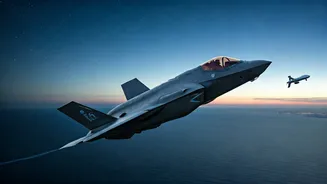
In a significant escalation of regional tensions, a United States F-35 fighter jet successfully neutralized an Iranian drone in the Arabian Sea. The unmanned
aircraft was observed flying aggressively in close proximity to the USS Abraham Lincoln aircraft carrier. Navy Captain Tim Hawkins, speaking for US Central Command, confirmed that the F-35C, operating from the Lincoln, engaged the drone in an act of self-defense to safeguard the carrier and its personnel. Fortunately, the incident resulted in no injuries to American service members and no damage to any US military assets. This event underscores the precarious security situation in the vital waterway, where naval forces maintain a constant vigil.
Geopolitical Undercurrents
This airborne engagement occurred against a backdrop of complex diplomatic efforts aimed at resuming nuclear talks between Iran and the United States. President Donald Trump had previously issued warnings about potential negative outcomes should no agreement be reached, particularly as US warships were being repositioned nearer to Iran. The presence of the Abraham Lincoln carrier strike group in the Middle East is part of a larger military buildup, a response partly triggered by Iran's forceful suppression of recent anti-government demonstrations. These protests were the most severe since the 1979 revolution, and while the US initially refrained from direct military intervention, President Trump has since pressed for nuclear concessions from Tehran, using naval deployments as leverage.
Escalating Regional Friction
Adding to the mounting friction, Iran's Revolutionary Guard Corps (IRGC) reportedly harassed a merchant vessel flying a US flag in the Strait of Hormuz shortly after the drone incident. According to Captain Hawkins, two IRGC boats and a Mohajer drone approached the M/V Stena Imperative, posing a threat of boarding and seizure. These actions highlight the ongoing challenges in maintaining maritime security and the simmering disputes between the US and Iran, fueled by stalled nuclear negotiations and Iran's assertive regional maneuvers. The White House Press Secretary reiterated that while the President remains committed to diplomacy, such efforts require reciprocal engagement.