



The Unsung Heartless
In the grand tapestry of life, the heart is often perceived as an indispensable organ, a tireless pump crucial for survival in most vertebrates. However,
the natural world presents us with captivating exceptions, creatures that have forged a path to existence without this vital organ. These animals demonstrate the ingenious adaptability of life, employing simpler or entirely different mechanisms to manage the essential transport of nutrients, oxygen, and waste throughout their bodies. Their existence challenges our conventional understanding of biological necessity and highlights the myriad ways organisms can flourish. This exploration unveils five such marvels, showcasing how life can thrive even in the absence of a beating heart.
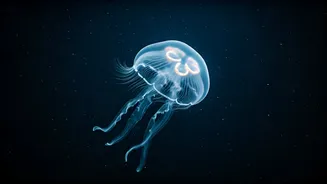
Jellyfish: Ancient Survivors
Jellyfish stand out as a prime example of life's resilience, remarkably existing without a heart, a brain, blood, or lungs. Their bodies, composed of over 95% water, facilitate a simple yet effective life. Oxygen absorption occurs directly through their permeable outer tissues, a process known as diffusion. For nutrient distribution, they utilize a rudimentary gastrovascular cavity, which also serves for digestion. As they gracefully pulse through the water, this basic system efficiently sustains them. Astonishingly, these seemingly simple organisms have navigated the planet's oceans for an impressive span of over 500 million years, a testament to the effectiveness of their unique biology.
Starfish's Water System
The echinoderms, commonly known as starfish, present another intriguing case of heartless survival. These marine invertebrates do not possess a heart or blood in the way vertebrates do. Instead, they operate using a sophisticated water vascular system. This network of fluid-filled canals acts as their internal transport mechanism, circulating essential nutrients and oxygen to all parts of their body. Seawater is drawn into the system through a specialized sieve-like opening and then channeled to power their distinctive tube feet, enabling movement and feeding. This peculiar system also grants starfish the remarkable ability to regenerate lost limbs, a biological feat that continues to captivate scientific inquiry.
Sea Anemones' Simple Design
Sharing a close evolutionary relationship with jellyfish, sea anemones also forgo the need for a heart, brain, or a complex circulatory system. Their bodily architecture is centered around a single, central cavity that ingeniously serves a dual purpose: both digestion of food and internal distribution of nutrients. Similar to jellyfish, oxygen is absorbed directly from their environment through their exposed surfaces. Nutrients are then circulated throughout their being without the need for a muscular pump. This streamlined approach is perfectly suited to their slow, sedentary lifestyle, proving that simplicity can be highly effective in ensuring survival.
Flatworms' Diffusion Advantage
Flatworms, belonging to the simplest phylum of animals exhibiting bilateral symmetry, are notable for their absence of a heart and a circulatory system. Their incredibly flattened bodies are key to their survival strategy; this morphology allows gases like oxygen and essential nutrients to permeate directly through their entire outer surface via diffusion. While this design inherently limits their maximum size, it supports remarkable regenerative capabilities. A small fragment of a flatworm can regrow into a complete, fully functional organism, a trait that has long fascinated biologists.
Sponges: Primal Life Forms
Representing some of the most ancient lineages in the animal kingdom, sponges embody an extreme form of biological simplicity. They lack not only a heart but also organized tissues and organs. Their unique physiology involves a continuous flow of water through their porous bodies. This water current serves as their lifeline, delivering oxygen and microscopic food particles directly to individual cells. Specialized cells are tasked with the removal of metabolic waste, all accomplished without any form of centralized circulatory system. This entirely passive survival strategy, reliant on environmental flow, has proven astonishingly effective for these primitive creatures.
Keys to Heartless Survival
The common thread uniting these remarkable heartless animals lies in their fundamental biological characteristics. They all possess simplified body structures, maintain slow metabolic rates, and primarily rely on diffusion or passive water flow for internal transport, rather than active circulation. By foregoing the energy-intensive development and maintenance of complex organs like a heart, these creatures effectively eliminate a significant biological demand. This allows them to thrive and persist using fundamentally different, yet equally successful, approaches to the essential processes of life, proving that evolution finds a way.