


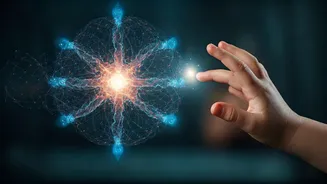

AI: A New Paradigm
Artificial intelligence is rapidly evolving from a theoretical concept into a tangible force reshaping our world. Rather than viewing AI as a direct competitor
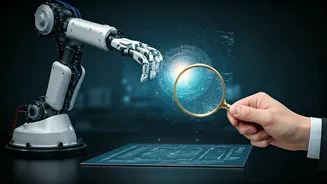
poised to usurp human roles, it's more accurate to understand it as a sophisticated tool designed to augment our existing capabilities. This shift in perspective is crucial for navigating the future of work and creativity. AI excels at processing vast amounts of data, identifying patterns, and executing repetitive tasks with unparalleled efficiency. These strengths, when combined with human ingenuity, critical thinking, and emotional intelligence, create a synergy that can unlock unprecedented levels of productivity and innovation across a multitude of sectors. The focus is moving from automation that replaces to augmentation that elevates.
Redefining Relevance
The advent of AI prompts a re-evaluation of what constitutes 'relevance' in professions and personal endeavors. As AI takes over routine and data-intensive tasks, the value of human skills shifts towards areas where AI currently falls short. This includes complex problem-solving, strategic decision-making, fostering interpersonal relationships, and exercising ethical judgment. Instead of fearing obsolescence, individuals and organizations should embrace the opportunity to cultivate these uniquely human attributes. The ability to adapt, learn continuously, and leverage AI as a partner will become paramount. This evolving landscape necessitates a proactive approach, focusing on developing skills that complement AI, thereby ensuring continued significance and impact in an increasingly automated world.
Collaboration Over Replacement
The narrative of AI as a job destroyer is an oversimplification of a more nuanced reality. The true power of AI lies in its potential to act as a co-pilot, assisting humans in achieving outcomes that would otherwise be unattainable or significantly more arduous. Consider fields like medicine, where AI can aid in diagnostics by analyzing scans faster and with greater precision than human eyes alone, allowing doctors to dedicate more time to patient care and complex treatment planning. In creative industries, AI can generate initial drafts or provide novel suggestions, freeing up artists and writers to refine concepts and inject their unique artistic vision. This symbiotic relationship enhances both efficiency and the quality of output, demonstrating that AI's primary role is to amplify human potential and redefine the very nature of professional contribution.