








Aerial Encounter
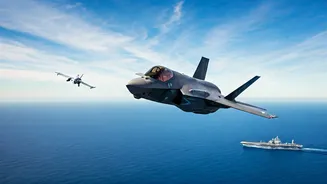
In a significant development within the Arabian Sea, an advanced US F-35 fighter jet was deployed to intercept and shoot down an Iranian drone. This drone had
ventured uncomfortably close to the USS Abraham Lincoln, an American aircraft carrier. According to reports from US Central Command, the drone exhibited aggressive behavior as it approached the carrier, prompting the F-35C pilot to take defensive action. The primary objective of this maneuver was to safeguard the carrier and its personnel from any potential threat. Fortunately, the engagement concluded without any injuries to American service members or damage to any US military assets, highlighting the precision and effectiveness of the defensive systems employed.
Broader Geopolitical Context
This aerial incident unfolded at a critical juncture in US-Iran relations, occurring simultaneously with diplomatic initiatives aimed at resuming nuclear talks between the two nations. President Donald Trump had previously issued a stern warning, suggesting that escalated US naval presence near Iran could lead to adverse outcomes if a diplomatic resolution, particularly regarding nuclear concessions, was not reached. The deployment of the Abraham Lincoln carrier strike group to the Middle East was part of a broader US military buildup. This buildup was a response to Iran's forceful suppression of anti-government protests, which had resulted in a significant loss of life and garnered international condemnation. While President Trump had initially refrained from direct military intervention in the protests, his administration subsequently demanded nuclear concessions from Tehran, utilizing the carrier deployment as a strategic leverage point.
Escalating Regional Friction
The situation grew more volatile with a separate incident in the Strait of Hormuz shortly after the drone engagement. Iran's Revolutionary Guard (IRGC) reportedly harassed a merchant vessel flying the US flag, the M/V Stena Imperative. Two IRGC boats, accompanied by a Mohajer drone, approached the ship with the apparent intention of boarding and seizing it. This action, confirmed by US Central Command Captain Tim Hawkins, further underscored the simmering tensions between the two countries. These tensions have been exacerbated over several months, fueled by the stalemate in nuclear negotiations and Iran's assertive actions within the region. The White House Press Secretary, Karoline Leavitt, reiterated that the decision to down the drone was made by CENTCOM due to its aggressive trajectory towards the USS Lincoln, emphasizing the President's continued commitment to diplomacy as a first resort, while also noting that such efforts require mutual engagement.