





A Leisurely Expedition
While India races towards high-speed rail with projects like the Mumbai-Ahmedabad bullet train, a different kind of railway magic exists in the Nilgiri
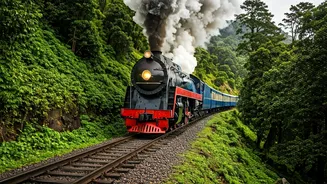
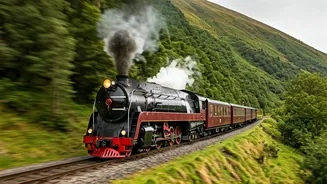
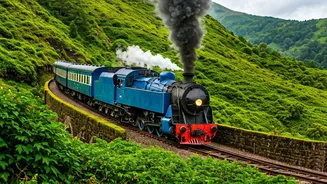
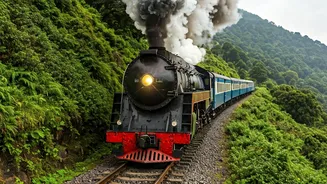
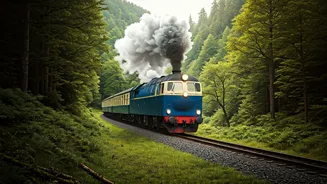
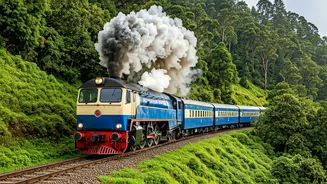
Mountains. The Nilgiri Mountain Railway offers an experience so leisurely that passengers can humorously consider stepping off for a photo and rejoining the journey without a hitch. This isn't a sign of inefficiency, but rather the core of its charm. The train's slow, deliberate pace through misty hills, alongside verdant tea estates and dense forests, transforms the journey into an unforgettable, almost dreamlike adventure, solidifying its reputation as one of India's most beloved and cherished rail experiences, providing a rare opportunity for travel at a truly unhurried pace.
The Unhurried Pace
The Nilgiri Mountain Railway, a celebrated icon of Indian rail travel, operates between Mettupalayam and Ooty, and is famously recognized as the nation's slowest train. Its average speed hovers around a mere 9 kilometers per hour, making the approximately 46-kilometer route take close to five hours to complete. However, this deliberate slowness is precisely what captivates travelers, elevating the journey from mere transit to a memorable event. The train's leisurely speed allows passengers to fully absorb the surrounding natural beauty, making the extended travel time an integral and enjoyable part of the overall experience rather than a drawback.
Engineering on Steep Slopes
The deliberate slowness of the Nilgiri Mountain Railway is a direct result of its challenging mountain terrain. The train must meticulously navigate the steep inclines of the Nilgiri Hills, traversing narrow tracks specifically designed for this environment. Several engineering elements contribute to its reduced speed: the tracks feature sharp, frequent curves and significant gradients, necessitating careful movement. Additionally, a specialized rack-and-pinion system is employed on the steeper ascents to ensure traction and safety. The route itself is a testament to early 20th-century engineering, punctuated by numerous tunnels, bridges, and winding turns that demand a slow, steady progression.
A UNESCO Heritage Marvel
Recognized globally for its historical and engineering significance, the Nilgiri Mountain Railway is a distinguished member of the UNESCO-listed Mountain Railways of India heritage network. It stands as an exceptional example of mountain railway construction from its era. Erected in the early 1900s, the route is an intricate passage through the mountains, featuring approximately 16 tunnels, more than 200 sharp curves, and over 250 bridges. As it traverses through dense woodlands, past cascading waterfalls, and alongside sprawling tea plantations, it offers a tangible link to a bygone era of railway development and a captivating glimpse into India's rich industrial heritage.
Silver Screen Stardom
The allure of the Nilgiri Mountain Railway extended beyond its scenic route and engineering prowess when it gained international fame through its appearance in the iconic Bollywood film 'Dil Se'. The memorable song 'Chaiyya Chaiyya', famously filmed atop the moving train with stars Shah Rukh Khan and Malaika Arora, introduced this unique railway to a global audience. This cinematic moment significantly boosted the train's legendary status and contributed to its widespread recognition, showcasing its picturesque journey to viewers worldwide and adding another layer to its fascinating narrative and appeal.
Enduring Traveler Appeal
Despite the advent of much faster road alternatives to Ooty, the Nilgiri Mountain Railway continues to draw travelers in significant numbers, primarily for the experiential aspect of the journey. Its persistent charm lies in the panoramic vistas of the Western Ghats, the vintage aesthetic of its wooden carriages, and the inherent heritage appeal. This slow passage through pristine, untouched landscapes offers a welcome respite from the hurried pace of contemporary life. For many, it's a nostalgic retreat, a chance to disconnect and savor a more traditional mode of travel that connects them with the natural beauty and a simpler time.
Optimal Travel Window
The most favorable period to embark on the Nilgiri Mountain Railway journey is between October and June. During these months, the weather in the region is typically pleasant, providing clear skies and excellent visibility for enjoying the majestic mountain panoramas. While the monsoon season, from June to September, transforms the landscape into a vibrant tapestry of lush greenery and dramatic misty vistas, it also carries the potential for heavy rainfall. This heavy rainfall can sometimes lead to disruptions or delays in train services, making the drier months a more reliable choice for an uninterrupted experience.
Accessing the Start
The journey on the Nilgiri Mountain Railway commences at Mettupalayam, a town that is conveniently accessible through various modes of transport. For air travelers, the nearest airport is Coimbatore International Airport, which is well-connected to major cities. Mettupalayam itself has rail connections, linking it to Coimbatore and other important railway networks across India. Road access is also straightforward, with Mettupalayam easily reachable from Coimbatore and other popular hill stations in the vicinity, ensuring a smooth start for visitors planning their heritage train adventure.