









A Familiar Arctic Dream
The United States, under Vice President JD Vance, is once again expressing significant interest in gaining more control over Greenland. This echoes a proposal
previously put forth by President Donald Trump, who articulated the view that the US's commitment to protecting the vast Arctic territory should translate into tangible strategic benefits for America. Vance recently articulated this sentiment, stating that Greenland's importance to US national security is undeniable. He posited that if the US bears the responsibility of safeguarding such a substantial landmass, it is only logical that the nation should derive some form of advantage from this protective role. This reiterates Trump's earlier stance, where he first publicly suggested the idea of purchasing Greenland from Denmark back in 2019. At that time, Trump highlighted the island's strategic Arctic location, its abundant natural resources, and its military defense value as key reasons for its acquisition. However, this initial proposal was met with strong rejection from Denmark's Prime Minister Mette Frederiksen, who labeled it 'absurd,' and Greenland's own leaders, who affirmed the territory was not for sale, leading to a temporary diplomatic strain and the cancellation of a planned state visit to Denmark. The discussion has since been revived, with Trump once again framing Greenland as a critical asset for American security in a rapidly evolving global landscape.
Strategic Arctic Importance
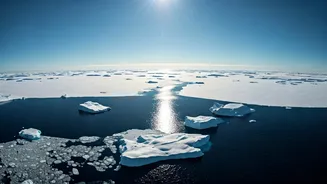
The renewed focus on Greenland is deeply intertwined with the shifting geopolitical dynamics of the Arctic region, especially in the context of climate change. As the Arctic ice recedes at an accelerated pace, new and vital shipping routes are becoming accessible to the north of both Canada and Russia. These emerging maritime pathways hold the potential to significantly boost global trade, but they also present an opportunity for rival powers to position their military forces closer to North America. Greenland's strategic geographical placement is therefore paramount for the United States. It allows for enhanced monitoring of submarine activities, provides a crucial vantage point for tracking missile trajectories over the North Pole, and helps secure key maritime chokepoints, such as the Greenland-Iceland-United Kingdom (GIUK) gap, which is vital for naval operations. The US vision for Greenland extends beyond mere defense; it aligns with broader national objectives, including countering the increasing influence of China in the race for critical rare earth minerals found in Greenland's subsoil. These minerals are indispensable for the production of advanced technologies, including electric vehicles and sophisticated weaponry. Furthermore, asserting US dominance in the Arctic is seen as a way to prevent or limit the growing presence of Russia and China in the region, thereby bolstering American influence in the Western Hemisphere.
Sovereignty Hurdles Ahead
Despite the significant strategic and economic arguments for increased US control over Greenland, the path forward is fraught with diplomatic complexities, particularly concerning sovereignty. The recent overtures by the Trump administration, now echoed by Vice President Vance, have reportedly strained relationships with key European allies within NATO, notably Denmark, which perceives these proposals as potentially coercive or bullying tactics within the alliance. While discussions continue, they face substantial obstacles rooted in Greenland's inherent right to self-determination and the principle of sovereignty. Vice President Vance's recent public comments followed a series of high-stakes meetings held at the White House in January 2026. These discussions involved Danish and Greenlandic officials and, according to reports, stalled over the fundamental issue of sovereignty, even as the US pushed for what they termed 'technical discussions' regarding potential acquisition. This situation underscores a core tension: the United States invests substantially in the protection of Greenland's vast territory and critical infrastructure, including its advanced Golden Dome missile defense system, while simultaneously seeking to enhance its defense control and secure access to the island's valuable mineral resources. The ongoing debate highlights the delicate balance between security interests, economic opportunities, and the recognized autonomy of Greenland and its close ties with Denmark.