






Manipur's Lifeline Lake
Situated in the vibrant state of Manipur, Loktak Lake stands as the preeminent freshwater body in Northeast India. More than just a scenic expanse, it functions
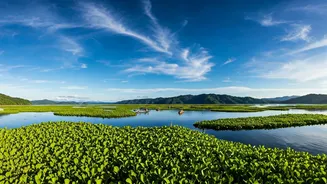
as the state's vital artery, sustaining local life through fishing and providing essential water for irrigation. The lake's surface is adorned with verdant patches, creating a picturesque tableau that draws admiration from visitors and serves as a crucial resource for the surrounding communities. Its shimmering waters are a testament to the natural beauty and ecological importance of this remarkable wetland, making it a truly captivating destination.
The Enigma of Phumdis
The defining characteristic of Loktak Lake is its extraordinary floating islands, known locally as 'phumdis'. These aren't mere rafts of vegetation; they are intricate, dense conglomerates of decaying organic matter, soil, and plant life that amass over time. These buoyant formations drift serenely across the lake's surface, with a significant portion of their mass submerged, much like an iceberg. The sheer scale of some phumdis is astonishing, with many large enough to support entire dwellings and small agricultural plots cultivated by the lake's inhabitants, showcasing an incredible adaptation of human life to this dynamic environment.
Life on Floating Homes
Within this surreal landscape, communities of fishermen have established a profound connection with Loktak Lake, building their homes on smaller phumdis. These floating residences, called 'phumsangs', are ingeniously constructed, allowing these communities to live in close proximity to their livelihood. They practice traditional, sustainable fishing methods, their way of life intricately woven into the ebb and flow of the lake's waters. The presence of these 'phumsangs' adds a distinct human narrative to the natural wonder of the floating islands, highlighting a harmonious coexistence between people and a unique environment.
World's Sole Floating Park
At the southeastern edge of Loktak Lake lies the Keibul Lamjao National Park, an area of approximately 40 square kilometers that holds a singular global distinction: it is the world's only national park situated entirely on a floating mass. This unique sanctuary was established with the primary objective of safeguarding its delicate ecosystem. The park's entire existence is dependent on a colossal phumdi that expands and contracts with the fluctuating water levels of the lake, making it a truly unparalleled wetland conservation area and a testament to nature's ingenuity.
A Dynamic Wetland Habitat
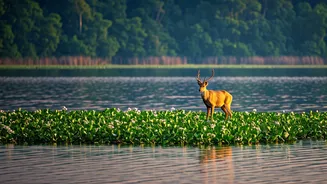
The floating meadows of Keibul Lamjao National Park create a habitat that is exceptionally dynamic and unlike any other found on Earth. The phumdis serve as vital feeding grounds, offering refuge and crucial breeding spaces for the park's diverse wildlife population, most notably the Sangai deer. The annual cycle of changing water levels drastically alters the park's surface, contributing to its ethereal and constantly evolving character. This continuous transformation makes the park a living, breathing entity, perfectly adapted to its watery surroundings.
Home of the Dancing Deer
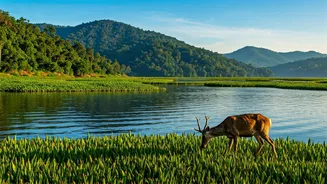
This remarkable park is renowned as the last remaining natural refuge for the critically endangered Manipur brow-antlered deer, affectionately known as the 'Sangai'. These graceful creatures, celebrated for their delicate movements across the spongy phumdis, possess specially adapted hooves that allow them to navigate the floating terrain with an almost balletic quality, earning them the moniker 'dancing deer'. Once facing the grim possibility of extinction, the Sangai has become a potent symbol of conservation success in Manipur, proudly serving as the state animal and a beacon of hope.
Vast Biodiversity Unveiled
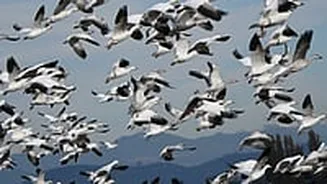
Beyond the iconic Sangai, Loktak Lake and its adjacent national park are teeming with a rich tapestry of life. The waters and surrounding vegetation provide sanctuary for species such as the hog deer and otters, while numerous species of waterfowl and migratory birds grace the skies, particularly during the winter months. The phumdis themselves are fertile grounds for a variety of aquatic plants and small aquatic animals, contributing to Loktak's status as a vital Ramsar wetland of international significance. This flourishing biodiversity not only sustains the natural world but also underpins the livelihoods of local communities.
Conserving a Natural Treasure
Recognized as a tentative UNESCO World Heritage site, Loktak Lake and Keibul Lamjao National Park are currently confronting significant environmental pressures. Fluctuations in water levels, pollution from various sources, and habitat degradation pose serious threats to this fragile ecosystem. The preservation of this jewel of Manipur is paramount, not only for the survival of the unique Sangai deer but also for the continuation of the entire extraordinary wetland environment. Visitors who experience this natural wonder depart with indelible memories of one of nature's most awe-inspiring creations.