





Greenland's Icy Reign
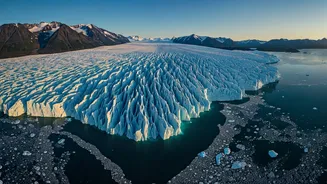
Topping the charts as the undisputed largest island on Earth is Greenland, an immense territory spanning an astounding 2,166,086 square kilometers. This
vast, ice-covered landmass plays a significant role in global climate systems and is home to unique Arctic biodiversity. Its colossal size means it dwarfs many countries, showcasing the sheer scale of geological formations that are not continental landmasses. The island's geography is dominated by a massive ice sheet, but its coastal areas support life and human settlements, a testament to resilience in a challenging environment. Greenland's position at the top of this list underscores the dramatic variation in island sizes, from the truly colossal to the more modestly proportioned.
New Guinea & Borneo's Grandeur
Following Greenland, we encounter two giants of the East: New Guinea and Borneo. New Guinea, measuring an impressive 785,753 square kilometers, is renowned for its incredible biodiversity and rugged interior, supporting a vast array of indigenous cultures and unique wildlife. It's a land of dense rainforests and soaring mountains. Close behind is Borneo, covering a substantial 743,330 square kilometers. This island is famous for its ancient rainforests, orangutans, and a rich tapestry of natural resources. Both islands are critical ecosystems, harboring a significant portion of the world's terrestrial species and presenting a compelling case for conservation efforts due to their ecological importance and immense geographical footprint.
Madagascar's Isolation & Baffin's Arctic Presence
Next on our journey are Madagascar and Baffin Island, each offering a distinct geographical and ecological narrative. Madagascar, the fourth largest island at 587,713 square kilometers, is celebrated for its unique evolutionary history, with a vast majority of its flora and fauna found nowhere else on Earth due to its long period of isolation. Its diverse landscapes range from dry forests to rainforests. In stark contrast, Baffin Island, the fifth largest with 507,451 square kilometers, is the largest island in Canada and lies within the Arctic Circle. Its terrain is characterized by mountains, fjords, and a cold, polar climate, making it a critical habitat for Arctic wildlife and a testament to the resilience of life in extreme environments. These two islands exemplify the broad spectrum of island environments.
Sumatra's Biodiversity & Honshu's Influence
Continuing our exploration, we arrive at Sumatra and Honshu, two islands of significant size and cultural or ecological importance. Sumatra, the sixth largest island with an area of 443,066 square kilometers, is a biodiversity hotspot within Indonesia, known for its lush rainforests, volcanic mountains, and iconic wildlife such as orangutans and tigers. It's a dynamic island with a rich cultural heritage. Moving to Japan, Honshu stands as the seventh largest at 225,800 square kilometers and is the most populous and influential island in the Japanese archipelago. It's the heart of Japan's economic and cultural life, featuring diverse landscapes from snow-capped mountains to bustling metropolises. Both islands demonstrate how large landmasses can be centers of both immense natural wealth and significant human activity.
Victoria Island, Great Britain, and Ellesmere
Rounding out our list of the world's ten largest islands are Victoria Island, Great Britain, and Ellesmere Island. Victoria Island, ranking eighth, is a vast Canadian Arctic island covering 217,291 square kilometers, known for its Arctic tundra and significant caribou populations. Next, Great Britain, at 209,331 square kilometers, is historically and culturally one of the most significant islands globally, housing diverse landscapes and major nations. Finally, Ellesmere Island, the tenth largest, is another massive Canadian Arctic territory spanning 183,965 square kilometers, characterized by its extremely cold climate and mountainous terrain, a true polar wilderness. These final three islands, though smaller than the top contenders, still represent substantial landmasses with unique environmental and historical significance.