/images/ppid_59c68470-image-178927502890915390.webp)

/images/ppid_59c68470-image-17891975284205884.webp)
/images/ppid_59c68470-image-178928002254429131.webp)
What is the story about?
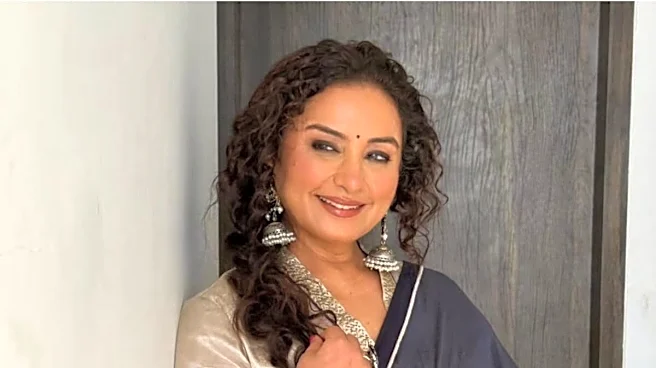
Anuparna Roy is already making Venice look like a regular stop. In 2025, her debut feature, Songs of Forgotten Trees, won Best Director in the Orizzonti section of the Venice Film Festival, making her the first Indian filmmaker to take home the prize. Now she is back, just a year later, with her second feature, Lovers in the Blue Night.
For Roy, however, the significance of the moment seems less about making history than about returning to a place that has begun to feel strangely familiar. "Venice has become my home," she says. "I love the audience and the people here. And most importantly, I love the people of Venice, the beauty of the place. It feels like home."
It was hardly a conventional route to Venice for her. She grew up in a village in Purulia, West Bengal, went to a government school, and later studied English Honours at Kulti College. Leaving her village for college, she recalls, felt like liberation. The world had suddenly become larger, and so had the possibilities for the life she wanted.
Now back at the Lido, that sense of arrival hasn't faded. "I am genuinely happy that my second film was successfully completed and made it to the festival again," she says. "I am really overwhelmed to come back to this place."
Anuparna Roy’s search for freedom
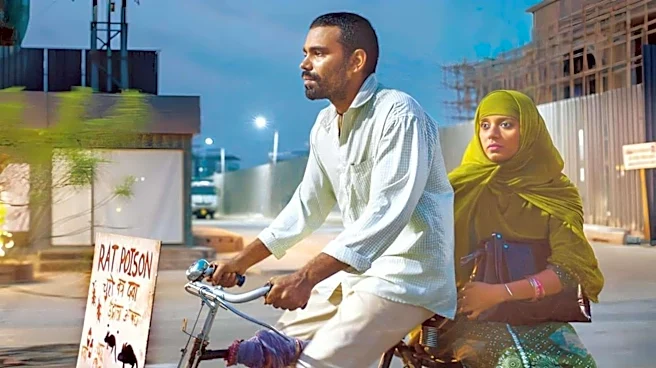
Lovers in the Blue Night began not with a plot, but with a woman she knew as a child. Ameena had lived and worked around Roy’s family in West Bengal, and it was only years later that Roy began to understand the unhappiness embedded in her marriage to Karim. That childhood encounter became the emotional spark for a film that would eventually move the story to an imagined Mumbai, where Ameena could search for a freedom that had eluded her in real life.
"Initially, it was a very emotional and rebellious decision to develop Ameena as a character and put her into an imaginary world, whether a city like Bombay or Delhi, where she is searching for her freedom," Roy says.
As the story took shape, the institution of marriage began to look different to her. What had initially seemed like a story of one woman trapped inside a dysfunctional marriage expanded into something more complicated: a meditation on migration, desire, and the strange bargains people make in order to belong.
Also Read: From Bhuvan Bam to Prajakta Koli, decoding India’s booming content-creator-to-actor wave
"As I started developing the script and looking deeper into the character, things became different," Roy says. "My perspective on the institution of marriage also changed inside me, and that’s how the lives of migration and Karim's character through Ameena also changed."
In Roy's Mumbai, the characters are not merely trying to escape where they came from; they are trying to imagine who they might become.
From a childhood diary to the director's chair
Long before Roy thought of becoming a filmmaker, she was a child who wrote things down. She was seven or eight when her father discovered her keeping a journal. He worried that writing might become a vocation and tried steering her towards the safer territories of science and commerce. Roy, however, had already begun imagining another life.
"I always wanted to become a writer," she recalls. Cinema entered that world almost by accident, through the films available in the small cities and villages where she grew up. They were, for the most part, big Hindi commercial movies, and her father would accompany her to the theatre.
From Bollywood to Ritwik Ghatak
The decisive encounter was Ritwik Ghatak. "If you ask me which film made me think about filmmaking, it was Ritwik Ghatak’s Meghe Dhaka Tara and Titas Ekti Nadir Naam," she says.
Around 21 or 22, Roy began encountering world cinema more seriously, films that had little connection to the commercial vocabulary she had grown up watching. She cites Roma and Close among the films that stayed with her. "It was basically world cinema that inspired me to become a filmmaker rather than the usual commercial movies," she says.
"I owe a lot to my mentors," she says. "They helped me understand cinema from a socio-religious angle."
Also Read: This ₹2 crore film with no stars just broke Dhurandhar's box office record
Before Anuparna Roy made a film, she made a living
She left her Master’s in Journalism with a simple, if somewhat stubborn, calculation: she needed to earn. She did not want to ask her parents for money. So, she worked two, sometimes three jobs at once, moonlighting to save enough to make her first film. "Earning money for me at that point of my life was the most important thing," she says. Her father, despite her refusal to ask, eventually helped finance her first film.
The story of Roy’s arrival in cinema is therefore less a tale of industry connections than of persistence, observation, and a certain refusal to behave as expected. "I never took any pressure to fit into this industry," she says. "I have always been a back-bencher in school, and I loved to observe things."
Roy has gravitated towards uncomfortable subjects, social realism, and the lives that conventional cinema tends to leave at the margins. Her mentors, Anirban Maity, Niraj Sahay, and Paresh Kamdar, introduced her to the grammar of Third World cinema, helping her see filmmaking not simply as an aesthetic exercise but as a way of examining society.
"I still feel I am a student of cinema," Roy says. For her, every film is another piece of homework, another attempt to get closer to a better narrative. "To tell a better narrative with each of my films is a constant struggle."
Cinema from the margins
She is also part of a generation of Indian independent filmmakers who are pushing cinema towards more difficult terrain. Roy admires Rohan Parashuram's Sabar Bonda and Nidhu Saxena’s visual language, particularly their engagement with suppressed desire and the complications of contemporary Indian society.
Yet the filmmakers may be ahead of the ecosystem around them. "There is not much encouragement for Indie filmmakers in our own country," Roy says. She believes the answer begins much earlier than the film industry itself: filmmaking and film appreciation, she argues, should be taught in schools.
The back-bencher has become the filmmaker, still observing from the margins, only now turning what she sees into stories that ask us to look again.
Also Read: Hollywood and regional hits are squeezing Bollywood’s dominance
For Roy, however, the significance of the moment seems less about making history than about returning to a place that has begun to feel strangely familiar. "Venice has become my home," she says. "I love the audience and the people here. And most importantly, I love the people of Venice, the beauty of the place. It feels like home."
It was hardly a conventional route to Venice for her. She grew up in a village in Purulia, West Bengal, went to a government school, and later studied English Honours at Kulti College. Leaving her village for college, she recalls, felt like liberation. The world had suddenly become larger, and so had the possibilities for the life she wanted.
Now back at the Lido, that sense of arrival hasn't faded. "I am genuinely happy that my second film was successfully completed and made it to the festival again," she says. "I am really overwhelmed to come back to this place."
Anuparna Roy’s search for freedom
Lovers in the Blue Night began not with a plot, but with a woman she knew as a child. Ameena had lived and worked around Roy’s family in West Bengal, and it was only years later that Roy began to understand the unhappiness embedded in her marriage to Karim. That childhood encounter became the emotional spark for a film that would eventually move the story to an imagined Mumbai, where Ameena could search for a freedom that had eluded her in real life.
"Initially, it was a very emotional and rebellious decision to develop Ameena as a character and put her into an imaginary world, whether a city like Bombay or Delhi, where she is searching for her freedom," Roy says.
As the story took shape, the institution of marriage began to look different to her. What had initially seemed like a story of one woman trapped inside a dysfunctional marriage expanded into something more complicated: a meditation on migration, desire, and the strange bargains people make in order to belong.
Also Read: From Bhuvan Bam to Prajakta Koli, decoding India’s booming content-creator-to-actor wave
"As I started developing the script and looking deeper into the character, things became different," Roy says. "My perspective on the institution of marriage also changed inside me, and that’s how the lives of migration and Karim's character through Ameena also changed."
In Roy's Mumbai, the characters are not merely trying to escape where they came from; they are trying to imagine who they might become.
From a childhood diary to the director's chair
Long before Roy thought of becoming a filmmaker, she was a child who wrote things down. She was seven or eight when her father discovered her keeping a journal. He worried that writing might become a vocation and tried steering her towards the safer territories of science and commerce. Roy, however, had already begun imagining another life.
"I always wanted to become a writer," she recalls. Cinema entered that world almost by accident, through the films available in the small cities and villages where she grew up. They were, for the most part, big Hindi commercial movies, and her father would accompany her to the theatre.
From Bollywood to Ritwik Ghatak
The decisive encounter was Ritwik Ghatak. "If you ask me which film made me think about filmmaking, it was Ritwik Ghatak’s Meghe Dhaka Tara and Titas Ekti Nadir Naam," she says.
Around 21 or 22, Roy began encountering world cinema more seriously, films that had little connection to the commercial vocabulary she had grown up watching. She cites Roma and Close among the films that stayed with her. "It was basically world cinema that inspired me to become a filmmaker rather than the usual commercial movies," she says.
"I owe a lot to my mentors," she says. "They helped me understand cinema from a socio-religious angle."
Also Read: This ₹2 crore film with no stars just broke Dhurandhar's box office record
Before Anuparna Roy made a film, she made a living
She left her Master’s in Journalism with a simple, if somewhat stubborn, calculation: she needed to earn. She did not want to ask her parents for money. So, she worked two, sometimes three jobs at once, moonlighting to save enough to make her first film. "Earning money for me at that point of my life was the most important thing," she says. Her father, despite her refusal to ask, eventually helped finance her first film.
The story of Roy’s arrival in cinema is therefore less a tale of industry connections than of persistence, observation, and a certain refusal to behave as expected. "I never took any pressure to fit into this industry," she says. "I have always been a back-bencher in school, and I loved to observe things."
Roy has gravitated towards uncomfortable subjects, social realism, and the lives that conventional cinema tends to leave at the margins. Her mentors, Anirban Maity, Niraj Sahay, and Paresh Kamdar, introduced her to the grammar of Third World cinema, helping her see filmmaking not simply as an aesthetic exercise but as a way of examining society.
"I still feel I am a student of cinema," Roy says. For her, every film is another piece of homework, another attempt to get closer to a better narrative. "To tell a better narrative with each of my films is a constant struggle."
Cinema from the margins
She is also part of a generation of Indian independent filmmakers who are pushing cinema towards more difficult terrain. Roy admires Rohan Parashuram's Sabar Bonda and Nidhu Saxena’s visual language, particularly their engagement with suppressed desire and the complications of contemporary Indian society.
Yet the filmmakers may be ahead of the ecosystem around them. "There is not much encouragement for Indie filmmakers in our own country," Roy says. She believes the answer begins much earlier than the film industry itself: filmmaking and film appreciation, she argues, should be taught in schools.
The back-bencher has become the filmmaker, still observing from the margins, only now turning what she sees into stories that ask us to look again.
Also Read: Hollywood and regional hits are squeezing Bollywood’s dominance