/images/ppid_59c68470-image-178385002594411485.webp)



What is the story about?
Before India’s economic liberalisation in 1991, Hindi cinema largely imagined the ideal man as either the self-sacrificing provider or the righteous vigilante. However, in the three decades since, that gold standard has transformed as drastically as the country’s burgeoning economy. As markets opened, our aspirations diversified and consumption became a language of identity, Bollywood's leading men stopped merely reflecting society—they began selling new ways of being a man. Their wardrobes became wishlists, holidays became itineraries, and emotional lives became aspirational.
This uneven journey can best be charted through five landmark films, each of which dominated the box office in its time and altered the cultural syntax of a nation trying to find a way to communicate. The resounding acceptance of each leading man revealed not just a shift in the popular idea of masculinity but also an evolution in capitalism.
From Shah Rukh Khan’s Raj Malhotra in Dilwale Dulhania Le Jayenge to Salman Khan’s Prem in Hum Saath Saath Hain, Shahid Kapoor’s Prem in Vivah, Hrithik Roshan's Arjun in Zindagi Na Milegi Dobara, and finally the emerging, harder-edged image that Dhurandhar’s Hamza/Jaskirat stands for, Bollywood's ideal man has steadily mirrored the country's economic ambitions.
Raj Malhotra arrived in 1995, just four years after liberalisation. It was a curious phase—the country was in a flux with the exploding middle class starting to dream globally but not wanting to abandon its cultural roots. Raj was wealthy and charming, westernised yet respectful, flirtatious yet patient—the ideal NRI who smelled of desh ki mitti. In spite of provocation, he chooses the harder path; he could have fled with Simran, but he chooses to win the approval of her family instead. It was his delicate handling of traditionality and modernity that made him the perfect ambassador for a newly global India that wanted foreign brands without surrendering Indian values.
DDLJ’s domino effect echoed far beyond cinema. Switzerland, already popular among Hindi filmmakers, courtesy Yash Chopra, became synonymous with romance for Indian travellers as the film cemented its visual identity. International package holidays increasingly entered bourgeois aspirations through the late 1990s, and making designer knitwear, leather jackets, branded luggage, fashion jewellery, and aspirational NRI lifestyles became visual shorthand for success. Bollywood was no longer merely entertaining audiences; it was normalising consumption as a cultural ideal.
Raj's masculinity reflected an important economic shift. Liberalisation rewarded mobility rather than inheritance. Raj was emotionally expressive, travelled freely and consumed effortlessly, representing a generation that began to measure success by exposure, self-confidence and cosmopolitanism.
By 1999, however, India's optimism had started to acquire a different texture. Hum Saath Saath Hain responded to the growing anxiety that economic modernity and rising individualism might fracture the joint family. Salman Khan's Prem—the second of three brothers in a wealthy industrialist family— became the gentle custodian of domestic harmony. His masculinity rested not on rebellion but responsibility. If Raj sold aspiration, Prem championed stability.
The film—which boasted of a large A-list ensemble cast including Karishma Kapoor, Saif Ali Khan, Sonali Bendre and Tabu—arrived during a period when organised retail, consumer durables and home ownership were becoming attainable for India's movie-going middle class. Liberalisation had created disposable income, which families tended to spend together. Modular furniture, home décor, gold jewellery, festive apparel, kitchen appliances and wedding shopping became central expressions of working-class prosperity.
The quintessential Sooraj Barjatya household functioned like an elaborate catalogue of consumption. Every room looked immaculate, every festival demanded coordinated, ornate clothing, every ritual justified another purchase. He moralised consumption for an entire generation that had spent their childhood not having enough. Buying for the family became an act of love rather than indulgence.
Also Read: Meet Dharna Durga: The 27-year-old who went from Instagram creator to Bollywood debut with Madhuri Dixit
Salman Khan’s Prem embodied an ideal man who earned admiration by preserving relationships instead of pursuing individual ambition. Economic growth had arrived, but its legitimacy depended on keeping the family intact.
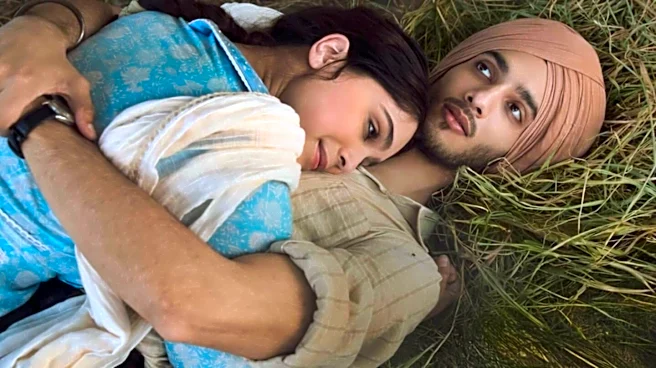
But by 2006, another transition was underway. Vivah presented perhaps Bollywood's purest masculine fantasy. Shahid Kapoor's Prem was neither flamboyant nor aggressively successful. He was remarkably patient and kind with an emotional quotient that burst through the roof. He was too good to be true, clearly fictional, and therefore all the more desirable. Amid rising cases of honour killings, dowry deaths and quotidian gender cruelty, he showed an entire nation what could be but rarely is.
The film—which also starred Amrita Rao—coincided with the rapid expansion of India's organised wedding economy. Designer bridal-wear, destination ceremonies, premium photography, jewellery brands and matrimonial services had begun to take root, transforming marriage into a multi-million dollar industry.
Yet Vivah resisted conspicuous luxury. Despite centring itself around the time period between engagement and wedding of a young couple who meet in an arranged setup at a time when live-in relationships had entered India’s social lexicon, its romance unfolds through rituals, conversations and quiet gestures rather than extravagant spectacle or forced intimacy.
Prem's masculinity reflected the aspirations of an emerging urban middle-class that sought emotional certainty amid rapid social change. Unlike the unencumbered Raj, who was a rolling stone, or Salman Khan's Prem, for whom family was sacred, Shahid Kapoor's character prioritised empathy, restraint, and commitment, making emotional intelligence the ultimate masculine ideal. Interestingly, this coincided with an unprecedented boom in relationship advice, matrimonial portals and lifestyle media focusing on compatibility and transparency.
Then came Zindagi Na Milegi Dobara in 2011, introducing us to Arjun, a high-performing investment banker who measures life in promotions and bonuses. By now, success had become entirely individualised for Indians, and family expectations had given way to corporate ambition. But the Zoya Akhtar film dismantled that definition with such conviction that it forced millennials to sit up and take stock.
Hrithik Roshan’s Arjun discovers fulfilment not through accumulation but through experience. Road trips, adventure sports, and emotional vulnerability become acts of liberation, redefining masculinity through self-awareness rather than sacrifice.
The film’s timing was significant. India’s urban professionals were entering an era shaped by start-ups, multinational corporations and rising disposable incomes. Experiences had started to compete with possessions, urging people to rethink. International travel, experiential tourism, wellness retreats, premium automobiles, fitness as an aesthetic and boutique hospitality all grew rapidly among affluent consumers.
Rather than selling products directly, Zindagi Na Milegi Dobara sold a philosophy: spend money collecting memorable experiences instead of objects. Its indelible impact was clearly visible in the surge of Indian tourism to Spain, particularly along the route showcased in the film—which also starred Katrina Kaif, Farhan Akhtar, Abhay Deol and Kali Koechlin—and in the broader cultural embrace of experiential consumption.
Also Read: The business of cricket biopics: Why Bollywood keeps betting on India's biggest sport
It egged young professionals to view travel not as a luxury but as an act of self-development, which, if you were lucky, could lead to self-fulfilment. Arjun represented India's first thoroughly global corporate man who realised that productivity and burnout were the two sides of the same coin that needed to be punctuated with regular intervals of downtime for a sustained run.
Together, these four popular characters succinctly chart India’s economic evolution while also marketing a different economy. DDLJ’s Shah Rukh Khan sold international aspirations, Hum Saath Saath Hain’s Salman domestic abundance, Vivah’s Shahid emotional security, and ZNMD’s Arjun personal freedom. What, then, does Ranveer Singh's emerging image in Dhurandhar stand for?
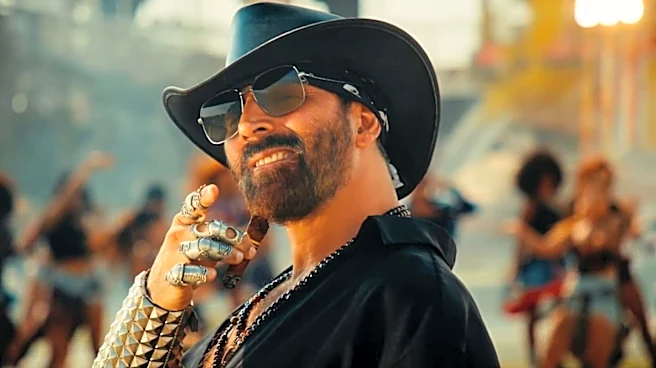
Here, caution is necessary. The two-part Aditya Dhar saga is too recent to support definitive cultural conclusions, and its long-term influence still remains unknowable. But one aspect is certain—unlike Raj’s unencumbered, polished cosmopolitanism or Arjun’s ability to take stock of where his life was going, Raveer Singh’s Jassi/Hamza represents something darker, cruder. The contemporary Hindi-film hero is physically transformed, psychologically scarred and perpetually prepared for conflict. Across recent mainstream cinema, masculinity is becoming more tactical than romantic, more buffed up than conversational, more survivalist than aspirational.
This recent shift reflects broader social anxieties. Economic uncertainty, hyper-competition, geopolitical tensions, unending wars, and algorithm-driven public life have produced heroes who are angry, ruthless, pronounced, and with a penchant for spectacle and myth-making. High-performance gyms, tactical fashion, combat sports, performance nutrition, luxury streetwear and ATV automobiles are occupying the aspirational landscape which was once filled by European holidays and familial prosperity.
It remains to be seen if Dhurandhar’s bumper box-office success is able to crystallise this new masculine archetype. Cultural influence cannot be declared within the first quarter of a film’s release; it needs to survive imitation, public memory and time to truly penetrate a zeitgeist.
This uncertainty is revealing. Bollywood's ideal man no longer possesses a stable definition. Liberalisation once positioned prosperity as the gold standard. However, a little over three decades later, the idea of prosperity has become fragmented, identities have become performative, people have become brands and masculinity has become contested.
From Raj's open arms to Arjun's emotional awakening—and now to Jassi’s battle-hardened persona—the ideal Bollywood man has always been less of a fantasy and more of an economic indicator. Every generation's hero has quietly advertised the aspirations, insecurities and consumption patterns of the socio-cultural milieu that created him.
Since liberalisation, each generation has had to solve a different problem. Raj asked how to be global without ceasing to be Indian. Prem wanted to grow without losing the family. Arjun wished to succeed without losing himself. The next hero may have to answer a far more difficult question: how to remain human in a deeply fractured and volatile economy that rewards performance over personhood.
Also Read: Mehrangarh Fort to Oxford: Iconic movie and TV filming locations every fan should visit
This uneven journey can best be charted through five landmark films, each of which dominated the box office in its time and altered the cultural syntax of a nation trying to find a way to communicate. The resounding acceptance of each leading man revealed not just a shift in the popular idea of masculinity but also an evolution in capitalism.
From Shah Rukh Khan’s Raj Malhotra in Dilwale Dulhania Le Jayenge to Salman Khan’s Prem in Hum Saath Saath Hain, Shahid Kapoor’s Prem in Vivah, Hrithik Roshan's Arjun in Zindagi Na Milegi Dobara, and finally the emerging, harder-edged image that Dhurandhar’s Hamza/Jaskirat stands for, Bollywood's ideal man has steadily mirrored the country's economic ambitions.
Raj Malhotra arrived in 1995, just four years after liberalisation. It was a curious phase—the country was in a flux with the exploding middle class starting to dream globally but not wanting to abandon its cultural roots. Raj was wealthy and charming, westernised yet respectful, flirtatious yet patient—the ideal NRI who smelled of desh ki mitti. In spite of provocation, he chooses the harder path; he could have fled with Simran, but he chooses to win the approval of her family instead. It was his delicate handling of traditionality and modernity that made him the perfect ambassador for a newly global India that wanted foreign brands without surrendering Indian values.
DDLJ’s domino effect echoed far beyond cinema. Switzerland, already popular among Hindi filmmakers, courtesy Yash Chopra, became synonymous with romance for Indian travellers as the film cemented its visual identity. International package holidays increasingly entered bourgeois aspirations through the late 1990s, and making designer knitwear, leather jackets, branded luggage, fashion jewellery, and aspirational NRI lifestyles became visual shorthand for success. Bollywood was no longer merely entertaining audiences; it was normalising consumption as a cultural ideal.
Raj's masculinity reflected an important economic shift. Liberalisation rewarded mobility rather than inheritance. Raj was emotionally expressive, travelled freely and consumed effortlessly, representing a generation that began to measure success by exposure, self-confidence and cosmopolitanism.
By 1999, however, India's optimism had started to acquire a different texture. Hum Saath Saath Hain responded to the growing anxiety that economic modernity and rising individualism might fracture the joint family. Salman Khan's Prem—the second of three brothers in a wealthy industrialist family— became the gentle custodian of domestic harmony. His masculinity rested not on rebellion but responsibility. If Raj sold aspiration, Prem championed stability.
The film—which boasted of a large A-list ensemble cast including Karishma Kapoor, Saif Ali Khan, Sonali Bendre and Tabu—arrived during a period when organised retail, consumer durables and home ownership were becoming attainable for India's movie-going middle class. Liberalisation had created disposable income, which families tended to spend together. Modular furniture, home décor, gold jewellery, festive apparel, kitchen appliances and wedding shopping became central expressions of working-class prosperity.
The quintessential Sooraj Barjatya household functioned like an elaborate catalogue of consumption. Every room looked immaculate, every festival demanded coordinated, ornate clothing, every ritual justified another purchase. He moralised consumption for an entire generation that had spent their childhood not having enough. Buying for the family became an act of love rather than indulgence.
Also Read: Meet Dharna Durga: The 27-year-old who went from Instagram creator to Bollywood debut with Madhuri Dixit
Salman Khan’s Prem embodied an ideal man who earned admiration by preserving relationships instead of pursuing individual ambition. Economic growth had arrived, but its legitimacy depended on keeping the family intact.
But by 2006, another transition was underway. Vivah presented perhaps Bollywood's purest masculine fantasy. Shahid Kapoor's Prem was neither flamboyant nor aggressively successful. He was remarkably patient and kind with an emotional quotient that burst through the roof. He was too good to be true, clearly fictional, and therefore all the more desirable. Amid rising cases of honour killings, dowry deaths and quotidian gender cruelty, he showed an entire nation what could be but rarely is.
The film—which also starred Amrita Rao—coincided with the rapid expansion of India's organised wedding economy. Designer bridal-wear, destination ceremonies, premium photography, jewellery brands and matrimonial services had begun to take root, transforming marriage into a multi-million dollar industry.
Yet Vivah resisted conspicuous luxury. Despite centring itself around the time period between engagement and wedding of a young couple who meet in an arranged setup at a time when live-in relationships had entered India’s social lexicon, its romance unfolds through rituals, conversations and quiet gestures rather than extravagant spectacle or forced intimacy.
Prem's masculinity reflected the aspirations of an emerging urban middle-class that sought emotional certainty amid rapid social change. Unlike the unencumbered Raj, who was a rolling stone, or Salman Khan's Prem, for whom family was sacred, Shahid Kapoor's character prioritised empathy, restraint, and commitment, making emotional intelligence the ultimate masculine ideal. Interestingly, this coincided with an unprecedented boom in relationship advice, matrimonial portals and lifestyle media focusing on compatibility and transparency.
Then came Zindagi Na Milegi Dobara in 2011, introducing us to Arjun, a high-performing investment banker who measures life in promotions and bonuses. By now, success had become entirely individualised for Indians, and family expectations had given way to corporate ambition. But the Zoya Akhtar film dismantled that definition with such conviction that it forced millennials to sit up and take stock.
Hrithik Roshan’s Arjun discovers fulfilment not through accumulation but through experience. Road trips, adventure sports, and emotional vulnerability become acts of liberation, redefining masculinity through self-awareness rather than sacrifice.
The film’s timing was significant. India’s urban professionals were entering an era shaped by start-ups, multinational corporations and rising disposable incomes. Experiences had started to compete with possessions, urging people to rethink. International travel, experiential tourism, wellness retreats, premium automobiles, fitness as an aesthetic and boutique hospitality all grew rapidly among affluent consumers.
Rather than selling products directly, Zindagi Na Milegi Dobara sold a philosophy: spend money collecting memorable experiences instead of objects. Its indelible impact was clearly visible in the surge of Indian tourism to Spain, particularly along the route showcased in the film—which also starred Katrina Kaif, Farhan Akhtar, Abhay Deol and Kali Koechlin—and in the broader cultural embrace of experiential consumption.
Also Read: The business of cricket biopics: Why Bollywood keeps betting on India's biggest sport
It egged young professionals to view travel not as a luxury but as an act of self-development, which, if you were lucky, could lead to self-fulfilment. Arjun represented India's first thoroughly global corporate man who realised that productivity and burnout were the two sides of the same coin that needed to be punctuated with regular intervals of downtime for a sustained run.
Together, these four popular characters succinctly chart India’s economic evolution while also marketing a different economy. DDLJ’s Shah Rukh Khan sold international aspirations, Hum Saath Saath Hain’s Salman domestic abundance, Vivah’s Shahid emotional security, and ZNMD’s Arjun personal freedom. What, then, does Ranveer Singh's emerging image in Dhurandhar stand for?
Here, caution is necessary. The two-part Aditya Dhar saga is too recent to support definitive cultural conclusions, and its long-term influence still remains unknowable. But one aspect is certain—unlike Raj’s unencumbered, polished cosmopolitanism or Arjun’s ability to take stock of where his life was going, Raveer Singh’s Jassi/Hamza represents something darker, cruder. The contemporary Hindi-film hero is physically transformed, psychologically scarred and perpetually prepared for conflict. Across recent mainstream cinema, masculinity is becoming more tactical than romantic, more buffed up than conversational, more survivalist than aspirational.
This recent shift reflects broader social anxieties. Economic uncertainty, hyper-competition, geopolitical tensions, unending wars, and algorithm-driven public life have produced heroes who are angry, ruthless, pronounced, and with a penchant for spectacle and myth-making. High-performance gyms, tactical fashion, combat sports, performance nutrition, luxury streetwear and ATV automobiles are occupying the aspirational landscape which was once filled by European holidays and familial prosperity.
It remains to be seen if Dhurandhar’s bumper box-office success is able to crystallise this new masculine archetype. Cultural influence cannot be declared within the first quarter of a film’s release; it needs to survive imitation, public memory and time to truly penetrate a zeitgeist.
This uncertainty is revealing. Bollywood's ideal man no longer possesses a stable definition. Liberalisation once positioned prosperity as the gold standard. However, a little over three decades later, the idea of prosperity has become fragmented, identities have become performative, people have become brands and masculinity has become contested.
From Raj's open arms to Arjun's emotional awakening—and now to Jassi’s battle-hardened persona—the ideal Bollywood man has always been less of a fantasy and more of an economic indicator. Every generation's hero has quietly advertised the aspirations, insecurities and consumption patterns of the socio-cultural milieu that created him.
Since liberalisation, each generation has had to solve a different problem. Raj asked how to be global without ceasing to be Indian. Prem wanted to grow without losing the family. Arjun wished to succeed without losing himself. The next hero may have to answer a far more difficult question: how to remain human in a deeply fractured and volatile economy that rewards performance over personhood.
Also Read: Mehrangarh Fort to Oxford: Iconic movie and TV filming locations every fan should visit
/images/ppid_59c68470-image-178375002485031261.webp)
/images/ppid_59c68470-image-178377003171013260.webp)