/images/ppid_59c68470-image-17836050297403646.webp)

/images/ppid_a911dc6a-image-178340404808421585.webp)



What is the story about?
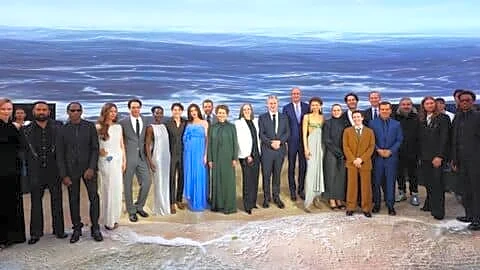
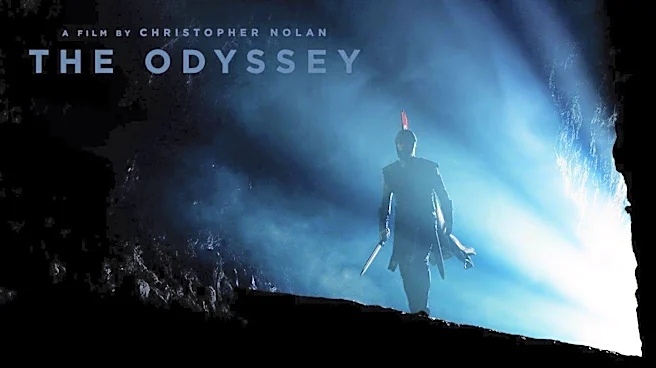
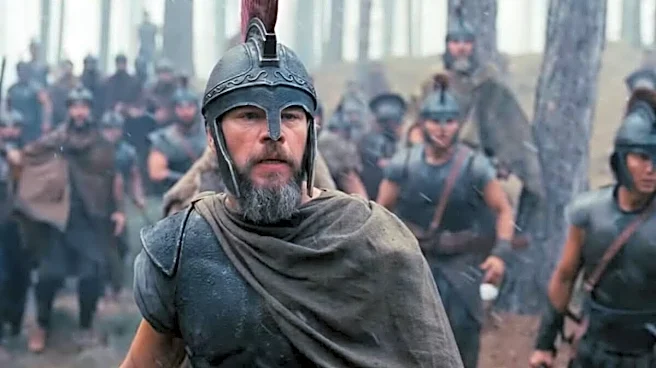
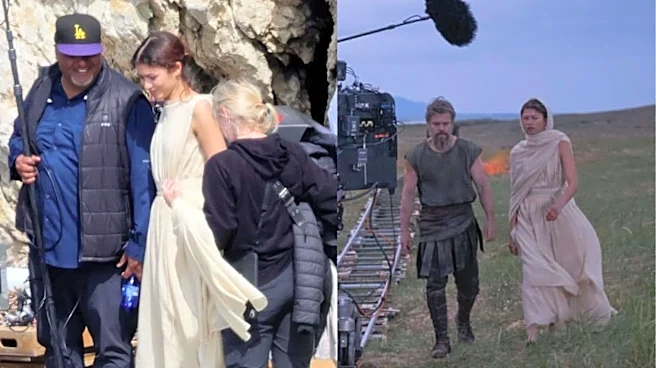
Christopher Nolan's highly anticipated The Odyssey arrives in cinemas on July 17, marking the Oscar-winning filmmaker's first release since his 2023 Oscar-winning Oppenheimer. Led by Matt Damon as Odysseus, the nearly three-hour mythic epic features a star-studded cast including Tom Holland (Telemachus), Anne Hathaway (Penelope), Zendaya (Athena), Robert Pattinson (Antinous), Lupita Nyong'o (Helen of Troy), Jon Bernthal (Menelaus) and Charlize Theron (Calypso).
Filmed across locations in Morocco, Greece, Italy, Iceland, Scotland and the Western Sahara, the estimated $250 million production has made history as the first feature film shot entirely with IMAX film cameras and has already generated widespread critical acclaim ahead of its global release.
Long before it became the latest addition to Christopher Nolan’s filmography, 'The Odyssey' was one of the foundational works of Western literature. Attributed to the ancient Greek poet Homer and composed nearly 3,000 years ago, the epic follows the arduous ten-year journey of the Greek hero Odysseus as he attempts to return home to Ithaca after the Trojan War, overcoming mythical creatures, divine intervention and countless challenges along the way.
Preserved through oral tradition before being written down, Homer’s poem has inspired generations of writers and filmmakers, while establishing many of the storytelling conventions—from the hero's journey to the adventure narrative—that continue to shape literature and cinema.
Also Read: Mehrangarh Fort to Oxford: Iconic movie and TV filming locations every fan should visit
Much of the poem's influence and longevity can be traced to its author, Homer. Traditionally credited with writing both 'The Odyssey' and 'The Iliad', Homer remains one of history's most mysterious literary figures. Scholars and historians around the world continue to debate whether he was a single poet or a name representing generations of storytellers, but there is broad agreement that the two epics were composed in ancient Greece around the eighth century BCE and were passed down orally long before they were committed to writing. Their survival has made Homer one of the most influential figures in the history of literature.
As cinema emerged in the twentieth century, filmmakers repeatedly turned to 'The Odyssey', adapting its narrative and its themes of perseverance, homecoming and self-discovery for stories set in vastly different worlds.
One of the earliest and most prominent adaptations was Ulysses (1954), starring Kirk Douglas as Odysseus, followed by The Odyssey (1997), directed by Andrei Konchalovsky, which remains one of the most faithful screen adaptations of Homer's poem, recreating many of its iconic episodes. Since then, dozens of films and television productions have adapted or reinterpreted 'The Odyssey', reflecting the epic's appeal to filmmakers across different cultures, languages and generations.
Beyond direct adaptations, 'The Odyssey' has continued to inspire filmmakers who have reinterpreted its themes rather than its plot. Stanley Kubrick's 2001: A Space Odyssey (1968) borrowed the epic's title to frame humanity's journey into the unknown, transforming Odysseus’ journey from Troy to Ithaca into an exploration of space and human evolution. The Coen brothers' O Brother, Where Art Thou? (2000) offered the most overt modern reinterpretation, relocating Odysseus' long journey home to Depression-era Mississippi while retaining many of the poem's iconic encounters and challenges.
Also Read: The business of cricket biopics: Why Bollywood keeps betting on India's biggest sport
Filmed across locations in Morocco, Greece, Italy, Iceland, Scotland and the Western Sahara, the estimated $250 million production has made history as the first feature film shot entirely with IMAX film cameras and has already generated widespread critical acclaim ahead of its global release.
Long before it became the latest addition to Christopher Nolan’s filmography, 'The Odyssey' was one of the foundational works of Western literature. Attributed to the ancient Greek poet Homer and composed nearly 3,000 years ago, the epic follows the arduous ten-year journey of the Greek hero Odysseus as he attempts to return home to Ithaca after the Trojan War, overcoming mythical creatures, divine intervention and countless challenges along the way.
Preserved through oral tradition before being written down, Homer’s poem has inspired generations of writers and filmmakers, while establishing many of the storytelling conventions—from the hero's journey to the adventure narrative—that continue to shape literature and cinema.
Also Read: Mehrangarh Fort to Oxford: Iconic movie and TV filming locations every fan should visit
Much of the poem's influence and longevity can be traced to its author, Homer. Traditionally credited with writing both 'The Odyssey' and 'The Iliad', Homer remains one of history's most mysterious literary figures. Scholars and historians around the world continue to debate whether he was a single poet or a name representing generations of storytellers, but there is broad agreement that the two epics were composed in ancient Greece around the eighth century BCE and were passed down orally long before they were committed to writing. Their survival has made Homer one of the most influential figures in the history of literature.
As cinema emerged in the twentieth century, filmmakers repeatedly turned to 'The Odyssey', adapting its narrative and its themes of perseverance, homecoming and self-discovery for stories set in vastly different worlds.
One of the earliest and most prominent adaptations was Ulysses (1954), starring Kirk Douglas as Odysseus, followed by The Odyssey (1997), directed by Andrei Konchalovsky, which remains one of the most faithful screen adaptations of Homer's poem, recreating many of its iconic episodes. Since then, dozens of films and television productions have adapted or reinterpreted 'The Odyssey', reflecting the epic's appeal to filmmakers across different cultures, languages and generations.
Beyond direct adaptations, 'The Odyssey' has continued to inspire filmmakers who have reinterpreted its themes rather than its plot. Stanley Kubrick's 2001: A Space Odyssey (1968) borrowed the epic's title to frame humanity's journey into the unknown, transforming Odysseus’ journey from Troy to Ithaca into an exploration of space and human evolution. The Coen brothers' O Brother, Where Art Thou? (2000) offered the most overt modern reinterpretation, relocating Odysseus' long journey home to Depression-era Mississippi while retaining many of the poem's iconic encounters and challenges.
Also Read: The business of cricket biopics: Why Bollywood keeps betting on India's biggest sport


/images/ppid_a911dc6a-image-178336902550034321.webp)

/images/ppid_a911dc6a-image-178349158578620209.webp)