/images/ppid_59c68470-image-179077252467194741.webp)


What is the story about?
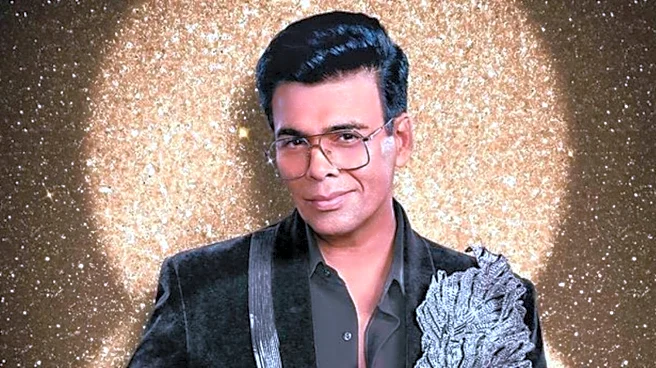
With Karan Johar finally pulling the plug on Koffee with Karan after twenty-two years, Indian television is officially losing the show that managed to turn insider Bollywood gossip into a television viewing experience. Season 9 marks the end of an era that began way back in 2004, and while the recent seasons took a beating for being dull and over-sanitised, it’s impossible to talk about English television in India without talking about the cultural reset this show pulled off.
Before Koffee, the landscape was polite, stiff, and formal. If you were watching an English talk show, you were likely watching Rendezvous with Simi Garewal. In every sense of the term, Garewal was an industry insider too, but her show operated like a dignified confession booth. Everything was white, everyone spoke in measured tones, and the stars were treated with reverence, all the de rigueur of a serious talk show. It was sophisticated, and there was a massive wall between the host and the subject, and another wall between the screen and the audience.
And then Karan Johar walked onto a set painted in glossy blacks and neon, and completely blew that wall apart.
He hung out with his guests like a gossipy best friend who already knew everything that had happened on that scandalous night. For the audience, it was like eavesdropping. The questions weren't about the emotional depth of their latest character; they were about who was dating whom, who had bad plastic surgery, and who was ignoring whose calls. By ditching the traditional one-on-one desk format and cramming two stars onto a single sofa, the vibe instantly shifted to chaotic, slightly petty drawing-room banter.
The English on KwK wasn't trying to be pristine or academic. It was breezy, fast, heavily code-switched with Hindi, and laced with casual urban slang that real people actually spoke. It took English-language broadcasting out of the colonial hangover era and made it contemporary and stylish.
And then there was a 'Rapid Fire' round. The makers figured out that Indian audiences loved seeing the veneer slip. To win that coffee hamper, stars dropped their media training and actively ranked their contemporaries or threw subtle shade.
The show gave audiences moments like Kareena Kapoor taking digs at Priyanka Chopra's accent, Deepika Padukone and Sonam Kapoor taking apart Ranbir Kapoor, or years later, Kangana Ranaut dropping the nepotism bomb right in Karan Johar’s face.
The irony, of course, is that the show slowly became a victim of the very monster it created. As social media exploded and PR machinery took over every celebrity's life, that natural, reckless vibe disappeared.
Still, as the show wraps up for good, its legacy is undeniable. Karan Johar changed the DNA of Indian talk shows by proving that people didn't actually want to worship stars from a distance; they just wanted to sit in the same room, listen to them talk nonsense, and watch them be messy.
Also Read: Alia Bhatt and the slow ascent of the female producer
Before Koffee, the landscape was polite, stiff, and formal. If you were watching an English talk show, you were likely watching Rendezvous with Simi Garewal. In every sense of the term, Garewal was an industry insider too, but her show operated like a dignified confession booth. Everything was white, everyone spoke in measured tones, and the stars were treated with reverence, all the de rigueur of a serious talk show. It was sophisticated, and there was a massive wall between the host and the subject, and another wall between the screen and the audience.
And then Karan Johar walked onto a set painted in glossy blacks and neon, and completely blew that wall apart.
He hung out with his guests like a gossipy best friend who already knew everything that had happened on that scandalous night. For the audience, it was like eavesdropping. The questions weren't about the emotional depth of their latest character; they were about who was dating whom, who had bad plastic surgery, and who was ignoring whose calls. By ditching the traditional one-on-one desk format and cramming two stars onto a single sofa, the vibe instantly shifted to chaotic, slightly petty drawing-room banter.
The English on KwK wasn't trying to be pristine or academic. It was breezy, fast, heavily code-switched with Hindi, and laced with casual urban slang that real people actually spoke. It took English-language broadcasting out of the colonial hangover era and made it contemporary and stylish.
And then there was a 'Rapid Fire' round. The makers figured out that Indian audiences loved seeing the veneer slip. To win that coffee hamper, stars dropped their media training and actively ranked their contemporaries or threw subtle shade.
The show gave audiences moments like Kareena Kapoor taking digs at Priyanka Chopra's accent, Deepika Padukone and Sonam Kapoor taking apart Ranbir Kapoor, or years later, Kangana Ranaut dropping the nepotism bomb right in Karan Johar’s face.
The irony, of course, is that the show slowly became a victim of the very monster it created. As social media exploded and PR machinery took over every celebrity's life, that natural, reckless vibe disappeared.
Still, as the show wraps up for good, its legacy is undeniable. Karan Johar changed the DNA of Indian talk shows by proving that people didn't actually want to worship stars from a distance; they just wanted to sit in the same room, listen to them talk nonsense, and watch them be messy.
Also Read: Alia Bhatt and the slow ascent of the female producer



/images/ppid_59c68470-image-179070003545695352.webp)