


What is the story about?
It’s been a while since Eros International received widespread flack for re-releasing its 2013 film Raanjhanaa in theatres with an AI-altered ending that turned its haunting climax into happily-ever-after despite strong disapproval from the movie’s director Anand L Rai and leading man Dhanush.
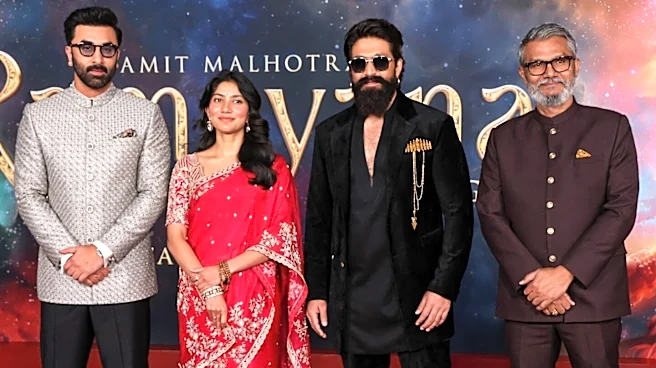
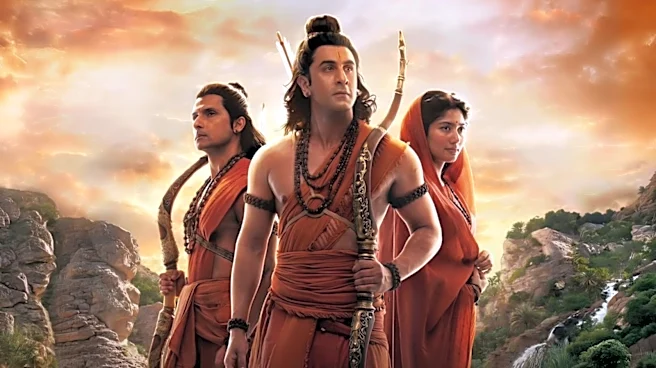
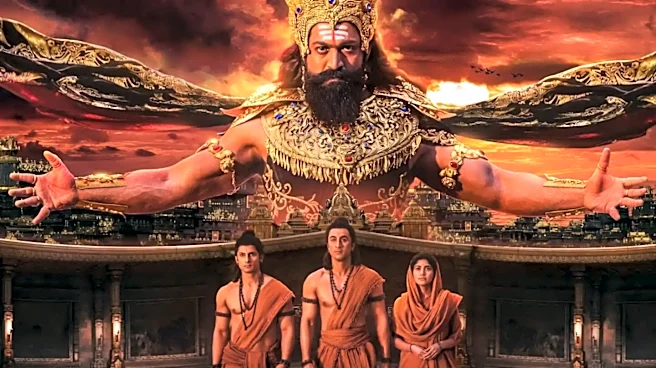
Cut to a year later and Nitesh Tiwari has used Brahma AI and its specialized VAANI component for the English dub of his forthcoming big Diwali release Ramayana: Rise of a Legend to lip-sync actors. The use of AI has allowed the makers to shoot the film only once in Hindi and let the new tech handle the rest.
However, early reviews from the press releases in the US have panned the decision, calling the effect jarring, saying it cheapens the entire experience.
Meanwhile, China’s Sanxingdui: Future Past, touted as the nation’s first fully AI-generated feature film, opened in cinemas on October 23. Nearly 100 people have reportedly spent more than two years making it using AI. According to the Chinese media, despite a reported 10 million yuan production cost, the film was able to rake in only a dismal 1.41 million yuan by October 29, after roughly a week in cinemas.
Though these are early figures, the case of Sanxingdui: Future Past exposes a crude reality the entertainment industry is currently facing with the advent and the rampant assimilation of AI into the filmmaking ecosystem: artificial intelligence can reign in production costs, human time and toil but can it make a film that people would want to go to the theatre to watch?
To make sense of the scale of this shift, it is crucial to understand the difference between AI-assisted, AI-generated and AI-native filmmaking. The first uses technology to accelerate or simplify repetitive, technical and cumbersome tasks while humans retain creative control, like in the case of Ramayana or Ben Affleck’s recent film Animals, which premiered on Netflix on October 9.
Speaking of using AI in Animals, Affleck told Rolling Stone, “Yes, we did use it. It is a good example because it’s a very human movie. It’s not in space. It doesn’t have visual effects. But it allowed us to move in some cases more quickly, really mostly in post-production, to do things that otherwise we wouldn’t have been able to do.”
In 2022, Affleck founded InterPositive, an AI startup to train models using proprietary, custom-shot cinematic footage to address growing concerns that standard open-source AI models trained on uncompensated work from industry insiders. Netflix acquired InterPositive for $587 million in March.
Meanwhile, AI-generated filmmaking relies on artificial intelligence to produce substantial portions of the images, environments, voices or performances while retaining some human control. Turkey’s Castle Walls (Surlar), a two-part historical drama released on Prime Video in August, is a great example. It used an in-house video-generation model, but the screenplay was reportedly written by human writers, the performances were not AI-generated and human voice actors handled dubbing.
Finally, AI-native entertainment is conceived around the technology from the start, with production methods, format and economics designed for an AI-enabled workflow. Like in the case of Sanxingdui: Future Past or South Korea’s micro-dramas such as Met a Savior in Hell and Seoul: Citation2053.
As told by Affleck, AI-assisted filmmaking offers the most immediate gains. It can significantly reduce the time, effort and money spent on essential, non-creative work and make elaborate settings possible at costs previously unimaginable.
Indian production houses have been quick to tap into the economic opportunity. Raanjhanaa and Ramayana aside, according to a Reuters report, AI could bring the cost of making mythology and fantasy content down to a fifth of traditional production costs, while reducing production time to a quarter. Abundantia Entertainment has announced investment in an AI studio and expects AI generated or assisted content to become a significant part of its business.
It is becoming harder to escape the onslaught of AI-native entertainment as it expands through microdramas—a format highly attractive to businesses seeking large volumes of inexpensive content. The economics of short, often vertical episodes engineered for mobile viewing, rapid consumption and cliffhanger-driven retention is different from those of theatrical cinema.
A viewer watching a 60-second episode on a phone is not necessarily looking for the visual consistency, performance nuance or immersive spectacle expected of a two-hour theatrical release. That difference creates room for AI-generated work to find an audience even when it might struggle on the big screen.
This probably explains the success of Raftaar, India's first AI-generated micro-drama series, launched by the Bengaluru-based entertainment startup Dashverse on its DashReels app. A 90-minute series about car racing, it has 45 episodes which were reportedly made in three weeks. Made on a reported budget of Rs. 12 lakh, it hit one million views within 15 days and a completion rate above 75 per cent.
However, concerns galore. “I just don't believe the work I do can be done by AI. I don't believe the soulfulness of a performance can be replicated,” Scarlett Johansson told The Times in January this year after she along with Cate Blanchett, Joseph Gordon-Levitt, and over 700 other entertainment personalities accused the big tech of using copyrighted creative work, voices, and likenesses to train AI models without authorization.
Joseph Gordon-Levitt, who has been a major voice warning against the mindless acceptance and integration of AI, was appointed the United Nations’ first global advocate for human-centric digital governance in March. “These companies are betting on the notion that they’re going to take over the entire economy. That would be totalitarianism, and that would be really bad,” he told The Hollywood Reporter.
Though he acknowledges why independent or low-budget creators with limited access might want to use AI tools, he warns the current corporate paths are helping consolidate power rather than empower those it can truly benefit. He, therefore, has been pushing for the “need to build a system for ongoing compensation” as this tech depends on “human input.”
Currently working on a feature film to shine a spotlight on how AI can entirely dismantle the current world order if left unchecked, Gordon-Levitt has also been at the forefront of the coming together of the Creators Coalition on AI to provide “a central coordinating hub to upgrade industry’s systems and institutions and establish shared standards, definitions and best practices as well as ethical and artistic protections for the use of AI in entertainment projects.”