/images/ppid_59c68470-image-178531752945568480.webp)


What is the story about?
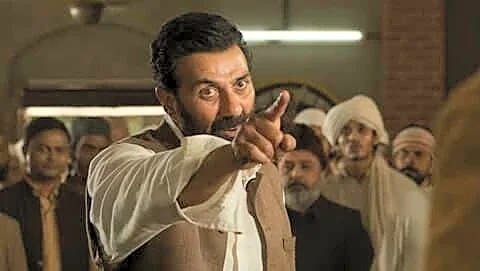
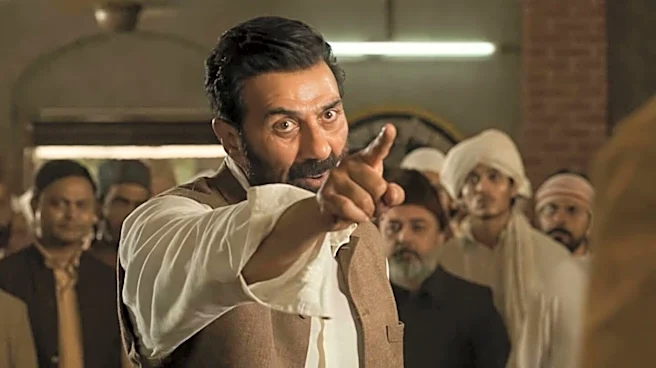
The trailer for Rajkumar Santoshi’s Batwara 1947 arrives with a familiar echo: steam engines rolling across blood-soaked landscapes, torn families, and Sunny Deol standing tall as an invincible protector amid the horror. Produced by Aamir Khan Productions and adapting Asghar Wajahat’s celebrated play 'Jis Lahore Nai Vekhya, O Jamya E Nai', the film sets its sights on an August 15 theatrical release, bringing mainstream Hindi cinema right back to its heavily trodden historical scar: the Partition.
It is a cinematic formula tested by time and perfected by spectacle. Yet, the drama set against the Western border highlights an enduring asymmetry in Indian storytelling.
For nearly eight decades, Bollywood has returned again and again to Punjab’s catastrophe, while India’s eastern Partition—which displaced millions across Bengal—remains comparatively absent from the mainstream narrative.
The reason for this divide could lie in how history unfolded.
Punjab’s division in 1947 was a sudden, apocalyptic explosion.
Within months, millions were forcibly uprooted in a violent, high-stakes exchange of populations. That swift, concentrated horror fitted seamlessly into commercial cinema’s dramatic architecture, giving rise to decades of blockbusters from
Garm Hava and Earth to Pinjar and television film Tamas.
Bengal, however, experienced a slow, agonising bleed.
The drawing of the Radcliffe Line did not spark an immediate, total swap of citizens across the border. Fueled by recurring communal flare-ups like the 1950 Barisal riots in then East Pakistan and the 1964 violence, millions of Bengali Hindus crossed into West Bengal in continuous waves well into the 1970s. They did not arrive in a single exodus; they trickled in, settling into refugee colonies across Kolkata and suburban districts.
Also Read: From DDLJ’s Raj to Dhurandhar’s Jassi: The journey of Bollywood’s ideal man since liberalisation
When Hindi cinema was finding its footing in post-Independence India, its legendary pioneers, figures like BR Chopra, Yash Chopra, Ramanand Sagar, and Dev Anand, were themselves Punjabi and Sindhi, refugees. Their personal trauma naturally became the industry's default memory of Partition.
Bengal’s heartbreak was left to be documented almost exclusively by Bengali parallel cinema. Displaced auteurs like Ritwik Ghatak captured the raw, unhealed trauma of refugee camps and lost homelands in haunting masterworks like Meghe Dhaka Tara and Subarnarekha.
One of the clearest examples of this imbalance came when filmmaker Srijit Mukherji remade his acclaimed Bengali film Rajkahini in Hindi as Begum Jaan . While the original was set along the Bengal border in the aftermath of Partition, the Hindi adaptation shifted the story to the Punjab border, replacing the eastern backdrop with the western one. Rare exceptions such as the 2024 film Bengal 1947 have attempted to place the Eastern Partition and its interfaith ruptures at the centre of the narrative. Still, such films remain few and far between compared with Bollywood's many Partition stories set in Punjab.
Even when Hindi cinema turns its camera toward Bengal, the lens shifts almost exclusively to 1971, the Liberation War of Bangladesh.
Yet here, too, the civilian story is largely eclipsed by military heroism. Recent productions like Pippa and Romeo Akbar Walter treat East Pakistan primarily as a chessboard for covert intelligence and battlefield triumphs.
The industry’s preference for 1971 is easy to understand. The war ended in a decisive, indisputable victory for India, offering filmmakers the thrilling spectacle of amphibious tank charges in Pippa, tactical brilliance in Sam Bahadur, and high-stakes espionage in Raazi.
What frequently fades into the background is the staggering human crisis that triggered the conflict: Pakistan’s brutal military crackdown in East Pakistan during Operation Searchlight and the influx of over ten million Bengali refugees into West Bengal, Tripura, and Assam.
Also Read: The business of cricket biopics: Why Bollywood keeps betting on India's biggest sport
If you're looking for Hindi films that capture the Eastern border, a few titles are worth zeroing in on. Devendra Prasad’s Bengal 1947 (2024), available for rent on Amazon Prime Video, is centred on how the Radcliffe Line disrupted rural Bengali lives and interfaith bonds. When it comes to 1971, while mainstream hits like Raazi (2018) and Pippa (2023) on Amazon Prime Video touch on the East Pakistan conflict, Mrityunjay Devvrat’s Children of War (2014), available on Mubi, goes furthest in directly confronting the civilian genocide of Operation Searchlight. For those interested in the broader geopolitical strategy behind the refugee crisis, Meghna Gulzar’s Sam Bahadur (2023) is streaming on ZEE5.
It is a cinematic formula tested by time and perfected by spectacle. Yet, the drama set against the Western border highlights an enduring asymmetry in Indian storytelling.
For nearly eight decades, Bollywood has returned again and again to Punjab’s catastrophe, while India’s eastern Partition—which displaced millions across Bengal—remains comparatively absent from the mainstream narrative.
The reason for this divide could lie in how history unfolded.
Punjab’s division in 1947 was a sudden, apocalyptic explosion.
Within months, millions were forcibly uprooted in a violent, high-stakes exchange of populations. That swift, concentrated horror fitted seamlessly into commercial cinema’s dramatic architecture, giving rise to decades of blockbusters from
Bengal, however, experienced a slow, agonising bleed.
The drawing of the Radcliffe Line did not spark an immediate, total swap of citizens across the border. Fueled by recurring communal flare-ups like the 1950 Barisal riots in then East Pakistan and the 1964 violence, millions of Bengali Hindus crossed into West Bengal in continuous waves well into the 1970s. They did not arrive in a single exodus; they trickled in, settling into refugee colonies across Kolkata and suburban districts.
Also Read: From DDLJ’s Raj to Dhurandhar’s Jassi: The journey of Bollywood’s ideal man since liberalisation
When Hindi cinema was finding its footing in post-Independence India, its legendary pioneers, figures like BR Chopra, Yash Chopra, Ramanand Sagar, and Dev Anand, were themselves Punjabi and Sindhi, refugees. Their personal trauma naturally became the industry's default memory of Partition.
Bengal’s heartbreak was left to be documented almost exclusively by Bengali parallel cinema. Displaced auteurs like Ritwik Ghatak captured the raw, unhealed trauma of refugee camps and lost homelands in haunting masterworks like Meghe Dhaka Tara and Subarnarekha.
One of the clearest examples of this imbalance came when filmmaker Srijit Mukherji remade his acclaimed Bengali film Rajkahini in Hindi as Begum Jaan . While the original was set along the Bengal border in the aftermath of Partition, the Hindi adaptation shifted the story to the Punjab border, replacing the eastern backdrop with the western one. Rare exceptions such as the 2024 film Bengal 1947 have attempted to place the Eastern Partition and its interfaith ruptures at the centre of the narrative. Still, such films remain few and far between compared with Bollywood's many Partition stories set in Punjab.
Even when Hindi cinema turns its camera toward Bengal, the lens shifts almost exclusively to 1971, the Liberation War of Bangladesh.
Yet here, too, the civilian story is largely eclipsed by military heroism. Recent productions like Pippa and Romeo Akbar Walter treat East Pakistan primarily as a chessboard for covert intelligence and battlefield triumphs.
The industry’s preference for 1971 is easy to understand. The war ended in a decisive, indisputable victory for India, offering filmmakers the thrilling spectacle of amphibious tank charges in Pippa, tactical brilliance in Sam Bahadur, and high-stakes espionage in Raazi.
What frequently fades into the background is the staggering human crisis that triggered the conflict: Pakistan’s brutal military crackdown in East Pakistan during Operation Searchlight and the influx of over ten million Bengali refugees into West Bengal, Tripura, and Assam.
Also Read: The business of cricket biopics: Why Bollywood keeps betting on India's biggest sport
If you're looking for Hindi films that capture the Eastern border, a few titles are worth zeroing in on. Devendra Prasad’s Bengal 1947 (2024), available for rent on Amazon Prime Video, is centred on how the Radcliffe Line disrupted rural Bengali lives and interfaith bonds. When it comes to 1971, while mainstream hits like Raazi (2018) and Pippa (2023) on Amazon Prime Video touch on the East Pakistan conflict, Mrityunjay Devvrat’s Children of War (2014), available on Mubi, goes furthest in directly confronting the civilian genocide of Operation Searchlight. For those interested in the broader geopolitical strategy behind the refugee crisis, Meghna Gulzar’s Sam Bahadur (2023) is streaming on ZEE5.


/images/ppid_59c68470-image-178549003264230764.webp)

/images/ppid_a911dc6a-image-178523812467422335.webp)

/images/ppid_59c68470-image-178527002982086059.webp)
/images/ppid_a911dc6a-image-178524162905869155.webp)