/images/ppid_59c68470-image-178350002867989366.webp)





What is the story about?
The first look of 'Dada – The Sourav Ganguly Story', with Rajkummar Rao recreating Sourav Ganguly's iconic jersey-waving celebration at Lord's, has put the spotlight on one of Bollywood's most curious genres, the cricket biopic.
The film, set to hit cinemas on May 14, 2027, joins a growing list of movies based on India's cricketing legends. It also comes at a time when a Yuvraj Singh biopic, backed by T-Series and producer Ravi Bhagchandka, is in development.
On paper, the formula seems foolproof.
Cricket is India's biggest sport. Cinema remains one of its biggest forms of entertainment.
Bringing the country's most celebrated cricketers to the big screen should, in theory, produce box-office gold.
Yet history tells a different story.
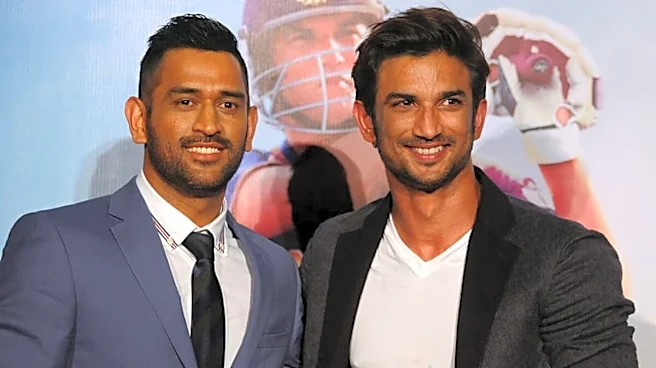
Over the last decade, Bollywood has chronicled the lives of Mahendra Singh Dhoni, Sachin Tendulkar, Mohammad Azharuddin, Kapil Dev, Mithali Raj and Pravin Tambe.
Also Read: Diljit Dosanjh flooded with Satluj download links during Instagram live, ‘Sab ne kar layi download’
But among them, only M.S. Dhoni: The Untold Story emerged as an undisputed commercial blockbuster. The others were either average performers, underwhelming theatrical outings or, in one case, found greater success on streaming than they likely would have in cinemas.
So why have cricket biopics struggled despite India's obsession with the sport? And why do filmmakers continue to return to them?
One clear winner
Released in 2016, Neeraj Pandey's M.S. Dhoni: The Untold Story remains the benchmark for cricket biopics in India. The film grossed over ₹215 crore worldwide, making it one of the year's highest-grossing Hindi films. However, its success wasn't simply because Dhoni was one of India's most beloved cricketers.
The film succeeded because it functioned first as a compelling drama and second as a sports film.
Rather than merely recreating famous matches, it traced Dhoni's journey from a ticket collector working with the Indian Railways to becoming the captain who led India to World Cup glory. The screenplay invested heavily in his personal struggles, family relationships, sacrifices, losses and aspirations.
Timing also played a significant role. The film arrived while Dhoni was still India's ODI captain and among the country's biggest sporting icons. Most importantly, audiences did not need to be cricket fans to enjoy it. At its core, it was an underdog story about ambition, perseverance and dreams.
Also Read: British music firm Virtuoso Music enters south Asia market with India launchFilms that followed couldn't repeat the feat
Ranveer Singh's portrayal of Kapil Dev in Kabir Khan's 83 was widely praised. Critics applauded the film, and viewers largely appreciated the recreation of India's historic 1983 World Cup triumph. Yet the film failed to translate that goodwill into strong domestic box office numbers.
Its release in December 2021 came when theatres were still recovering from the pandemic. It also faced stiff competition from Spider-Man: No Way Home, one of the biggest Hollywood releases in India.
83 also faced a storytelling challenge. The film leaned heavily on nostalgia and historical recreation. Rather than just building around an individual's personal journey, the emotional arc was shared across an entire team rather than centred on a single protagonist.
The 2017 release, Sachin: A Billion Dreams, was a documentary built around archival footage, interviews and personal reflections from Tendulkar himself. Fans appreciated its intimate look into his life and career, but documentaries have traditionally occupied a niche space in Indian theatres. The film performed respectably but never reached blockbuster status, despite being centred around the god of cricket himself.
Based on Mithali Raj's life, Shabaash Mithu received generally favourable reviews. Commercially, however, it was a disaster, grossing less than ₹3 crore worldwide. Several reviewers pointed out that while the film was emotionally earnest, it lacked the dramatic intensity and edge-of-the-seat moments needed to fully engage audiences. The screenplay was also criticised for not delving deeply enough into defining chapters of Mithali Raj's career, including India's run to the 2017 Women's World Cup final.
Its release during Bollywood's difficult theatrical phase in 2022 further compounded its challenges, as audiences had become increasingly selective about what they were willing to watch on the big screen. And it did not help that women's cricket was still struggling to find its footing back then.
Also Read: With Alpha, women finally take charge of Indian spy thrillers after six decades
Unlike Dhoni or Kapil Dev, Mohammad Azharuddin's cricketing legacy remains intertwined with the match-fixing controversy that ended his international career. That controversy inevitably shaped public conversation around Azhar.
Even before its release, the film faced criticism from former investigators who disputed its portrayal of events and argued that it appeared to offer Azharuddin a clean chit. The controversy generated curiosity but also prevented the film from achieving the broad emotional connection enjoyed by more universally celebrated sporting figures.
One of the most appreciated cricket biopics bypassed theatres altogether. Released directly on OTT, Kaun Pravin Tambe? earned positive reviews for its portrayal of an extraordinary underdog who made his IPL debut at the age of 41 after decades of perseverance. Without the pressure of theatrical box office expectations, the film found an audience on streaming platforms.
Why cricket biopics struggle
The mixed fortunes of cricket biopics raise an obvious question. If India is arguably the world's most cricket-obsessed nation, why don't films about its greatest cricketers consistently become blockbuster hits?
Part of the answer lies in familiarity.
Unlike fictional sports dramas, audiences already know every major milestone. They know Dhoni will hit the winning six in the 2011 World Cup final. They know Kapil Dev will lift the World Cup at Lord's. They know Ganguly will wave his shirt from the balcony.
The challenge is, therefore, not revealing what happened, but making audiences emotionally invest in how those moments came to be.
Also Read: Delhi Belly at 15: A rare cinematic triumph that’s impossible to recreate
Many cricket biopics also struggle because they fall into a familiar template: childhood hardships, early rejection, breakthrough selection, career-defining triumph and an inspirational conclusion. Unless filmmakers uncover fresh emotional conflicts, these stories risk feeling more like chronological highlight reels than compelling dramas.
At the same time, cricket films are expensive. Stadium recreations, visual effects, large ensemble casts, period production design and sports choreography all increase production costs, making profitability far more difficult than for conventional dramas.
Yet, Bollywood continues to invest in cricket biopics.
The reason is simple: the potential upside remains enormous. Few genres arrive with built-in brand recognition comparable to cricket. Names such as Sourav Ganguly or Yuvraj Singh carry instant recall across generations, reducing the marketing challenge significantly.
Economics has also evolved. A film today is no longer dependent solely on theatrical collections. Streaming rights, satellite deals, music rights and overseas distribution have diversified revenue streams, lowering financial risk. Kaun Pravin Tambe? demonstrated that a cricket biopic can succeed on OTT even without a theatrical release.
Also Read: Khashaba teaser: Nagraj Manjule’s sports drama brings Olympic wrestler Khashaba Jadav’s story to big screen
The film, set to hit cinemas on May 14, 2027, joins a growing list of movies based on India's cricketing legends. It also comes at a time when a Yuvraj Singh biopic, backed by T-Series and producer Ravi Bhagchandka, is in development.
On paper, the formula seems foolproof.
Cricket is India's biggest sport. Cinema remains one of its biggest forms of entertainment.
Bringing the country's most celebrated cricketers to the big screen should, in theory, produce box-office gold.
Yet history tells a different story.
Over the last decade, Bollywood has chronicled the lives of Mahendra Singh Dhoni, Sachin Tendulkar, Mohammad Azharuddin, Kapil Dev, Mithali Raj and Pravin Tambe.
Also Read: Diljit Dosanjh flooded with Satluj download links during Instagram live, ‘Sab ne kar layi download’
But among them, only M.S. Dhoni: The Untold Story emerged as an undisputed commercial blockbuster. The others were either average performers, underwhelming theatrical outings or, in one case, found greater success on streaming than they likely would have in cinemas.
So why have cricket biopics struggled despite India's obsession with the sport? And why do filmmakers continue to return to them?
One clear winner
Released in 2016, Neeraj Pandey's M.S. Dhoni: The Untold Story remains the benchmark for cricket biopics in India. The film grossed over ₹215 crore worldwide, making it one of the year's highest-grossing Hindi films. However, its success wasn't simply because Dhoni was one of India's most beloved cricketers.
The film succeeded because it functioned first as a compelling drama and second as a sports film.
Rather than merely recreating famous matches, it traced Dhoni's journey from a ticket collector working with the Indian Railways to becoming the captain who led India to World Cup glory. The screenplay invested heavily in his personal struggles, family relationships, sacrifices, losses and aspirations.
Timing also played a significant role. The film arrived while Dhoni was still India's ODI captain and among the country's biggest sporting icons. Most importantly, audiences did not need to be cricket fans to enjoy it. At its core, it was an underdog story about ambition, perseverance and dreams.
Also Read: British music firm Virtuoso Music enters south Asia market with India launchFilms that followed couldn't repeat the feat
Ranveer Singh's portrayal of Kapil Dev in Kabir Khan's 83 was widely praised. Critics applauded the film, and viewers largely appreciated the recreation of India's historic 1983 World Cup triumph. Yet the film failed to translate that goodwill into strong domestic box office numbers.
Its release in December 2021 came when theatres were still recovering from the pandemic. It also faced stiff competition from Spider-Man: No Way Home, one of the biggest Hollywood releases in India.
83 also faced a storytelling challenge. The film leaned heavily on nostalgia and historical recreation. Rather than just building around an individual's personal journey, the emotional arc was shared across an entire team rather than centred on a single protagonist.
The 2017 release, Sachin: A Billion Dreams, was a documentary built around archival footage, interviews and personal reflections from Tendulkar himself. Fans appreciated its intimate look into his life and career, but documentaries have traditionally occupied a niche space in Indian theatres. The film performed respectably but never reached blockbuster status, despite being centred around the god of cricket himself.
Based on Mithali Raj's life, Shabaash Mithu received generally favourable reviews. Commercially, however, it was a disaster, grossing less than ₹3 crore worldwide. Several reviewers pointed out that while the film was emotionally earnest, it lacked the dramatic intensity and edge-of-the-seat moments needed to fully engage audiences. The screenplay was also criticised for not delving deeply enough into defining chapters of Mithali Raj's career, including India's run to the 2017 Women's World Cup final.
Its release during Bollywood's difficult theatrical phase in 2022 further compounded its challenges, as audiences had become increasingly selective about what they were willing to watch on the big screen. And it did not help that women's cricket was still struggling to find its footing back then.
Also Read: With Alpha, women finally take charge of Indian spy thrillers after six decades
Unlike Dhoni or Kapil Dev, Mohammad Azharuddin's cricketing legacy remains intertwined with the match-fixing controversy that ended his international career. That controversy inevitably shaped public conversation around Azhar.
Even before its release, the film faced criticism from former investigators who disputed its portrayal of events and argued that it appeared to offer Azharuddin a clean chit. The controversy generated curiosity but also prevented the film from achieving the broad emotional connection enjoyed by more universally celebrated sporting figures.
One of the most appreciated cricket biopics bypassed theatres altogether. Released directly on OTT, Kaun Pravin Tambe? earned positive reviews for its portrayal of an extraordinary underdog who made his IPL debut at the age of 41 after decades of perseverance. Without the pressure of theatrical box office expectations, the film found an audience on streaming platforms.
Why cricket biopics struggle
The mixed fortunes of cricket biopics raise an obvious question. If India is arguably the world's most cricket-obsessed nation, why don't films about its greatest cricketers consistently become blockbuster hits?
Part of the answer lies in familiarity.
Unlike fictional sports dramas, audiences already know every major milestone. They know Dhoni will hit the winning six in the 2011 World Cup final. They know Kapil Dev will lift the World Cup at Lord's. They know Ganguly will wave his shirt from the balcony.
The challenge is, therefore, not revealing what happened, but making audiences emotionally invest in how those moments came to be.
Also Read: Delhi Belly at 15: A rare cinematic triumph that’s impossible to recreate
Many cricket biopics also struggle because they fall into a familiar template: childhood hardships, early rejection, breakthrough selection, career-defining triumph and an inspirational conclusion. Unless filmmakers uncover fresh emotional conflicts, these stories risk feeling more like chronological highlight reels than compelling dramas.
At the same time, cricket films are expensive. Stadium recreations, visual effects, large ensemble casts, period production design and sports choreography all increase production costs, making profitability far more difficult than for conventional dramas.
Yet, Bollywood continues to invest in cricket biopics.
The reason is simple: the potential upside remains enormous. Few genres arrive with built-in brand recognition comparable to cricket. Names such as Sourav Ganguly or Yuvraj Singh carry instant recall across generations, reducing the marketing challenge significantly.
Economics has also evolved. A film today is no longer dependent solely on theatrical collections. Streaming rights, satellite deals, music rights and overseas distribution have diversified revenue streams, lowering financial risk. Kaun Pravin Tambe? demonstrated that a cricket biopic can succeed on OTT even without a theatrical release.
Also Read: Khashaba teaser: Nagraj Manjule’s sports drama brings Olympic wrestler Khashaba Jadav’s story to big screen