





AI's Growing Capacity
Recent interactions with AI assistants like Claude have shed light on the increasing capability of artificial intelligence to tackle a substantial amount
of work across various professions. Anthropic's extensive research, based on millions of user engagements, suggests that approximately 49% of all jobs currently have at least 25% of their tasks that could potentially be managed by AI tools. This figure represents a notable upward revision from earlier projections and underscores the accelerating integration of AI into the daily operations of the workforce. The study highlights that AI is proving particularly adept at knowledge-intensive domains, including writing, coding, analytical tasks, and administrative duties. Rather than outright replacement, AI is frequently being adopted as a tool to augment human efficiency and streamline workflows, though its widespread adoption is undeniably set to bring about significant shifts in the employment landscape.
Vulnerable Job Roles
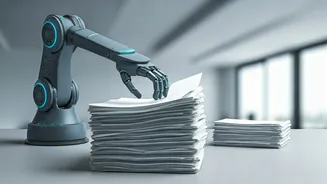
Certain job categories are identified as being at the forefront of potential AI-driven automation. Roles characterized by a high volume of routine digital operations, such as programming, data processing, and customer support, are flagged as particularly susceptible. Industry analyses, referenced in reports, indicate that up to 70% of tasks performed by individuals in these fields could theoretically be automated using current AI systems. Beyond these, administrative roles, office support functions, legal research and documentation, financial analysis and reporting, content creation, and translation services also appear to be at elevated risk. This vulnerability stems from the fact that these professions largely involve the manipulation and understanding of information, an area where advanced large language models excel, enabling them to process and generate textual and data-based outputs with increasing sophistication.
White-Collar Impact
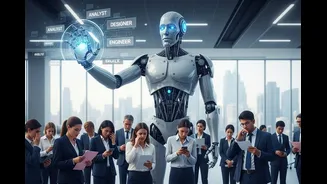
Unlike previous technological upheavals that primarily affected manufacturing and manual labor, the current wave of AI advancement is significantly targeting knowledge work, often associated with white-collar professions. The inherent capacity of generative AI to analyze complex texts, generate detailed reports, produce functional code, and meticulously process data positions it as a potent force capable of undertaking many tasks previously exclusive to human white-collar workers. Experts predict this could precipitate a profound transformation in the labor market. Some analyses even suggest AI could trigger a 'great recession' for white-collar employees if a large number of office-based jobs are automated concurrently. However, a prevailing economic viewpoint is that technology is more likely to evolve job descriptions and create new specializations rather than cause mass unemployment.
Industry Leaders' Warnings
Prominent figures in the technology and business sectors have recently voiced serious concerns regarding the accelerated pace of AI-driven transformations in the workplace. Dario Amodei, the CEO of Anthropic, has posited that within the next five years, up to half of all entry-level white-collar positions might cease to exist as AI systems mature in their capabilities. He has characterized this impending transition as potentially 'unusually painful' for both individuals and societies as they grapple with such rapid technological shifts. Other business leaders have echoed these sentiments, cautioning about the scale of disruption. For example, industrialist Harsh Goenka has warned that specific job categories could vanish entirely within a decade as AI systems become proficient at handling routine workplace functions, leading to a fundamental redefinition of human roles in various industries.
New Job Creation Potential
Despite the apprehension surrounding job displacement, there is a compelling argument that AI will ultimately act as a catalyst for the creation of entirely new job opportunities. Historical patterns from past technological revolutions illustrate that while certain jobs become obsolete, new industries and roles emerge that were previously unimaginable. Economists point to research indicating that many jobs commonplace today simply did not exist a few decades ago. The implementation of AI is expected to boost overall productivity, paving the way for new roles in areas such as AI system training and oversight, the development of sophisticated human-AI interaction interfaces, and the creation of advanced software solutions. Companies embracing AI are also likely to expand their offerings, thereby generating further employment opportunities.
The Evolving Future
Anthropic's comprehensive research suggests that the future of work is unlikely to be a simple binary of humans versus machines. Instead, AI is poised to fundamentally reconfigure the composition of jobs, automating repetitive tasks while simultaneously amplifying the demand for uniquely human skills. These include higher-order cognitive abilities such as creativity, strategic foresight, and complex problem-solving. For individuals navigating the contemporary labor market and for policymakers shaping future economic strategies, the paramount challenge lies in adapting to a professional environment where AI tools increasingly function as collaborative digital partners. As this technology continues its rapid evolution, the central question may indeed shift from a broad 'Will AI replace jobs?' to a more nuanced 'Which specific components of our jobs will AI undertake next?'