




Deepening Bilateral Ties
The relationship between India and Germany is experiencing a significant upswing, with a focus on strengthening economic ties. The recent announcement
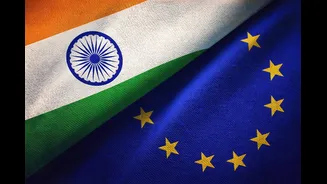
of visa-free transit for Indian passport holders transiting through Germany underscores the commitment to fostering closer connections. This development has contributed to a substantial increase in the Indian population in Germany, with numbers more than doubling between 2017 and 2024. This growth reflects the deepening people-to-people connections between the two countries and opens opportunities for further collaboration and exchange. The selection of EU leaders as chief guests for India's Republic Day underscores the growing collaboration between India and the EU, showcasing a shared vision for global cooperation and mutual benefit. This is a critical indicator of the expanding influence of the EU-India dynamic.
Trade and Agreements
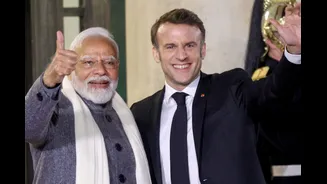
In January, the relationship between India and Germany was further solidified by the signing of 27 memoranda of understanding (MoUs) and a Joint Declaration of Intent. The signing, covering multiple sectors, occurred during German Chancellor Friedrich Merz’s visit to India. This comprehensive set of agreements signifies a shared commitment to enhance cooperation across various domains. Prime Minister Narendra Modi expressed their mutual desire to cultivate a 'limitless' economic partnership. Merchandise trade between the two nations reached its highest level during FY25. However, India experienced a trade deficit during this period. In FY26 (April-November), Germany accounted for 2.56% of India's total exports and 2.48% of its imports, indicating a consistent trade relationship, though with a slight imbalance.
Economic Landscapes Compared
The article also provides a comparative glance at the economic trajectories of Germany and India. Germany’s economy has demonstrated consistent growth, with a compounded annual growth rate (CAGR) of 3.72% between 2001 and 2025. Conversely, India's Gross Domestic Product (GDP) is projected to reach approximately $4.1 trillion in FY26, showcasing a robust growth rate of 8.85% over the same period. This indicates India's rapid economic expansion and its potential to gradually narrow the gap with Germany. The growing economic similarity is a testament to the dynamic transformations unfolding in both nations. This development paves the way for deeper integration and strategic alignments in the years to come.
FTA Discussions Underway
A critical aspect of the evolving partnership between India and the EU is the ongoing discussions aimed at finalizing the India-European Union Free Trade Agreement (FTA). The FTA negotiations hold significant potential for both parties, aiming to promote mutual economic growth through streamlined trade and enhanced market access. The finalization of the FTA is expected to catalyze trade between India and the EU, creating a more favorable environment for businesses and investors. The focus on finalizing the FTA demonstrates the dedication of both sides to strengthening economic cooperation.