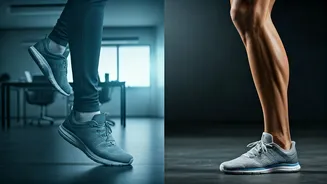







The Power of Calf Muscles
Your calf muscles play a crucial role in blood circulation, acting as a 'second heart' to pump blood back towards the upper body. When you remain seated
for extended periods, this vital flow can decelerate, leading to uncomfortable sensations like leg heaviness or noticeable swelling. Simple movements, such as performing seated calf raises by lifting your heels up and down, can keep these muscles engaged. This action actively supports improved blood circulation, offering a practical method to counteract the effects of prolonged sitting. While these exercises don't substitute for comprehensive physical activity, they are a valuable tool for maintaining a degree of movement when getting up is not feasible.
Walking: The Full-Body Advantage
Walking emerges as a generally superior option due to its comprehensive engagement of numerous muscle groups, encompassing the legs, hips, and core. This activity significantly enhances blood circulation, contributes positively to cardiovascular health, and effectively alleviates the stiffness that accumulates from remaining in a seated position for extended durations. Even brief walking intervals, lasting just 5 to 10 minutes during work breaks, can yield a palpable difference in how you feel. Despite the overarching benefits of walking, seated calf raises retain their utility, particularly in scenarios where frequent movement is restricted. They specifically target calf muscle activation, aiding in the return of blood flow towards the heart, making them a complementary strategy for sedentary individuals.
Optimal Sedentary Strategy
For individuals whose professional lives demand extensive sitting, both walking and seated calf raises hold importance, though their impact may vary. Walking is highly advantageous as it activates a broad spectrum of muscles, bolsters blood flow, promotes joint suppleness, and reduces the likelihood of stiffness and potentially harmful blood clots. Many people gravitate towards walking as a reliable method for staying active when other forms of exercise are impractical. Furthermore, it contributes to robust cardiovascular fitness and assists in weight management. Seated calf raises are beneficial when continuous ambulation is not an option, such as during prolonged desk work. Their primary function is to target the calf muscles, thereby improving venous return and mitigating lower limb swelling. However, it's important to acknowledge that they do not deliver the extensive, full-body advantages that characterize walking.
The Combined Approach
The most effective strategy for combating the negative effects of prolonged sitting appears to be a synergistic combination of both walking and targeted seated movements. The act of standing up and taking a short walk every hour, even for just a few minutes, helps your body reset and effectively combats stiffness. In between these short walks, incorporating seated exercises like calf raises, ankle rotations, or gentle stretches can keep your legs actively engaged and support overall joint comfort and mobility. The principle of performing small, consistent actions throughout the day proves more beneficial than engaging in a single, lengthy workout followed by extended inactivity. This integrated approach ensures continuous engagement of the body, fostering better circulation and maintaining joint health.





![[Watch] Young fans wearing RCB jerseys request MS Dhoni for an autograph, former India captain's reaction](https://g-mob.glance-cdn.com/public/fc/image/MTruezkAO3E0.webp)