






Cylinder Storage Limits
When it comes to keeping LPG cylinders at your residence, Indian oil marketing companies strictly adhere to safety and petroleum regulations. Domestic
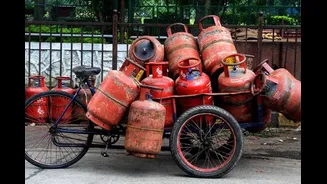
consumers are generally permitted to store a maximum of two LPG cylinders on their premises at any given time. This allowance typically accounts for one cylinder that is actively connected and in use for cooking, alongside a single spare cylinder kept as a backup. This measure is in place to mitigate risks associated with handling highly flammable fuel. Storing more than this prescribed limit necessitates specific safety clearances under the Gas Cylinders Rules, 2016, as an excess quantity significantly elevates the potential for accidents. For commercial operations, however, the rules are different, allowing for the storage of up to 100 kg of LPG without requiring an explosive license, provided specific guidelines are met.
Annual Booking Quotas
Each household in India is entitled to a specific annual quota for LPG cylinder bookings, with a distinction between subsidized and non-subsidized rates. Under government schemes, domestic users can avail up to 12 subsidized cylinders of 14.2 kg each within a financial year. For those opting for smaller 5 kg cylinders, this translates to an equivalent entitlement of 34 cylinders annually at subsidized prices. While one subsidized cylinder can typically be booked per month, the total number of cylinders a household can book in a financial year is generally capped at 15 for the 14.2 kg size. This means that after exhausting the 12 subsidized cylinders, an additional three can be purchased at prevailing market rates. To curb misuse and hoarding, oil marketing companies have implemented a mandatory 25-day interval between consecutive bookings.
Government Anti-Hoarding Measures
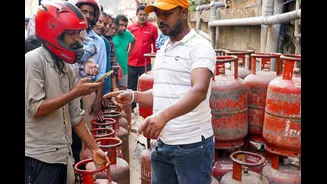
In response to escalating demand and potential supply disruptions, particularly influenced by global energy market fluctuations, the Indian government has actively implemented measures to ensure equitable LPG distribution. The Union government has invoked the Essential Commodities Act, empowering authorities to closely monitor LPG production, inventory levels, and distribution networks. This stringent oversight aims to prevent hoarding and black marketing, thereby safeguarding against artificial shortages. Refineries have been directed to prioritize LPG production for household consumption, balancing it with broader fuel supply needs. Furthermore, the waiting period for an LPG refill has been extended from 21 to 25 days, a deliberate step to curtail hoarding practices and ensure a steadier flow of supplies to consumers across the nation.
Current LPG Price Snapshot
Recent adjustments have led to revised pricing for both domestic and commercial LPG cylinders across India. For a standard 14.2 kg domestic cylinder, prices in the four major metro cities are currently: Delhi at Rs 913.00, Mumbai at Rs 912.50, Kolkata at Rs 939.00, and Chennai at Rs 928.50. These figures represent an increase of Rs 60 compared to previous rates. Domestic prices vary slightly in other major cities due to regional transportation costs and state taxes, with examples including Bengaluru at Rs 915.50 and Patna at Rs 1,002.50. For commercial users relying on 19 kg cylinders, the price hike is more substantial, with the New Delhi cylinder now costing Rs 1,884.50, Mumbai at Rs 1,836.00, Kolkata at Rs 1,988.50, and Chennai at Rs 2,043.50, reflecting a nationwide increase of Rs 144 for commercial usage.