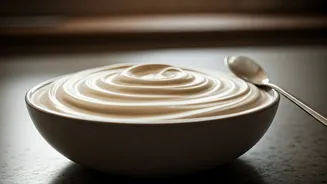



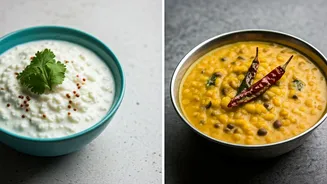

Why Homemade Curd?
Embracing homemade curd offers a significant advantage over its commercially produced counterparts, primarily due to the absence of artificial preservatives
and additives that can pose long-term health risks. Beyond the health benefits, crafting your own curd at home is a cost-effective solution, especially as summer approaches and the demand for this cooling staple rises. Digital creator Shashank Asli has shed light on making curd abundantly at home with just three straightforward approaches. This practice not only ensures freshness and purity but also allows for customization of taste and texture, making it a wholesome addition to your daily diet. The inherent probiotics in curd are vital for maintaining a healthy gut microbiome, aiding digestion, and can even offer relief for individuals with lactose intolerance. Furthermore, curd is a nutritional powerhouse, packed with essential nutrients like calcium, phosphorus, protein, and various B vitamins, all contributing to overall well-being. By understanding the simple science behind curd formation and employing these methods, you can consistently produce high-quality curd in your own kitchen.
Method 1: Lemon's Tang
The first method leverages the natural acidity of lemon juice to initiate the curdling process, yielding a thick and pleasingly tangy product. To prepare, take one litre of whole milk and divide it into three separate bowls. In the first bowl, add the juice extracted from half a lemon. The citric acid present in lemon juice acts as a catalyst, prompting the milk proteins to coagulate and form curd. This results in a curd that is not only thick but also possesses a distinct, mild tanginess, making it a versatile ingredient for various culinary applications. The consistency achieved is generally good, offering a satisfying texture that is desirable for both eating plain and using in recipes. This approach is straightforward and relies on a common household ingredient to achieve a successful curd set.
Method 2: Chilli's Magic
Exploring another innovative approach, the second method utilizes green chillies to foster curd formation, harnessing the natural presence of lactobacillus bacteria on their surface. For this technique, divide one litre of whole milk into three bowls, and in the second bowl, introduce either one whole green chilli or one with its tip sliced off. These chillies are a natural source of beneficial bacteria, the very same microbes essential for the fermentation process that transforms milk into curd. While it might sound unusual, the process ensures that the curd sets effectively without imparting any significant spicy flavour to the final product. The curd produced through this method is observed to set well, although it might be slightly thinner in consistency compared to the curd prepared using lemon juice. This method offers a unique way to achieve good curd using a readily available ingredient, showcasing the diverse ways nature aids in food preparation.
Method 3: Starter Culture
The third and most traditional method involves using a spoonful of existing curd as a starter culture, a technique widely recognized for its reliability and predictability. In the third bowl, add approximately one spoonful of previously prepared, good-quality curd to the milk. This method is considered the most dependable because the starter curd already contains a robust population of active lactic acid bacteria, which are crucial for initiating and sustaining the fermentation process. Consequently, this approach consistently yields curd with a perfect texture and the familiar, comforting taste that many associate with homemade dahi. It's the go-to method for those seeking a foolproof way to ensure a successful curd set, providing a familiar and satisfying result every time due to the direct introduction of established bacterial cultures.
Tips for Thick Curd
To achieve a truly thick and firm curd, several expert recommendations should be followed. Begin by boiling a litre of whole milk, then continue to simmer it on low heat until it reduces and thickens considerably. This simmering process concentrates the milk solids, which is key to a denser curd. Once thickened, allow the milk to cool slightly, but not to room temperature; it should still be warm to the touch. The next crucial step is to froth the milk extensively. This can be done by repeatedly pouring the milk from one vessel to another, creating aeration. After frothing, introduce your chosen curd culture – whether it's from the lemon, chilli, or starter method – and toss it gently a couple of times to distribute it evenly. Transfer this mixture to a casserole, a thick-bottomed bowl, or an earthen vessel, cover it with a lid, and let it set in a warm place for 5 to 8 hours or overnight, depending on the ambient temperature. Prompt refrigeration as soon as the curd has set will help maintain its firmness.
Do's and Don'ts
For optimal curd results, adhering to specific do's and don'ts is essential. Always opt for whole milk, as its higher fat content contributes to a thicker curd. Further simmering the milk for an additional 10 minutes can enhance thickness, but be vigilant to prevent it from scorching. When using curd as a starter, ensure it's fresh and of good quality; bring it to room temperature before adding it to the milk, using anywhere from one teaspoon to one tablespoon. Frothing the milk before adding the culture is a non-negotiable step for achieving thickness. Conversely, avoid using sour or old curd as your starter, as this will result in sour curd. It is paramount to dissolve the starter culture uniformly in the milk; whisk it well with a spoon or whisk. Earthen pots are highly recommended for their porous nature, which aids in moisture absorption and results in excellent curd. For those in colder climates, extending the setting time or using indirect heat sources like an oven or warm clothing can help. Remember that milk quality directly influences curd consistency, and practice makes perfect; expect variations and try setting curd at least twice to master your technique.